
Make the recipe
Start with measured ingredients and pay attention to the texture cue in the method. Most recipe problems come from changing thickness, moisture, or heat without adjusting the timing.

Keep the texture right
Good texture comes from matching the cooking cue to the food, not from trusting the timer alone. Check thickness, moisture, and doneness before changing the recipe.
-
Prep evenlyCut, roll, portion, or spread the mixture evenly so every piece cooks at the same pace.
-
Control moisturePat, drain, rest, or reduce wet ingredients when excess liquid would soften the final texture.
-
Use the doneness cueLook for the recipe-specific sign of doneness instead of stopping at the first browned edge.
-
Let it settleCool or rest the finished food long enough for steam and structure to stabilize.
Swaps that still work
Start with measured ingredients and pay attention to the texture cue in the method. Most recipe problems come from changing thickness, moisture, or heat without adjusting the timing.

Serve and store it
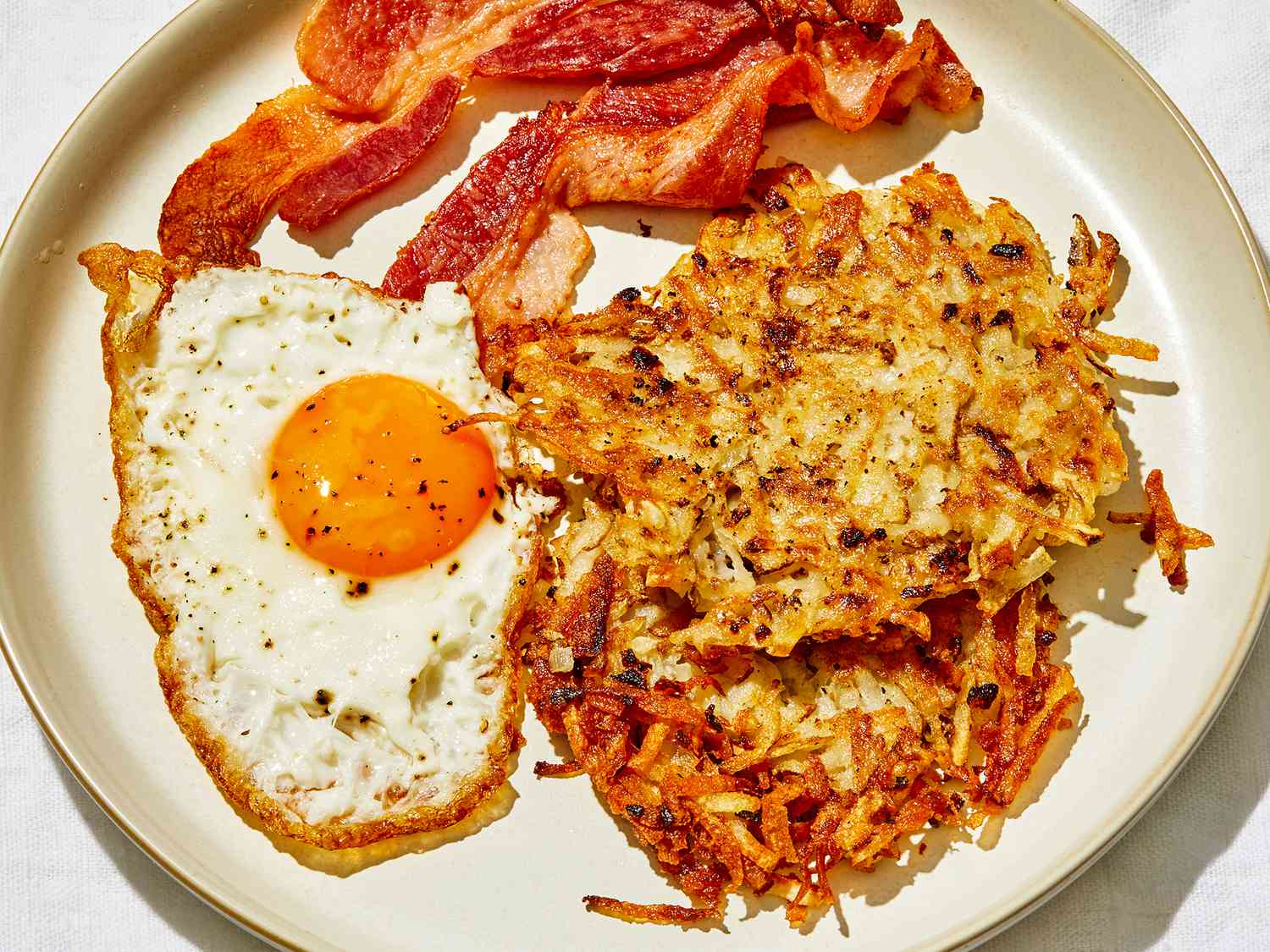
The difference between good hash browns and great ones comes down to timing. Pull them from the pan when the edges are deep golden and the center is tender. They will crisp up slightly more as they rest for a minute or two. Serve immediately with sour cream, salsa, or a fried egg on top. If you are making a large batch, keep finished portions warm in a 200°F oven on a wire rack instead of stacking them on a plate. Stacking traps steam and turns those crispy edges soggy before you even pick up a fork.
Leftover hash browns keep well in the refrigerator for up to three days. Store them in an airtight container with a paper towel underneath to absorb excess moisture. When reheating, avoid the microwave. It turns the potatoes soft and chewy. Instead, spread them in a single layer in a skillet over medium heat with a teaspoon of oil. Heat for 2-3 minutes per side until hot and crisp again. An air fryer also works well at 375°F for about 4 minutes.
Crispy hash browns: what to check next
Getting diner-style crunch at home usually comes down to moisture control and patience. If your hash browns are steaming or soggy, the fix is rarely about adding more ingredients. It’s about removing water and giving the starch time to brown.
No comments yet. Be the first to share your thoughts!