
Why russet potatoes win
Choosing the right potato is the single most important decision you will make when building a breakfast skillet recipe. The difference between a soggy, steamed mess and a deeply golden, shattering crust comes down to starch content and moisture levels. Russet potatoes, often called Idaho potatoes, are the undisputed champion for this task. Their high starch and low moisture content creates the ideal canvas for achieving maximum crispiness.
When you use a potato shredder on a russet, the high starch acts like a natural binder. As the shredded potatoes hit the hot fat in your skillet, the starch gelatinizes and fries, forming a cohesive lattice that holds together without falling apart. This structure allows each strand to crisp up individually while maintaining the structural integrity of the patty. Waxy potatoes, such as red or Yukon Gold varieties, contain too much water and not enough starch. They tend to steam rather than fry, resulting in a soft, mushy texture that lacks the essential crunch.
The lower moisture content in russets also means less water needs to evaporate before the browning process can begin. This allows the exterior to reach the necessary temperature for the Maillard reaction—browning and flavor development—much faster. By starting with a dry, starchy base, you ensure that every bite of your crispy hash browns delivers that satisfying, diner-style crunch.
Squeeze out every drop
Removing moisture is the single most important technical step in making crispy hash browns. Wet potatoes steam instead of fry, leaving you with a soggy, pale mess instead of a golden crust. When you shred potatoes with a potato shredder, the cells rupture and release starch mixed with water. This slurry coats the shreds, creating a barrier that prevents browning.
To fix this, you must wring the potatoes dry. Transfer the shredded potatoes into a clean kitchen towel or a layer of cheesecloth. Gather the edges and twist tightly over the sink, applying maximum pressure to force out the liquid. You should see a significant amount of cloudy water drain away. The remaining potato mass should feel dry to the touch, not slick or damp.
Once the liquid is gone, spread the shreds on a plate or paper towels for a final minute to air out any remaining surface moisture. This extra step ensures that when the potatoes hit the hot skillet, they immediately begin to sear and crisp up, rather than releasing more water into the pan.
The skillet and heat setup
The foundation of a perfect crispy hash brown recipe starts with the pan. Cast iron is the undisputed champion here. Its thick walls hold heat steadily, preventing the temperature from dropping when you add the cold, shredded potatoes. This thermal mass is what turns soggy shreds into a golden, crunchy crust. A standard 10-inch skillet, as recommended by NatashasKitchen, offers the ideal surface area-to-depth ratio for most home cooks. It allows the potatoes to spread in a single, even layer without overcrowding, which is essential for proper browning.
:max_bytes(150000):strip_icc()/__opt__aboutcom__coeus__resources__content_migration__serious_eats__seriouseats.com__2014__06__20180315-hashbrowns-vicky-wasik-16-fc59290c176e4df8b7eb0f176fa11bc1.jpg)
Fat selection is equally critical. You need a neutral oil with a high smoke point, such as vegetable, canola, or avocado oil, to handle the medium-high heat required for crispness. Butter alone will burn before the potatoes cook through, but a combination works beautifully. Start with oil to prevent burning, then finish with a knob of butter for that rich, savory flavor. The fat should shimmer but not smoke when the potatoes hit the pan. This ensures immediate sizzling, which sears the surface and locks in the texture you’re after.
Preheat the skillet for at least five minutes before adding anything. A properly heated pan is non-negotiable for this method. If the pan is too cold, the potatoes will steam instead of fry, resulting in a pale, limp texture. Once hot, add your fat and swirl to coat the bottom evenly. The skillet should feel hot to the touch if you hover your hand above it. This level of heat ensures the shredded potatoes make immediate contact with a scorching surface, setting the stage for those signature crispy edges.
Cook Until Golden Brown
The final stage of making the best hash brown recipe relies on patience and heat management. Once the shredded potatoes hit the skillet, they will stick together as the natural starches release. Your goal is to let them bond into a single, cohesive patty rather than stirring them into loose bits. Use a spatula to press down firmly, ensuring every shred makes contact with the hot metal. This direct contact is what drives the Maillard reaction, turning the pale shreds into a deep, golden crust.
For the first half of the cooking time, resist the urge to move the hash browns. Let them sit undisturbed over medium-high heat. You will hear the sizzle change pitch from a wet hiss to a dry, aggressive crackle. This sound shift tells you the moisture has evaporated and the exterior is hardening. If you lift the edge and see a consistent bronze color, it is time to flip.
Flipping is the most delicate part of the process. If the patty is not fully set, it will break apart. Slide a wide spatula completely underneath, then use a confident wrist flick to turn the hash browns over in one motion. If you are unsure, you can use a plate to help invert the patty safely. Once flipped, reduce the heat slightly to medium to prevent burning the second side while the interior cooks through. Cook for another five to seven minutes until the second side matches the first in color and crispiness.
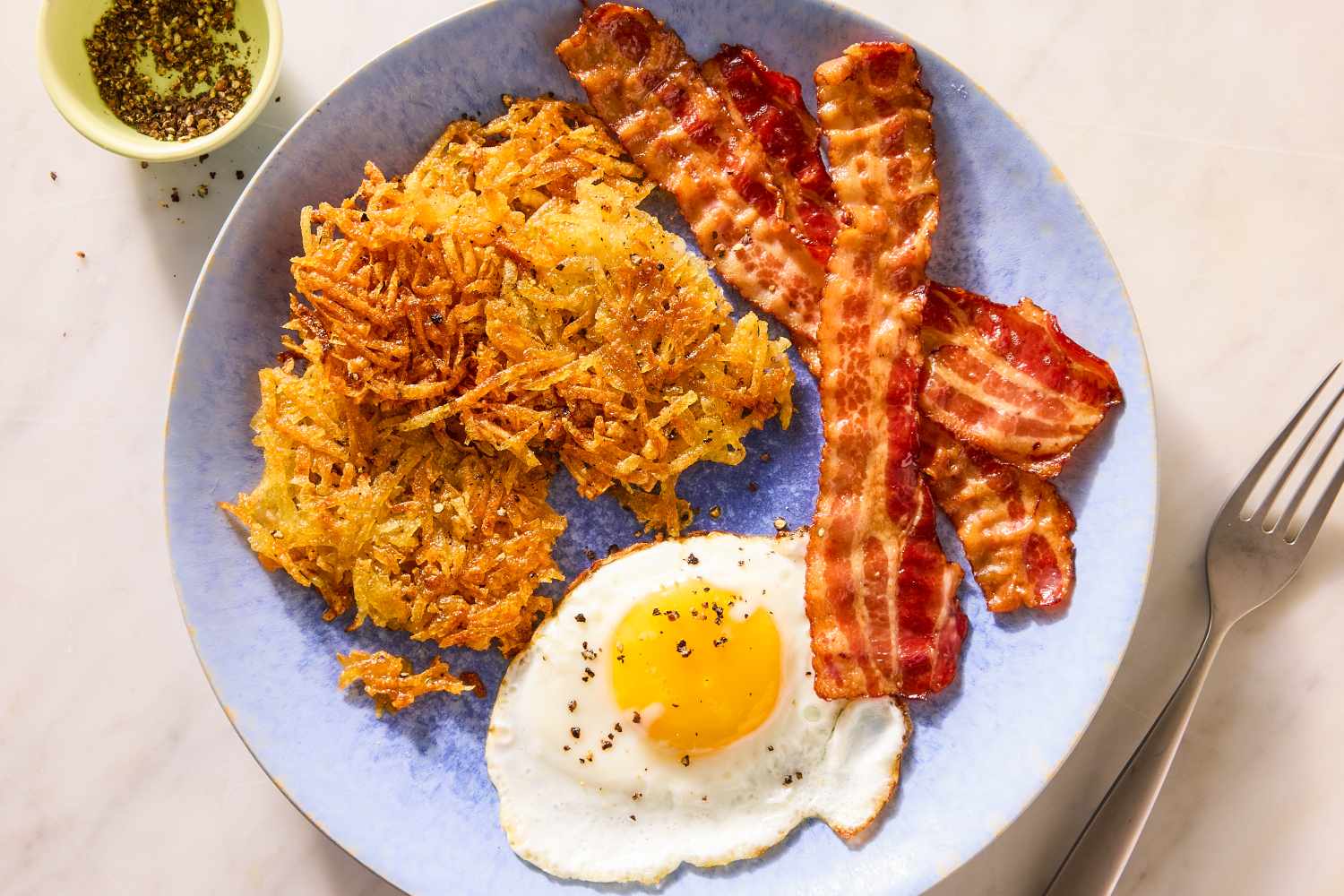
Use a spatula to press the shredded potatoes firmly against the skillet bottom. This ensures even contact for maximum crispiness.
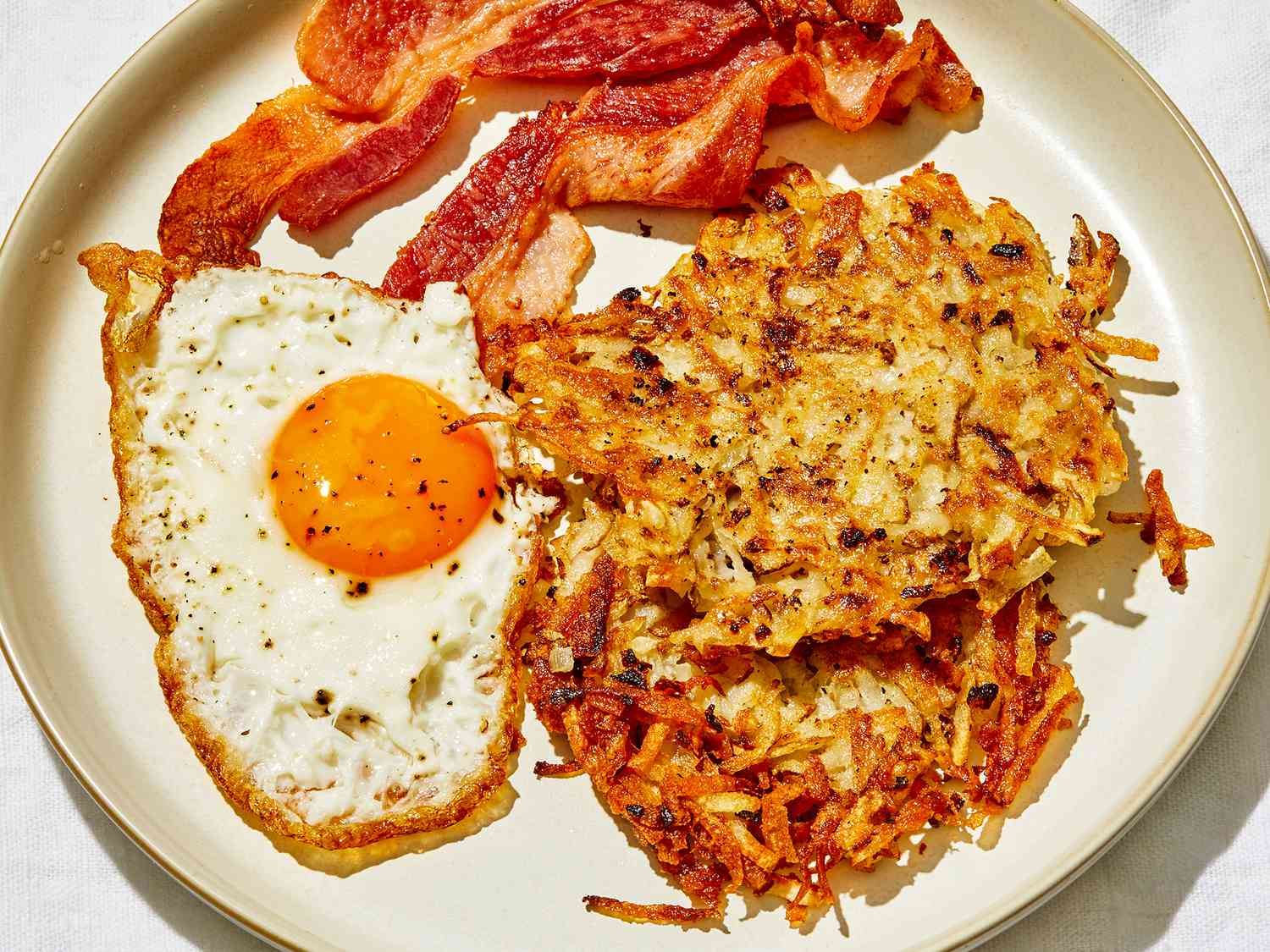
Wait for the wet hissing sound to stop and turn into a dry crackle. This indicates the moisture has evaporated and the crust is forming.
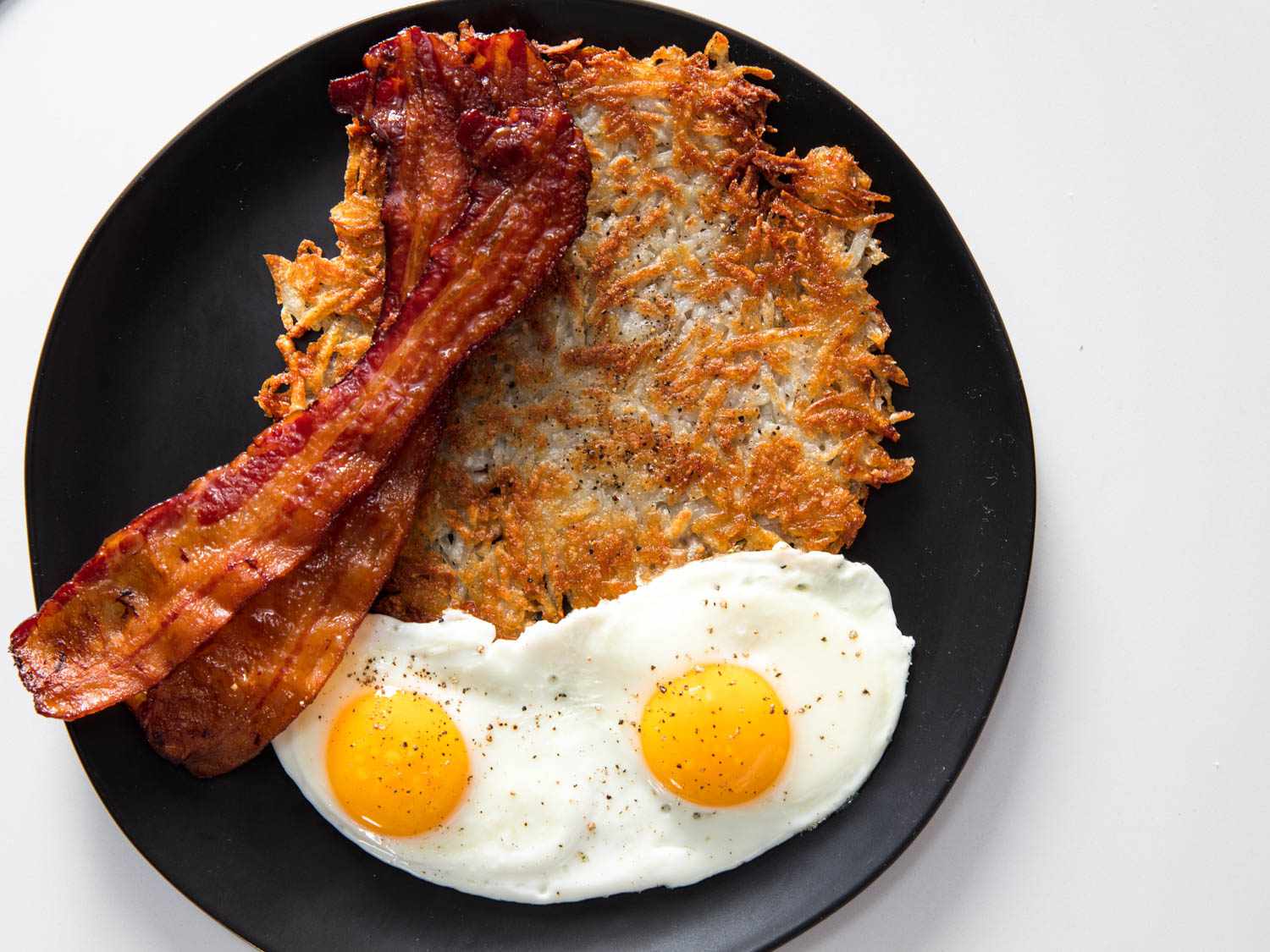
Slide the spatula completely under the patty. Flip in one smooth motion to keep the structure intact.
Checklist for perfect crispiness
Achieving diner-style crunch relies on three non-negotiables: moisture control, heat management, and patience. Use this quick reference to troubleshoot soggy or pale results.
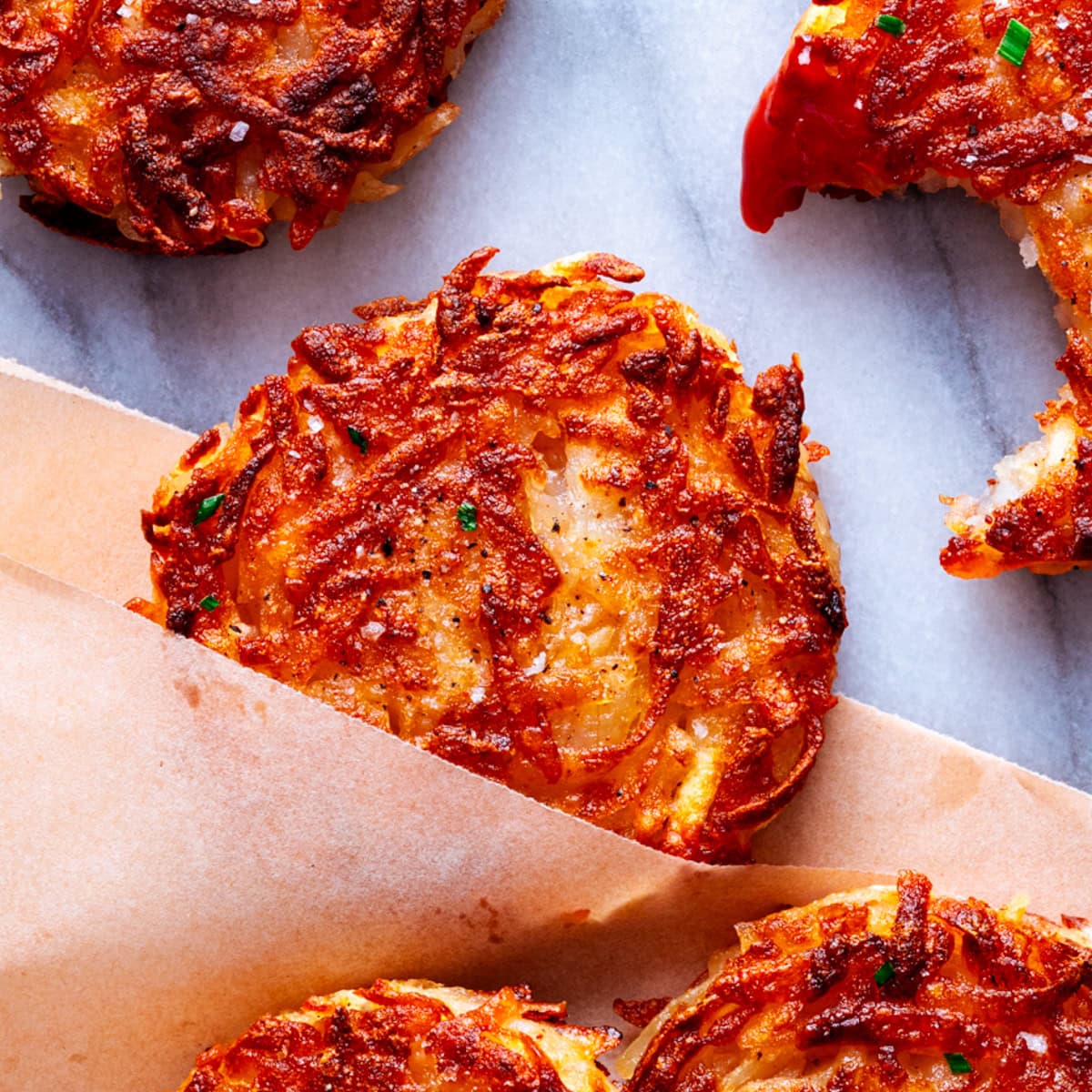
-
Use starchy Russet potatoes for maximum crunch
-
Shred potatoes and squeeze them bone-dry in a towel
-
Preheat skillet until a drop of water sizzles instantly
-
Add enough oil to coat the bottom generously
-
Cook undisturbed until the bottom is deep golden brown
Skipping the squeeze step is the most common mistake. Wet potatoes steam instead of fry, leaving you with a soft, gray texture rather than a golden crust. Trust the process and let the heat do the work.
Common hash brown mistakes
Even with a reliable potato shredder, hash browns can turn out soggy or burnt if you overlook a few basic techniques. The difference between a golden, crunchy crust and a steamed mess usually comes down to heat management and timing.
Crowding the pan
A crowded skillet traps steam, which prevents the potatoes from browning. When the pan is too full, the moisture released by the potatoes has nowhere to go, resulting in soft, pale edges instead of a crisp exterior. Use a large skillet and cook in batches if necessary. Give each layer room to breathe so the heat can evaporate surface moisture quickly.
Flipping too early
Patience is the most important ingredient in this recipe. Do not move the hash browns for the first five minutes of cooking. Let the bottom layer set and develop a deep golden crust before attempting to flip. If you tug at them too soon, the structure will break apart, and you will lose the crispy texture you are trying to achieve.
Using the wrong potatoes
Waxy potatoes like red or Yukon Gold hold too much moisture and lack the starch needed for maximum crispiness. Stick to starchy Russet potatoes. Their high starch content helps bind the shreds together while creating a light, crunchy exterior. If you must use another variety, rinse the shreds thoroughly to remove excess surface starch, but Russets remain the superior choice for a classic breakfast skillet recipe.
Skipping the squeeze
Water is the enemy of crispiness. After shredding, rinse the potatoes in cold water to remove excess starch, then dry them thoroughly. Use a clean kitchen towel or cheesecloth to squeeze out as much liquid as possible. The drier the shreds, the faster they will fry and the crisper they will become.
No comments yet. Be the first to share your thoughts!