
Why russet potatoes win for crispiness
The secret to hash browns that shatter when you bite them isn't high heat or extra oil—it is the potato itself. Russet potatoes, often called Idaho potatoes, are the gold standard for this dish because of their high starch content and low moisture levels. This specific starch-to-water ratio is what allows the shreds to crisp up without turning into a soggy, gummy mass.
Starchy potatoes have a mealy texture with large starch granules. When you shred them, these granules are exposed. During cooking, the starch gelatinizes and then dries out, creating a rigid, crunchy exterior. Waxy potatoes, by contrast, hold their structure tightly and retain more water. If you use a waxy variety, the hash browns will steam rather than fry, resulting in a soft, rubbery texture that lacks the desired diner-style crunch.
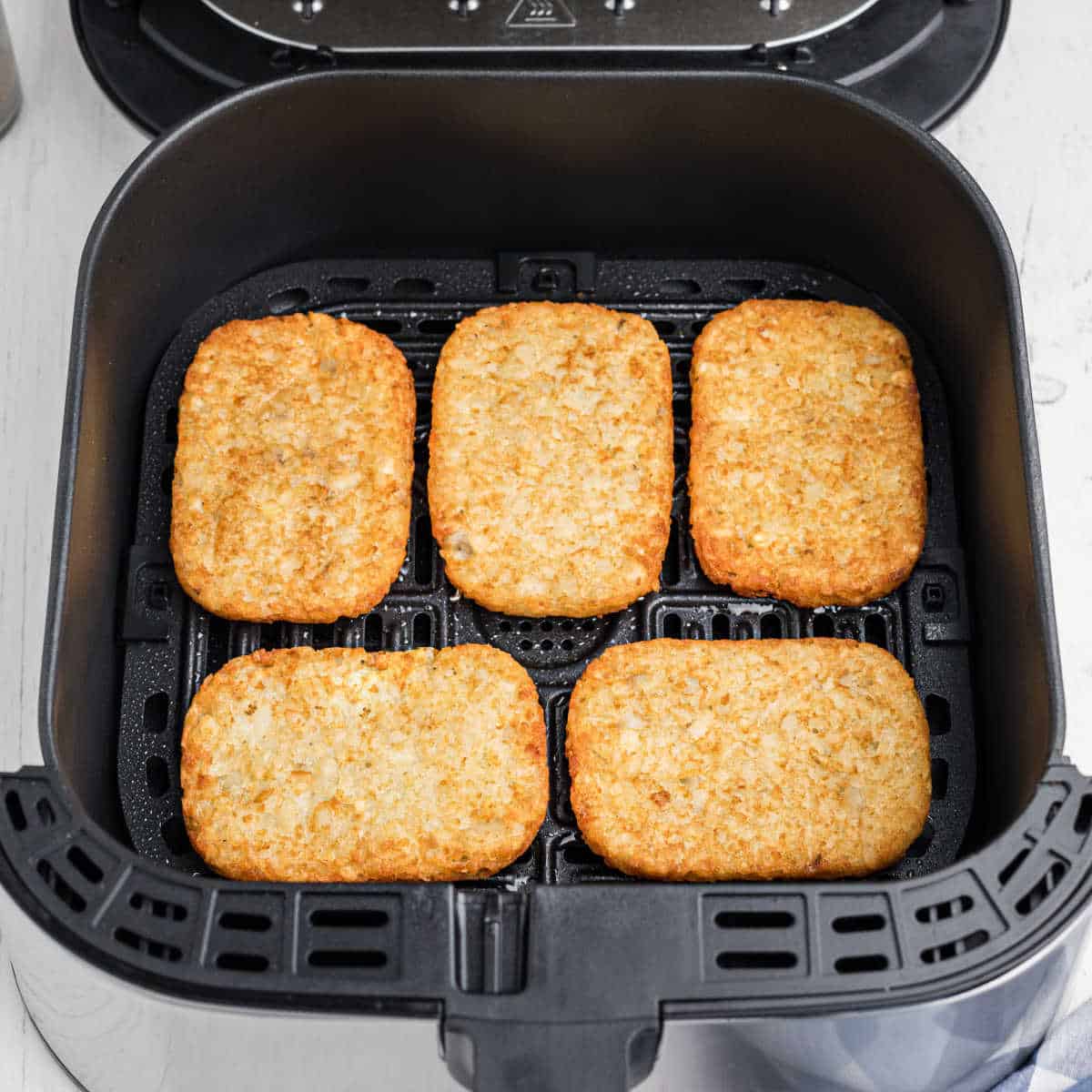
Choosing the right potato simplifies the rest of the process. Because russets are so starchy, they benefit from a quick rinse to remove excess surface starch, which prevents the shreds from clumping together into a single dense cake. Once rinsed and dried, they are ready to transform into golden, crispy patties in either an air fryer or a skillet.
Remove starch and moisture for crunch
The difference between a soggy, steamed mess and a golden, shattering crust comes down to two variables: starch and water. Potatoes are essentially bags of starch granules suspended in water. When you shred them, you rupture those cells, releasing surface starch that acts like glue. If left on the potato, that starch gelatinizes during cooking, creating a soft, gummy barrier that prevents the outside from crisping.
To fix this, you need to wash the starch away and then aggressively remove the water. Think of this process as preparing a canvas; if the surface is wet and sticky, the paint (the crust) won't adhere or crisp properly. You are essentially stripping the potato of everything that isn't the structural fiber you want to crisp up.
Rinse until the water runs clear
Place your shredded potatoes in a large bowl and cover them with cold water. Swirl them around with your hands, squeezing gently to release the cloudy starch. Drain the milky water and repeat. You will know you are done when the water remains relatively clear and the potato shreds look opaque rather than slimy. This step removes the surface starch that causes sticking and sogginess.
Squeeze out every drop of water
Drain the potatoes in a colander, then transfer them to a clean kitchen towel or several layers of cheesecloth. Gather the edges and twist tightly over the sink. Apply firm, sustained pressure. You should be able to wring out a significant amount of liquid. If the shreds still feel damp to the touch, they will steam instead of fry. Dry shreds are non-negotiable for air fryer crispiness.
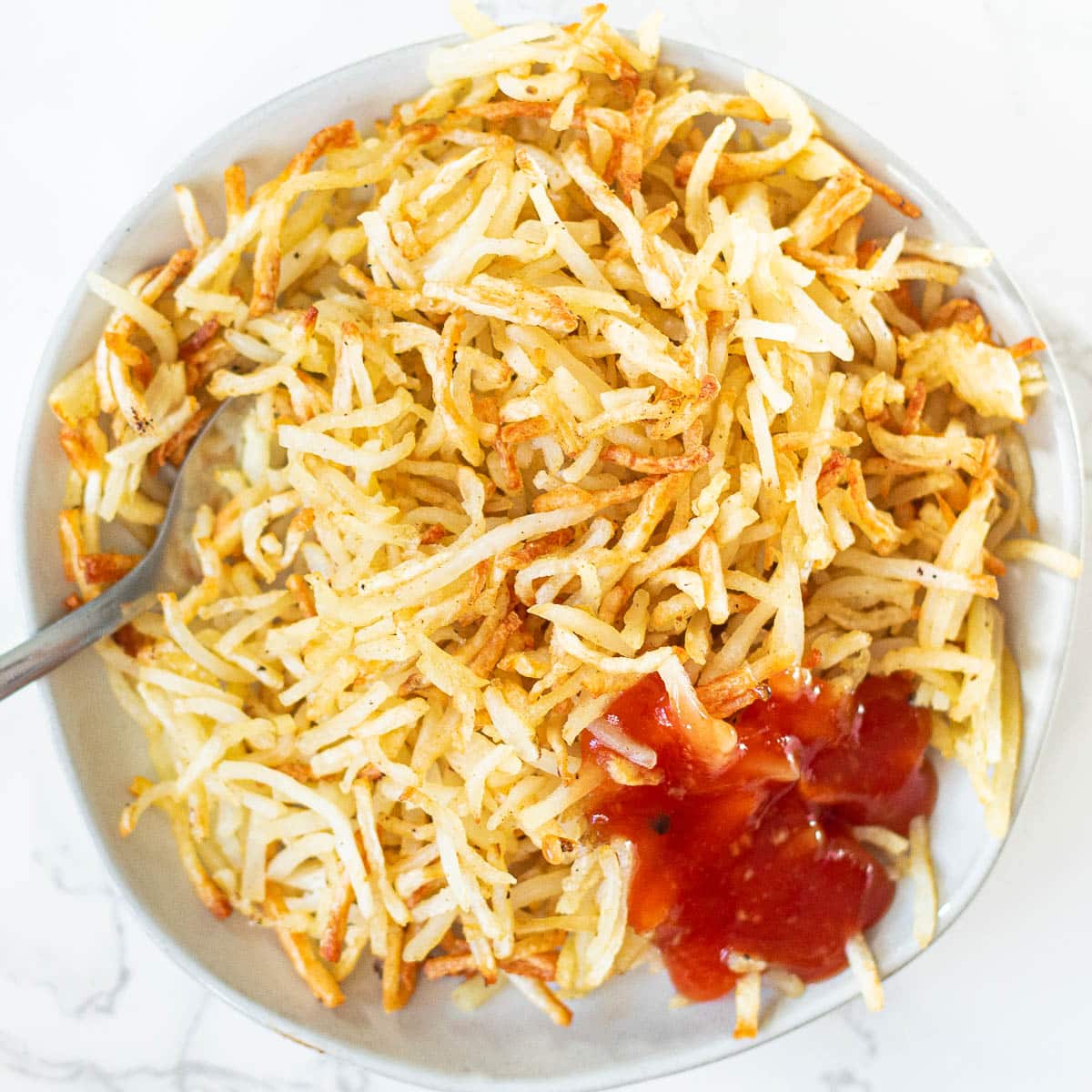
Ingredients and tools for the best hash brown recipe
Achieving air fryer and skillet crispiness comes down to managing starch and moisture. Russet potatoes provide the necessary starch structure, while a potato shredder ensures uniform strands that cook evenly. Minimal ingredients keep the flavor focused on the potato itself.
- 2 large russet potatoes: High starch content creates a fluffy interior and crispy exterior.
- 1 medium onion: Finely chopped to distribute flavor without large chunks.
- 1 large egg: Acts as a binder to hold the shredded potato and onion together.
- ¼ cup all-purpose flour: Absorbs excess moisture and helps form a crisp crust.
- Salt and pepper: Essential seasoning to enhance the natural potato flavor.
- Vegetable or canola oil: Provides the fat necessary for browning in the skillet or air fryer.
The tools are just as important as the ingredients. A box grater or food processor shredder is required to get the right texture. A large bowl is needed for mixing, and a spatula for flipping. For the air fryer, a non-stick spray prevents sticking without adding extra oil.
Air fryer hash browns: temperature and timing
The air fryer transforms hash browns by circulating hot air rapidly around the shreds. This method relies on high heat to drive off moisture quickly, creating a crisp exterior without the need for a large volume of oil. To achieve this, you must set the appliance to a high temperature and avoid overcrowding the basket.
Set the temperature to 400°F (200°C)
High heat is non-negotiable for crispiness. At 400°F (200°C), the surface of the potato shreds reaches the Maillard reaction temperature rapidly. This browning process develops flavor and texture. Lower temperatures will simply dry out the potatoes, leaving them leathery or soggy rather than crunchy. If your air fryer runs hot, you can drop the temperature to 390°F (200°C), but do not go lower.
Do not overcrowd the basket
Air needs space to circulate. If you pile the hash browns too high, the hot air cannot reach the bottom layers. These hidden shreds will steam in their own released moisture instead of frying. Spread the potatoes in a single, even layer. If you are making a large batch, cook in two rounds. The second batch will often crisp up faster because the air fryer is already preheated and the basket is dry.
Cook for 15–20 minutes, shaking halfway
Start checking your hash browns at the 15-minute mark. The exact time depends on the thickness of your shreds and the power of your specific air fryer. Shake the basket or flip the hash browns halfway through cooking to ensure even browning on all sides. Look for golden-brown edges and a firm, crispy texture. If they are still soft, add 2–3 minutes and check again.
Skillet hash browns: heat management and flipping
The skillet method relies on conduction rather than the convective air circulation of an air fryer. To replicate that crispiness, you need a heavy-bottomed pan—cast iron or carbon steel works best—because it holds heat steady when the cold potato hits the surface. A thin pan loses temperature too quickly, steaming the potatoes instead of frying them.
Patience is the primary ingredient here. Once the potatoes are in the pan, resist the urge to stir. You are waiting for the Maillard reaction to create a structural crust. This crust acts as a barrier, sealing in moisture while the exterior dehydrates and crisps. If you move the potatoes too early, you break the bond forming between the starch and the pan, resulting in soggy, fragmented shreds.
Flipping is the most critical technical step. Unlike the air fryer, where you shake the basket, the skillet requires a confident, single-motion flip or a careful turn with a spatula. The goal is to preserve the integrity of the crust on the first side. If the potatoes stick, they aren't ready; give them another minute. A properly cooked side should release easily from the pan, indicating that the starch has fully gelatinized and caramelized.
Why Your Hash Browns Fail
Sogginess and burning are the two most common pitfalls when making hash browns, but they stem from the same root cause: starch and moisture management. Potatoes are roughly 80% water and filled with surface starch. If that starch isn't rinsed away, it acts like glue, preventing crispness. If the water isn't removed, the potato steams instead of frying.
Burning usually happens when the heat is too high for the moisture content. If the pan is screaming hot but the potatoes are damp, the exterior chars before the interior dries out. In an air fryer, overcrowding the basket traps humidity, leading to uneven cooking. Spread the shreds in a thin, even layer to maximize surface area exposure to the hot air.
The fix is simple: rinse until the water runs clear, squeeze until dry, and cook with high heat in a single layer. This ensures the starch gelatinizes and then degrades into a crisp crust rather than a gummy center.
No comments yet. Be the first to share your thoughts!