
Thaw and squeeze out moisture
Water prevents crispiness. Frozen hash brown shreds contain ice crystals that turn to steam in hot oil, steaming the potatoes instead of frying them. Removing this moisture before cooking is the most critical step for a golden crust.
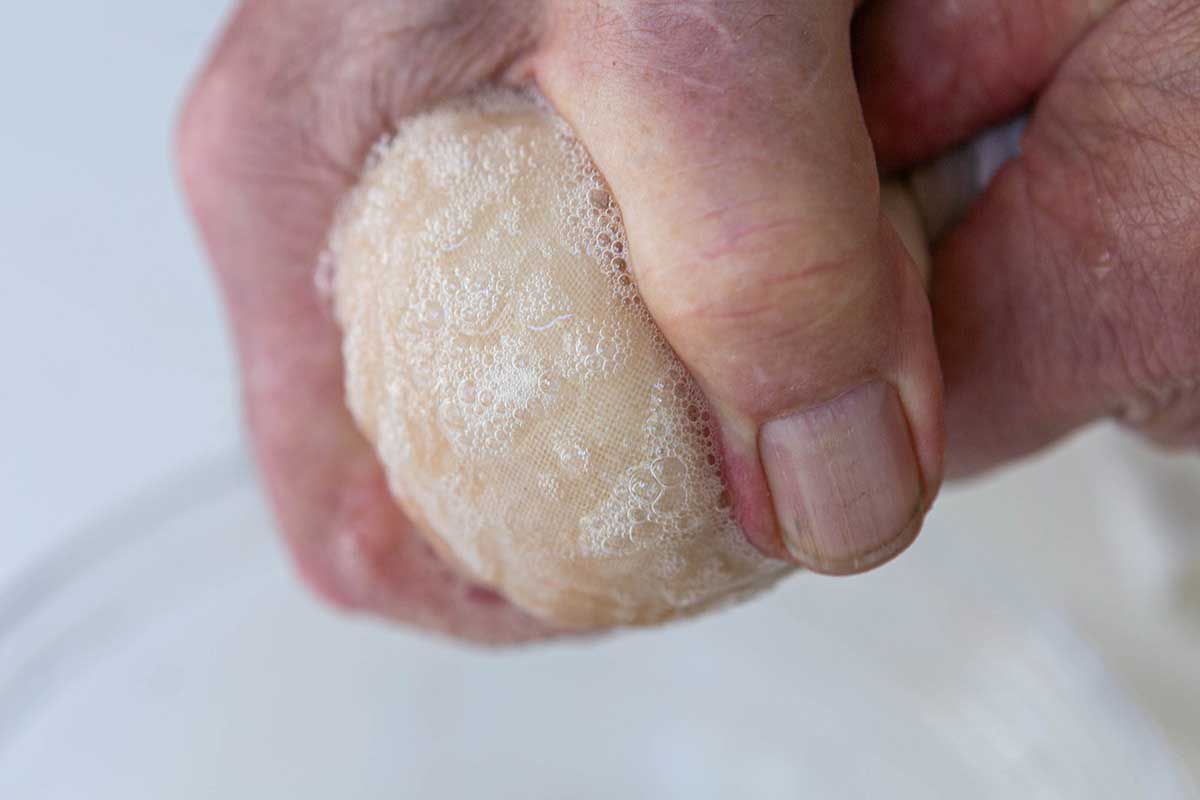
Let frozen shreds sit in a colander at room temperature for 10–15 minutes. They should be loose enough to separate but still cold. Do not microwave them, as this cooks the edges unevenly. Transfer the shreds to a clean, lint-free kitchen towel or cheesecloth. Gather the edges and twist tightly over the sink, applying firm, consistent pressure to extract as much water as possible. If the shreds still feel damp, repeat with a dry section of the towel. Dry shreds are non-negotiable for diner-style crispiness.
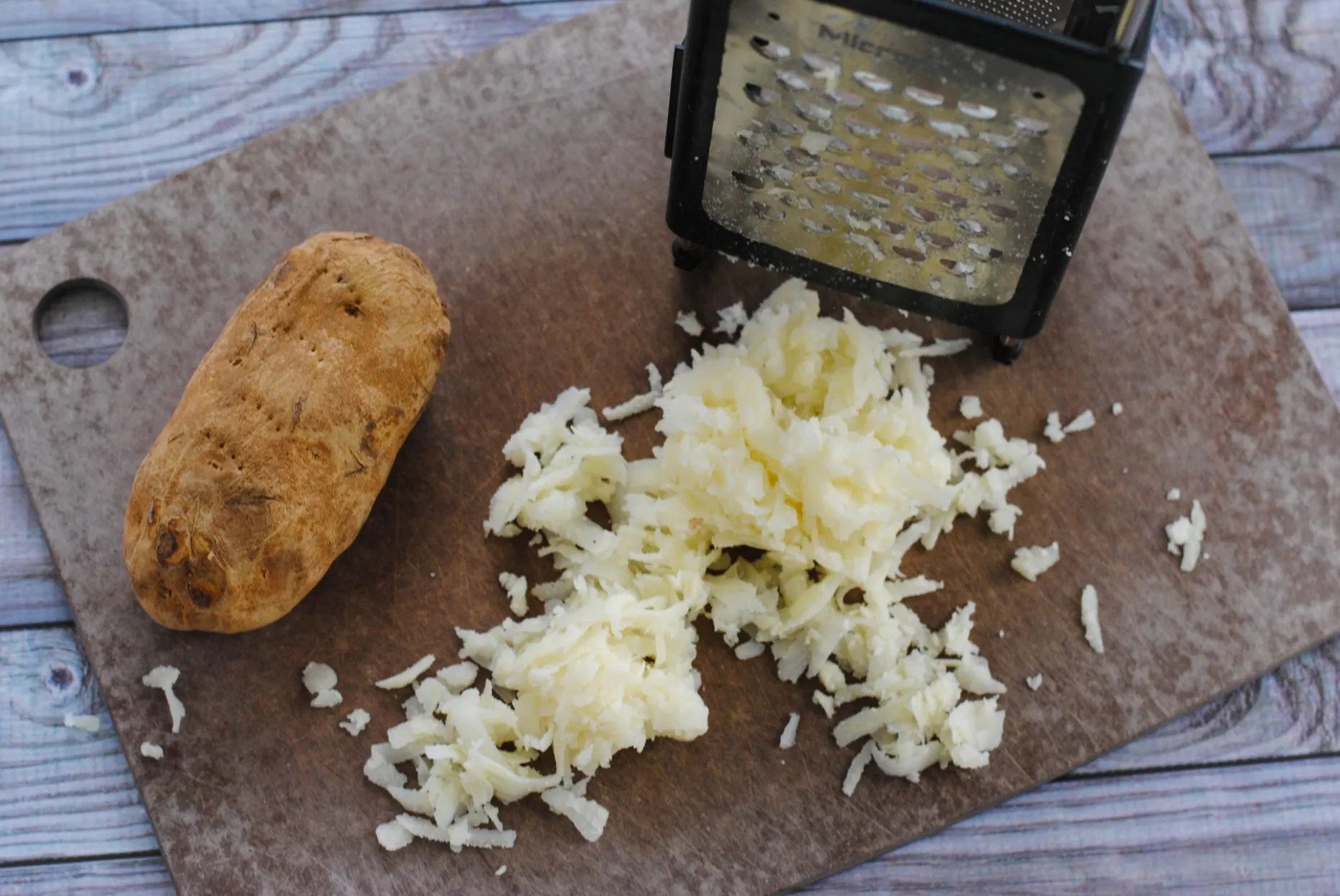
Let the frozen shreds sit in a colander for 10–15 minutes. They should be loose enough to separate but still cold. Do not microwave them, as this will start cooking the edges and create uneven moisture pockets.
Place the shreds in a clean kitchen towel. Gather the edges and twist tightly over the sink. Apply firm pressure to extract as much water as possible. Repeat with a dry section of the towel if the shreds still feel damp.
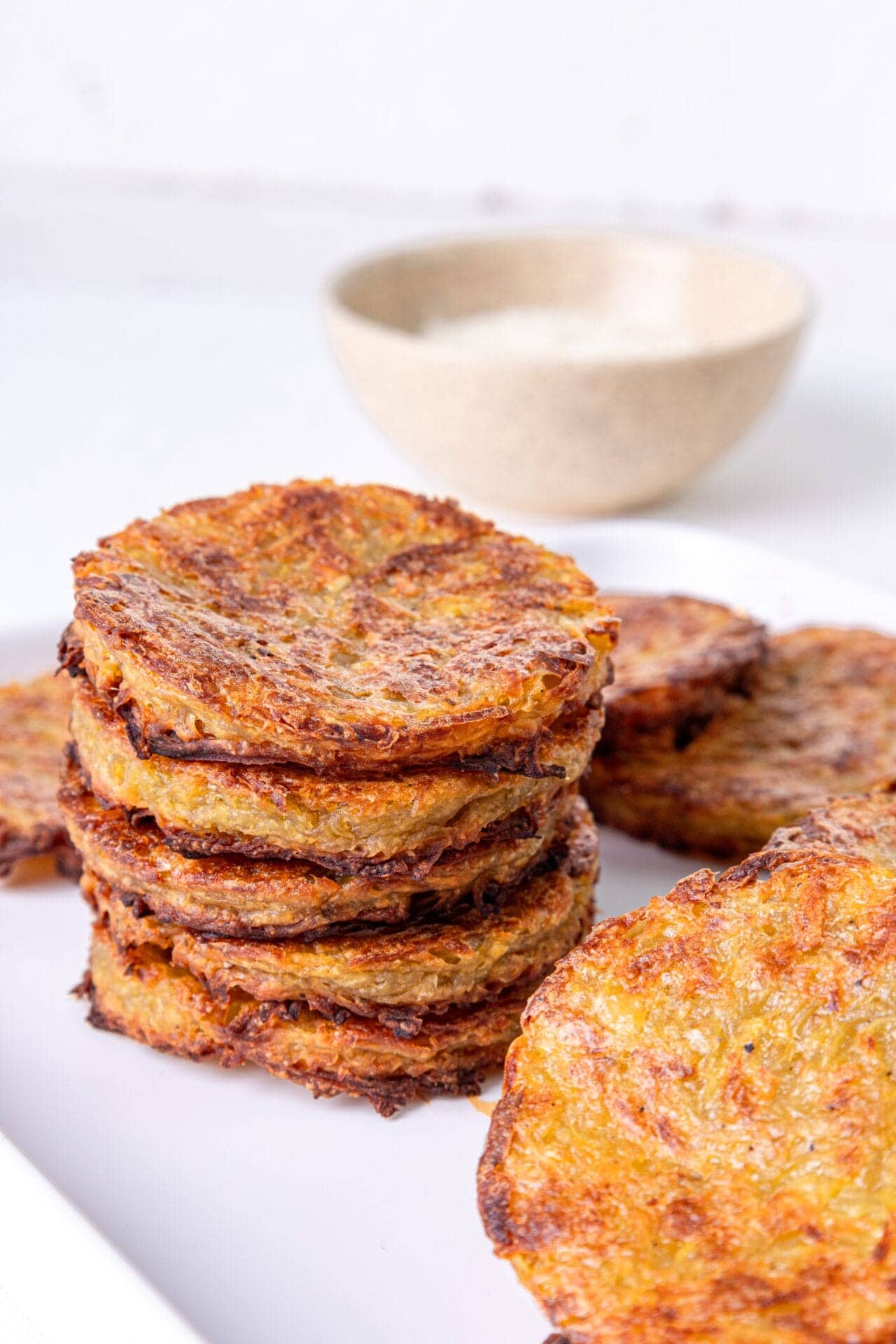
Inspect the shreds. They should look matte and feel dry to the touch. If you see any visible water droplets or clumping, squeeze again. Dry shreds ensure immediate sizzling and maximum crispiness upon contact with hot oil.
Season with cornstarch and spices
This step engineers the texture of the final product. Toss the shreds with one tablespoon of cornstarch for every two cups of potatoes. Cornstarch gelatinizes at high heat, forming a thin, rigid shell around each strand. Unlike flour, which contains gluten and can become chewy, cornstarch stays crisp. It acts as a barrier, preventing internal moisture from steaming the exterior.
Add dry spices now: salt, black pepper, and paprika. Adding them at this stage allows the spices to toast in the oil, releasing essential oils. Avoid wet ingredients like fresh onions or garlic, which introduce moisture that fights the cornstarch barrier. Mix gently but thoroughly until every shred is lightly dusted. The visual cue is a matte, dry finish. If they look wet or shiny, you have added too much liquid or not enough starch.
Spread the coated shreds in a single layer on a baking sheet. This ensures the cornstarch adheres evenly and doesn't clump. If the shreds are still frozen solid, let them sit for five minutes to thaw slightly so the coating sticks, but do not let them release their water content.
Place frozen shreds in a large bowl. Sprinkle one tablespoon of cornstarch per two cups of potatoes. Toss until every strand is lightly coated in a matte, dry dusting.
Add salt, black pepper, and paprika. Mix gently to distribute evenly. The goal is flavor without moisture; avoid wet ingredients like fresh onions or garlic.
Lay the coated shreds on a baking sheet in a single layer. This prevents clumping and ensures the cornstarch sets properly before hitting the hot oil.
Spread shreds in a single layer
The geometry of your pan dictates the texture. Overcrowding traps steam, turning shreds into a soggy mass. A single layer ensures every strand makes direct contact with the hot surface, allowing moisture to escape and Maillard browning to occur.
Use a 10- to 12-inch cast iron skillet or heavy-bottomed nonstick pan. These tools retain heat effectively, preventing temperature drops when cold hash browns hit the surface. Spread the shreds evenly across the bottom. Do not pile them up. If you have more shreds than fit, cook in batches.
Resist the urge to stir. Let them cook undisturbed for 5 to 10 minutes over medium-high heat. This allows a solid, golden crust to form. When the edges look set and the bottom is deeply browned, flip or serve. Touching them too early tears the crust and releases starch, creating a sticky finish.
Heat your 10- to 12-inch cast iron skillet over medium-high heat. Add oil or butter and let it shimmer before adding the potatoes.
Spread the frozen hash brown shreds evenly across the skillet. Ensure they are in a single layer with no overlapping piles to prevent steaming.
Let the potatoes cook for 5 to 10 minutes without touching them. This allows a solid, golden crust to form on the bottom.
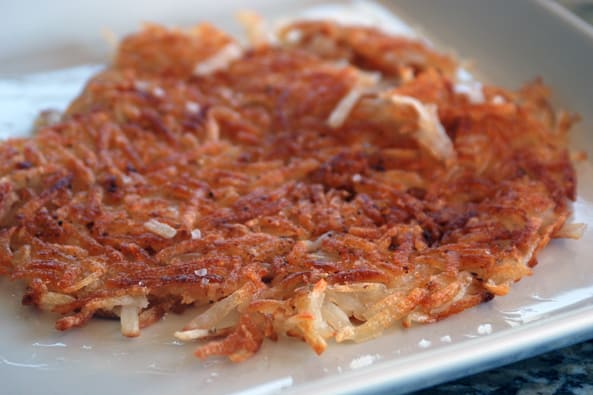
Once the bottom is deeply browned and the edges look set, flip the hash browns or slide them onto a plate to serve.
Cook undisturbed until golden
Once the potatoes hit the pan, resist the urge to stir. The goal is to let the Maillard reaction occur without interruption, creating a unified, golden-brown crust. Keep the heat at medium-high. This temperature evaporates surface moisture quickly without burning the interior before it thaws. If the pan smokes excessively, the oil is too hot; if nothing sizzles, it is too cold. You want a steady, aggressive sizzle.
Leave the hash browns completely undisturbed for 5 to 10 minutes. During this time, the starches on the bottom layer caramelize and bond to the pan. Moving them now tears the crust and releases moisture, turning crispy edges into soggy mush. Patience here directly correlates to the final crunch.
After 5 minutes, gently lift one edge with a spatula. If the potatoes release easily and the underside is deep golden brown, they are ready to flip. If they stick, give them another 2 minutes. Forcing them too early will break the crust.
Once the bottom is set, flip the hash browns in sections or as a whole patty. Cook the second side for another 3-5 minutes until it matches the first. The interior should be fully thawed and hot, while both sides remain crisp.
Use a metal spatula with a thin, flexible edge to slide under the potatoes. A dull or thick spatula will crush the shreds. If cooking multiple batches, keep finished hash browns warm in a 200°F (95°C) oven on a wire rack to maintain crispness.
Flip and finish the second side
Once the first side has developed a deep golden crust, flip. Attempting to turn a fragile patty with a single spatula often results in breakage. Use two wide metal spatulas or a lid-assisted pan toss to preserve structure. If using a lid, slide it over the skillet, invert the pan over the lid, and slide the hash browns back in. This ensures the raw shreds land in the hot oil without sticking.
Use two wide metal spatulas to gently lift and turn the patty. Avoid cutting into the shreds; keep the mass intact to prevent loose pieces from burning. A lid-assisted flip is the safest option for beginners to maintain structural integrity.
After flipping, lower the burner to medium-low. This allows the interior to cook through without scorching the exterior. The goal is to drive off remaining moisture while allowing starches to gelatinize. Cook for 4–5 minutes, pressing down lightly with the spatula to ensure even contact. Check for uniform browning. The hash browns are done when the patty releases easily and the edges feel firm. If the bottom is dark but the center feels soft, cover the pan with a lid for one minute to trap steam and finish the interior. Transfer immediately to a wire rack.
Best tools for crispy results
Choosing the right equipment supports high heat without steaming the potatoes.
Cast iron vs. stainless steel
Cast iron holds heat better than stainless steel, which is critical when adding frozen shreds that drop pan temperature. Stainless steel heats faster but loses heat quickly, requiring more attention to avoid burning.
| Material | Heat Retention | Crisping | Maintenance |
|---|---|---|---|
| Cast Iron | High | Excellent | Seasoned |
| Stainless Steel | Medium | Good | Easy |
Recommended equipment
A heavy skillet and a reliable shredder ensure consistent results.

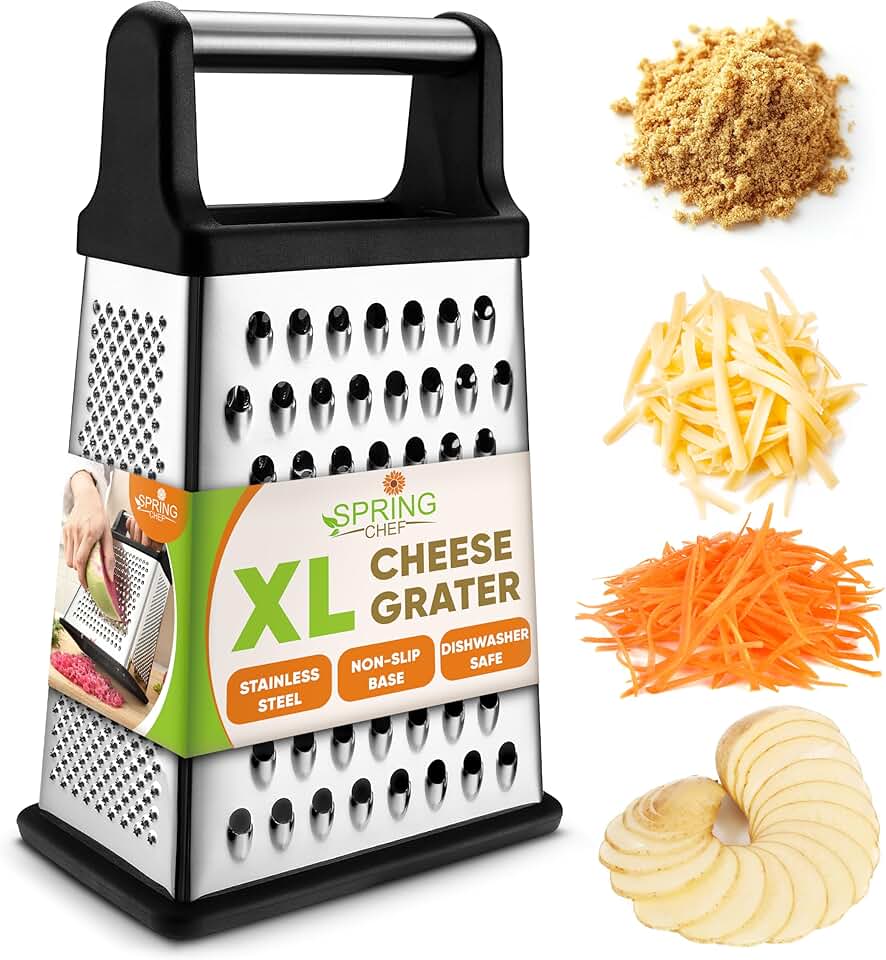
As an Amazon Associate, we may earn from qualifying purchases.
Troubleshoot mushy hash browns
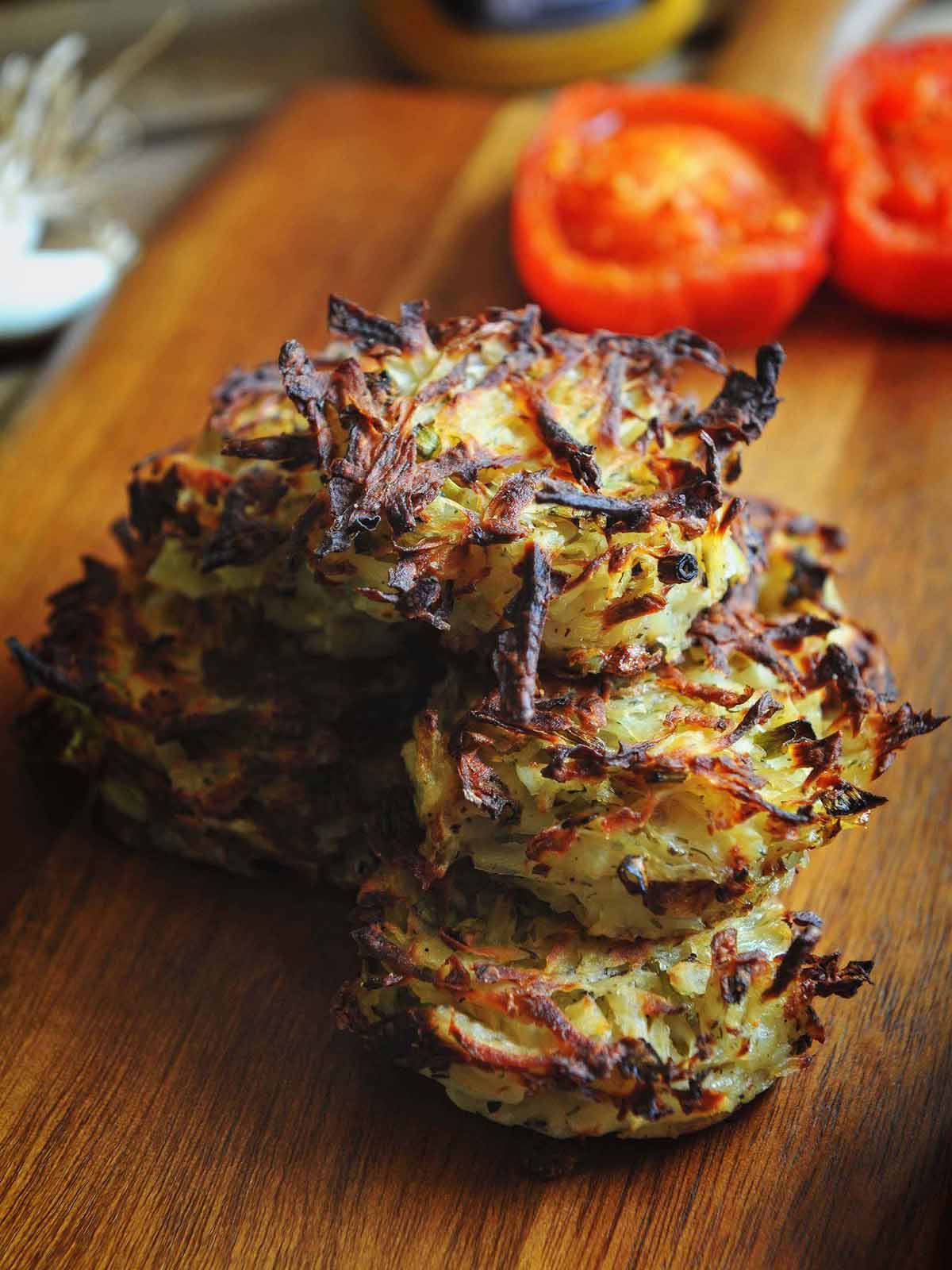
Mushy hash browns are a moisture problem. Frozen shreds contain ice crystals that release steam. If shreds are wet or clump, the pan temperature drops, causing steaming rather than frying. Start by squeezing the shreds in a clean towel. You should see a pool of water. If they still feel damp, repeat. Dry shreds hit the pan and brown immediately, creating a crust that locks in heat.
Manage heat carefully. Use medium-high heat, not high. If the pan is too hot, the outside burns before the inside thaws; if too low, potatoes sit in released moisture. Spread shreds in a single, even layer. A crowded pan traps steam. If hash browns stick together or look wet, increase heat slightly and press down gently with a spatula to break up clumps. Let them cook undisturbed for 3-4 minutes until a golden crust forms. Flip only once.
The final test is visual and auditory. Crispy hash browns sizzle loudly and pull away from the pan edges. If they stick or sound quiet, they need more time and heat. Remove them to a wire rack or paper towel-lined plate immediately to prevent residual heat from steaming the bottom crust.
Checklist for perfect crispy hash browns
-
Defrost and Drain: Thaw frozen shreds completely in a colander. Press out every drop of water.
-
Dry Thoroughly: Pat shreds with paper towels. Moisture is the enemy of crispness.
-
Coat with Cornstarch: Toss shreds with 1-2 tablespoons of cornstarch per pound. This creates a protective, crunchy shell.
-
Heat Oil Correctly: Use 2-3 tablespoons of oil in a skillet. Heat to 350°F (175°C) until shimmering.
-
Spread in Single Layer: Press shreds firmly into the pan. Do not overcrowd. Cook undisturbed for 5-7 minutes per side.
-
Flip Once: Use a wide spatula. Flip only when the bottom is deep golden brown.
-
Drain Immediately: Transfer to a wire rack or paper towels to keep the bottom crisp.
Thaw frozen shreds completely. Squeeze out excess water using a clean kitchen towel or paper towels. Dry shreds are essential for a crisp texture.
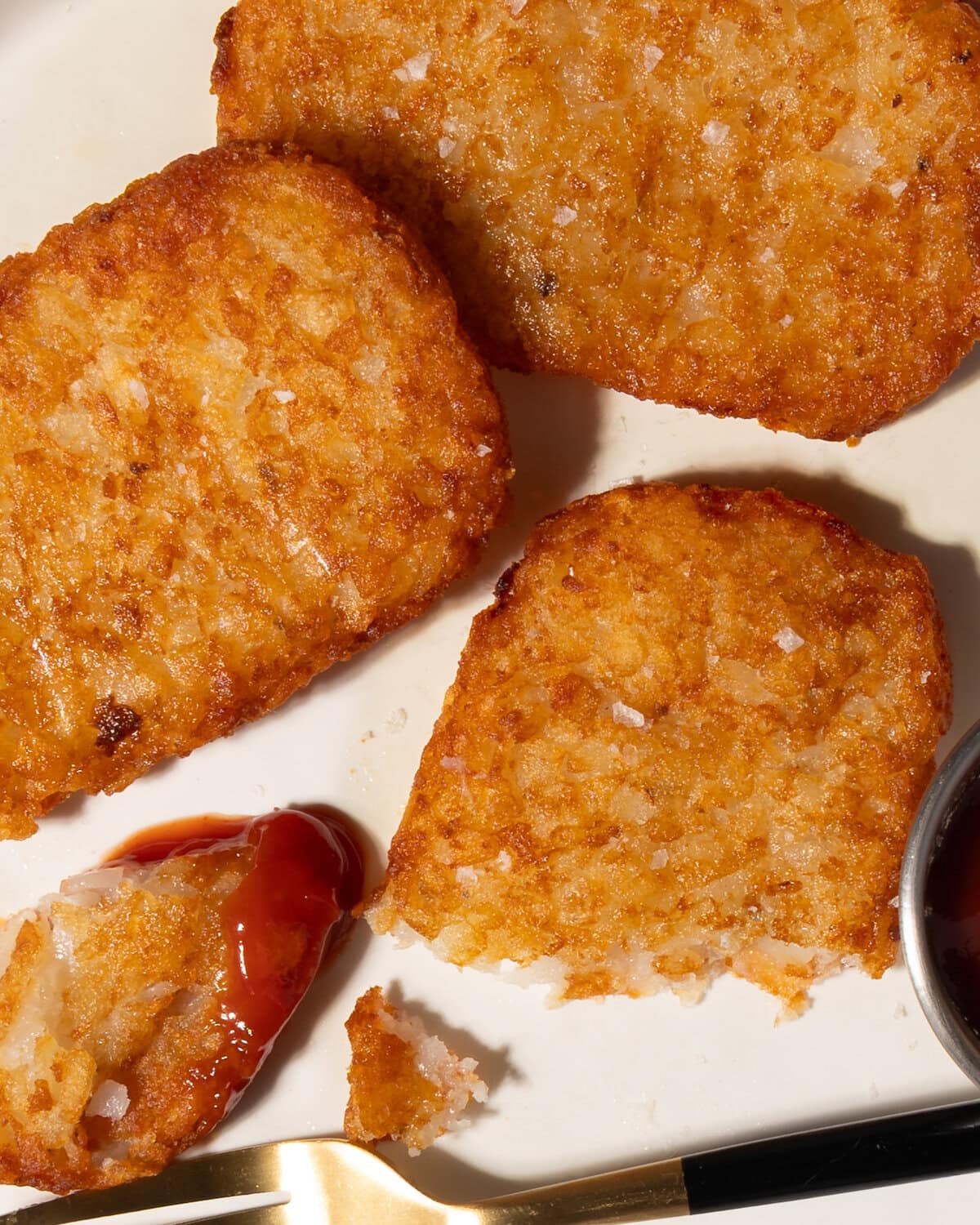
Toss the dried shreds with 1-2 tablespoons of cornstarch per pound. This coating absorbs residual moisture and creates a crunchy exterior.
Heat 2-3 tablespoons of oil in a skillet over medium-high heat. Spread shreds in a single, compact layer. Press down firmly.
Cook for 5-7 minutes without moving. Flip only once when the bottom is golden brown. Cook the second side for 5-7 minutes.
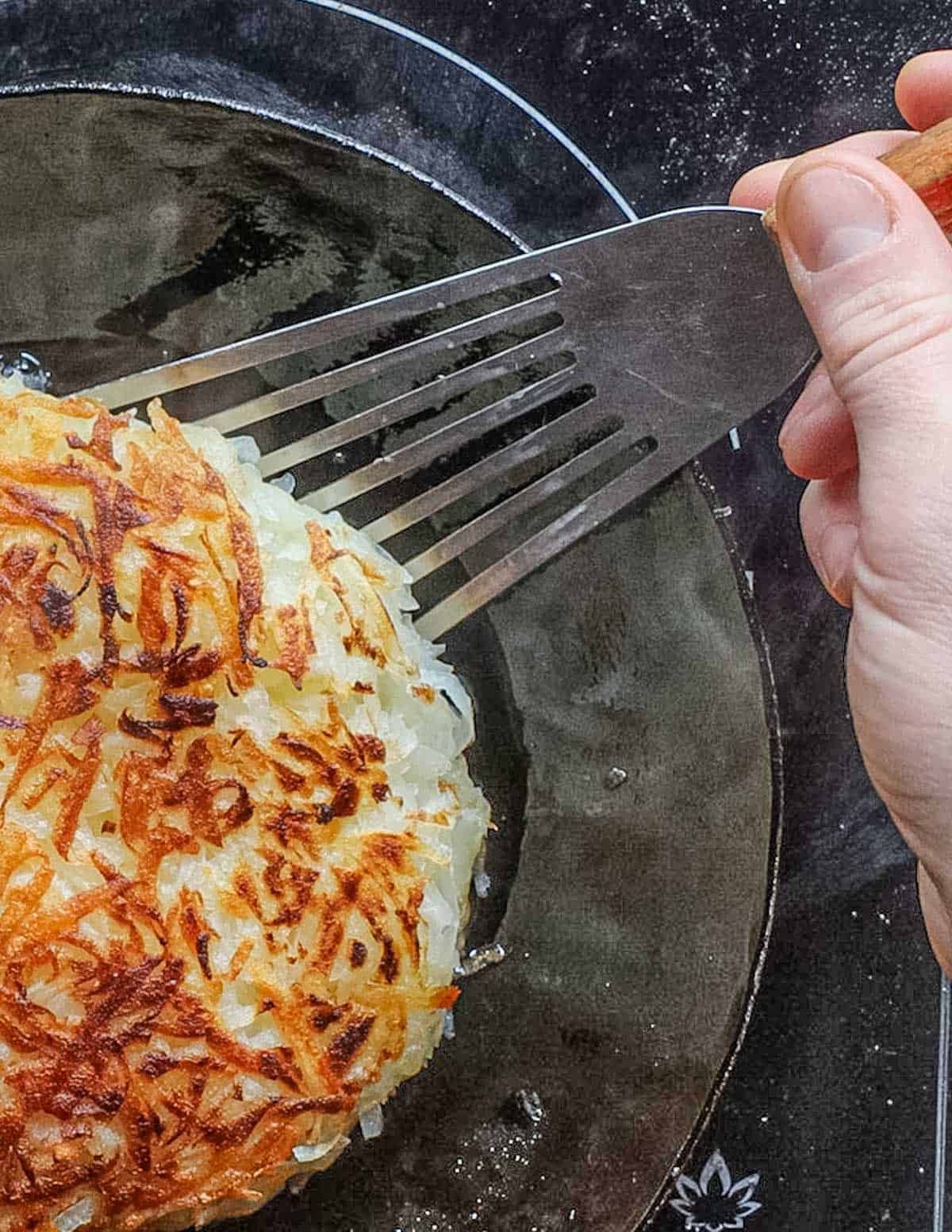
Transfer hash browns to a wire rack or paper towels immediately. This prevents steam from softening the crispy bottom.
No comments yet. Be the first to share your thoughts!