The secret to crispy hash browns
The difference between a soggy, pale breakfast side and a diner-quality, golden-brown crust comes down to one factor: moisture control. Potatoes are approximately 80% water. When grated raw potatoes hit hot oil, that internal water must evaporate before the surface temperature can rise high enough to trigger the Maillard reaction—the chemical process that creates browning and crispiness.
If you skip the drying step, the potato steams itself in its own juices. The result is a soft, grayish disc rather than a crisp lattice. Removing that water is the technical prerequisite for texture.
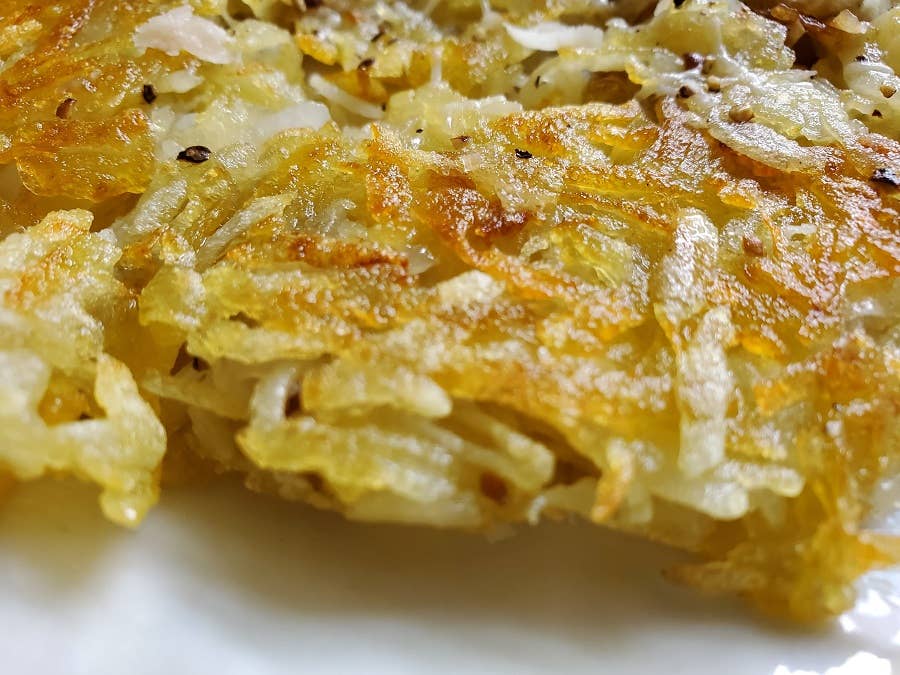
To achieve this, you must rinse the grated potatoes thoroughly to remove surface starch, then squeeze them aggressively. A clean kitchen towel or cheesecloth works best here. You need to wring out the liquid until the potato shreds feel dry to the touch and clump together loosely when pressed. If any liquid pools in the bottom of the bowl, you haven't removed enough moisture.
Once the potatoes are dry, heat management becomes the secondary driver of success. Preheat your skillet to medium-high before adding the oil. The pan needs to be hot enough to immediately sear the exterior of the potato shreds, locking in the crispness. Adding potatoes to a lukewarm pan allows the remaining internal moisture to leak out slowly, leading to a greasy, tough texture.
Ingredients and Tools
Crispy hash browns rely on precise moisture control and high heat. The goal is to remove as much water from the potato as possible before it hits the skillet. This section outlines the minimal ingredients and the essential tool required to achieve that texture.
Essential Ingredients
You need only three core components to build the base. The quality of the potato matters more than the quantity.
- Potatoes: Use 2-3 large Russet potatoes. Russets have high starch and low moisture, which is critical for browning. Avoid waxy varieties like Yukon Gold or red potatoes, as they retain too much water and become gummy.
- Oil: Use a neutral oil with a high smoke point, such as vegetable, canola, or avocado oil. Butter burns at the high temperatures needed for crispiness. You will need about 3-4 tablespoons for a standard 12-inch skillet.
- Salt: Kosher salt is preferred for even distribution. Add it during cooking to draw out excess moisture, and a final pinch at the end for surface flavor.
The Potato Shredder
The single most important tool is a box grater or a mandoline slicer with a shredding blade. A food processor can work but often creates uneven shreds that cook inconsistently. A box grater allows you to control the shred size, which directly impacts the final texture.
Fine shreds create a dense, cake-like hash brown. Coarse shreds create a loose, wispy, and extra-crispy texture. For the classic diner-style crispy hash brown, aim for medium-coarse shreds. Consistency in shred size ensures that every piece browns at the same rate, preventing burnt edges and undercooked centers.
Optional Add-ins
Most traditional recipes rely solely on potato, oil, and salt. However, you can add aromatics for depth. Finely diced onion or minced garlic can be sautéed in the oil before adding the potatoes. These should be added sparingly, as they introduce additional moisture and can soften the crispiness if not cooked thoroughly first.
Prep the potatoes correctly
Good texture comes from matching the cooking cue to the food, not from trusting the timer alone. Check thickness, moisture, and doneness before changing the recipe.
-
Prep evenlyCut, roll, portion, or spread the mixture evenly so every piece cooks at the same pace.
-
Control moisturePat, drain, rest, or reduce wet ingredients when excess liquid would soften the final texture.
-
Use the doneness cueLook for the recipe-specific sign of doneness instead of stopping at the first browned edge.
-
Let it settleCool or rest the finished food long enough for steam and structure to stabilize.
Cooking technique and heat
Start with measured ingredients and pay attention to the texture cue in the method. Most recipe problems come from changing thickness, moisture, or heat without adjusting the timing.
Troubleshooting soggy hash browns
The difference between a diner-quality crust and a steamed mess comes down to two variables: moisture content and pan real estate. When you pile shredded potatoes into a skillet, the water trapped in the starch granules turns to steam. That steam gets trapped under the layer, softening the exterior before it has a chance to brown. To fix this, you need to treat the potato like a sponge that must be wrung out completely.
Remove excess water aggressively
No amount of heat can evaporate surface water fast enough to create crispness. You must mechanically extract the liquid before the potatoes hit the pan. After shredding, rinse the potatoes in cold water to remove free starch, then squeeze them in a clean kitchen towel or cheesecloth with relentless pressure. You should be able to pour water out of the towel bundle. Dry potatoes fry; wet potatoes steam.
Avoid overcrowding the pan
Crowding is the most common reason for failure. When you add too much potato to the skillet, the temperature of the pan drops rapidly. The oil stops frying and starts boiling the released moisture. Give your hash browns space. Cook in batches if necessary. The potatoes should form a single, even layer in the skillet. If they are piled on top of each other, the bottom layer will never crisp.
Choose the right potato
Starchy potatoes like Russets are ideal for hash browns because they have low moisture and high starch content, which aids in binding and crisping. Waxy potatoes hold too much water and lack the structural integrity to form a crispy lattice. If you only have waxy potatoes on hand, add a tablespoon of cornstarch per pound of shredded potato to help draw out moisture and create a firmer crust.
Crispy Hash Brown FAQs
Why don't my hash browns get crispy?
Moisture is the enemy. Potatoes contain significant water content that turns to steam upon contact with the skillet, steaming the potatoes rather than frying them. If your hash browns turn out soggy or pale, you likely didn't extract enough liquid. Squeeze the grated potatoes in a clean kitchen towel or cheesecloth until no more water drips out. Dry potatoes ensure direct contact with the hot oil, which is necessary for the Maillard reaction and crust formation.
What is the secret to crispy hash browns?
The primary secret is rigorous moisture removal combined with proper heat management. You must squeeze the grated potatoes thoroughly to eliminate surface and internal water. Additionally, preheat your skillet to medium-high heat before adding the oil. This ensures the potatoes sizzle immediately upon contact, creating a rigid crust that locks in the interior texture without burning.
How do restaurants make hash browns so crispy?
Commercial kitchens rely on high-heat equipment and consistent technique. They typically use flat-top griddles that distribute heat evenly, allowing for a large surface area contact. They also often use a specific potato variety with lower moisture content and may incorporate a small amount of cornstarch or flour to absorb residual surface moisture and accelerate browning. For home cooking, a heavy cast-iron skillet mimics this high thermal mass.
Should I add cornstarch to hash browns?
Adding a tablespoon of cornstarch is optional but effective. It acts as a desiccant, absorbing excess surface moisture from the grated potatoes that squeezing might miss. The starch also creates a thin, glass-like crust when fried, enhancing the crunch factor. If your potatoes are very wet or if you prefer a more rigid, diner-style texture, include the cornstarch in the seasoning mix.
No comments yet. Be the first to share your thoughts!