
Why russet potatoes win
Start with measured ingredients and pay attention to the texture cue in the method. Most recipe problems come from changing thickness, moisture, or heat without adjusting the timing.
Shred, rinse, and dry
The texture of your hash browns is determined before the pan ever heats up. Russet potatoes are the standard choice for this best hash brown recipe because their high starch content provides the structural integrity needed for a crispy exterior. However, that same starch creates a gummy surface layer that prevents browning. To fix this, you must remove excess surface starch and moisture through a specific three-part workflow.
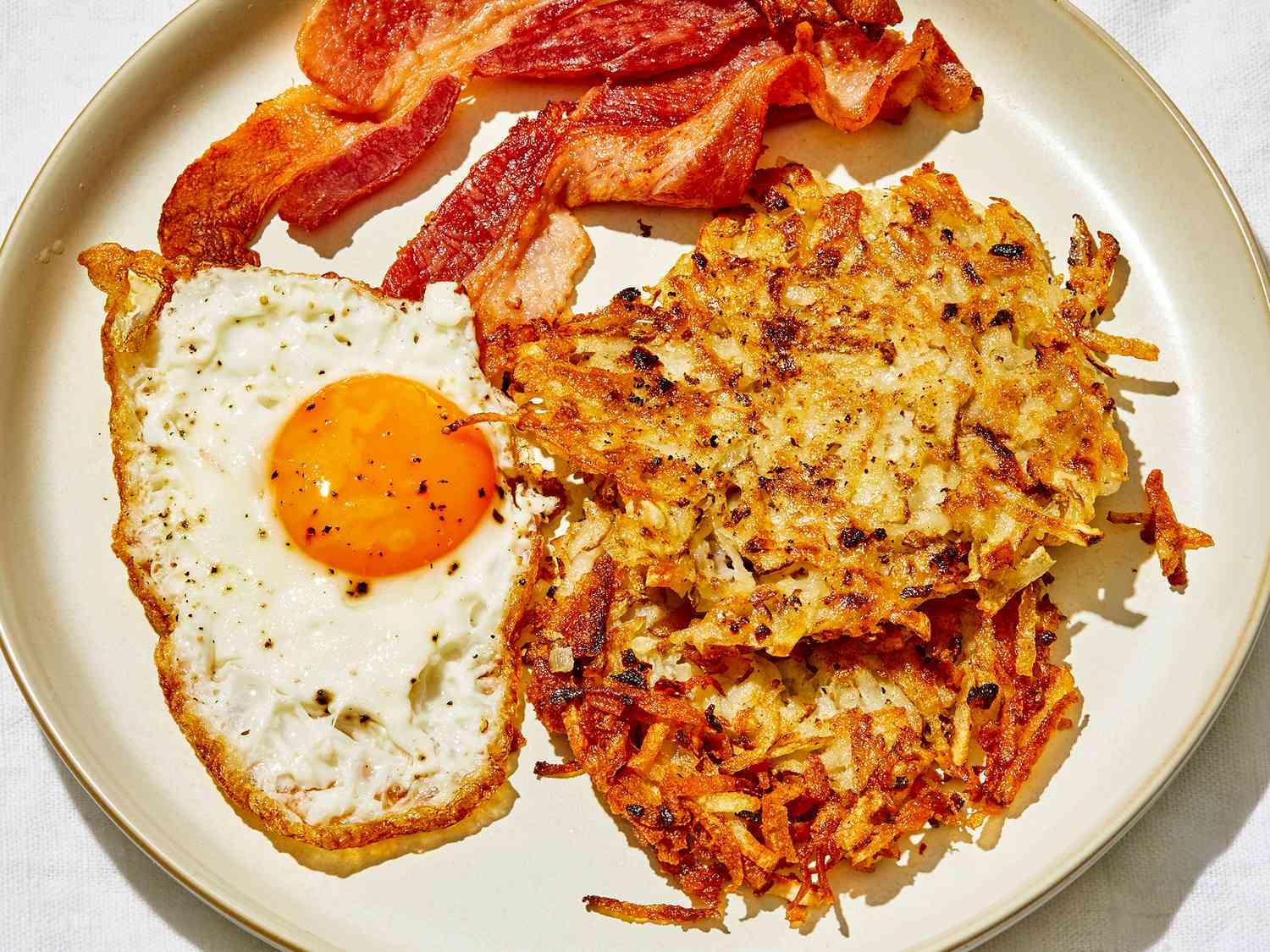
Use the medium holes on a box grater or a food processor fitted with a shredding disk. Aim for uniform strips about the width of a matchstick. Irregular shreds cook at different rates, leading to some pieces burning while others remain soggy. Avoid fine graters, which turn the potato into a paste that steams rather than fries.
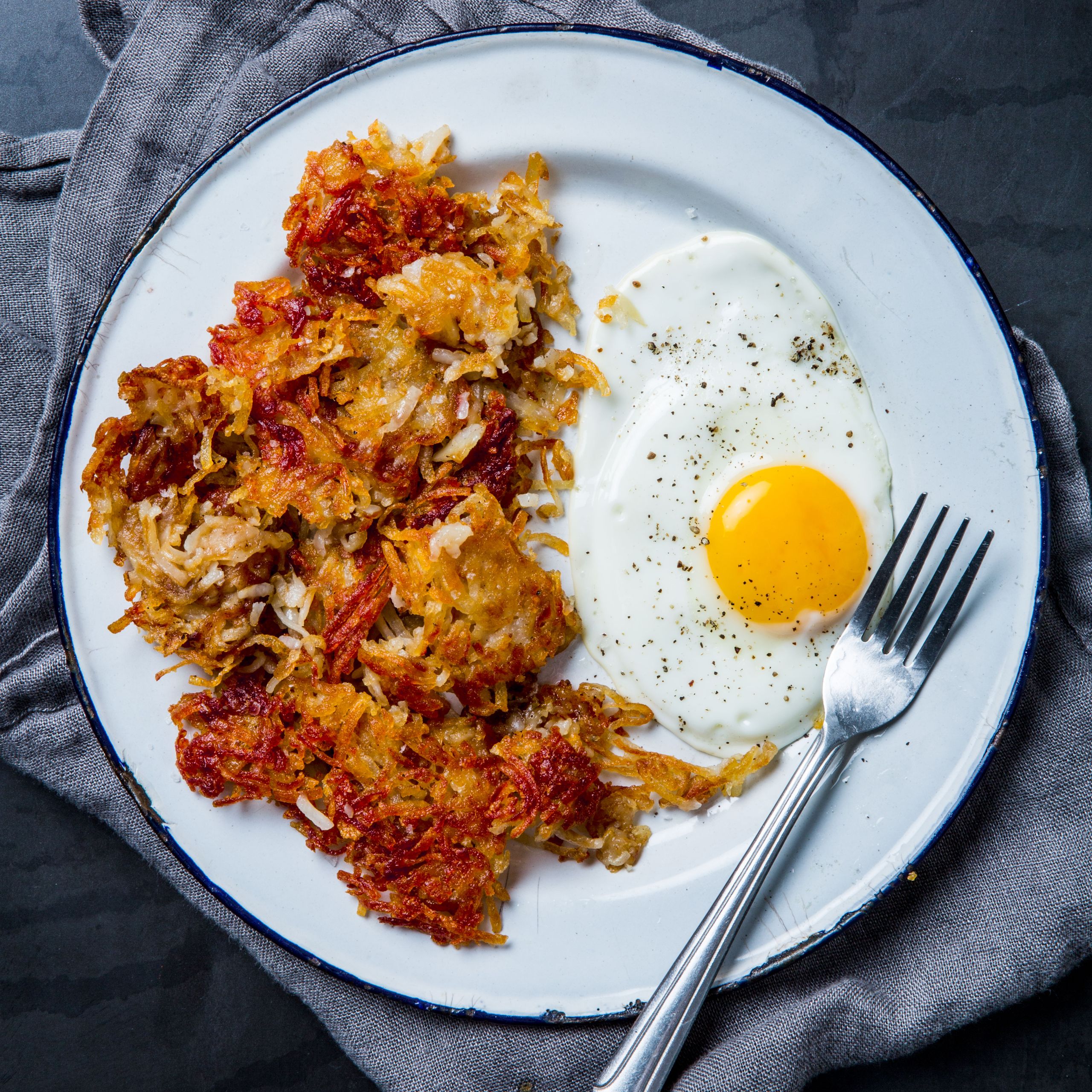
Place the shredded potatoes in a fine-mesh colander and run cold water over them for 30 to 60 seconds. Agitate the shreds with your hands to ensure every strand is rinsed. You will see the water turn milky white; this is the loose starch being washed away. Removing this starch is critical because it eliminates the glue that causes the hash browns to stick together in a dense, doughy mass.
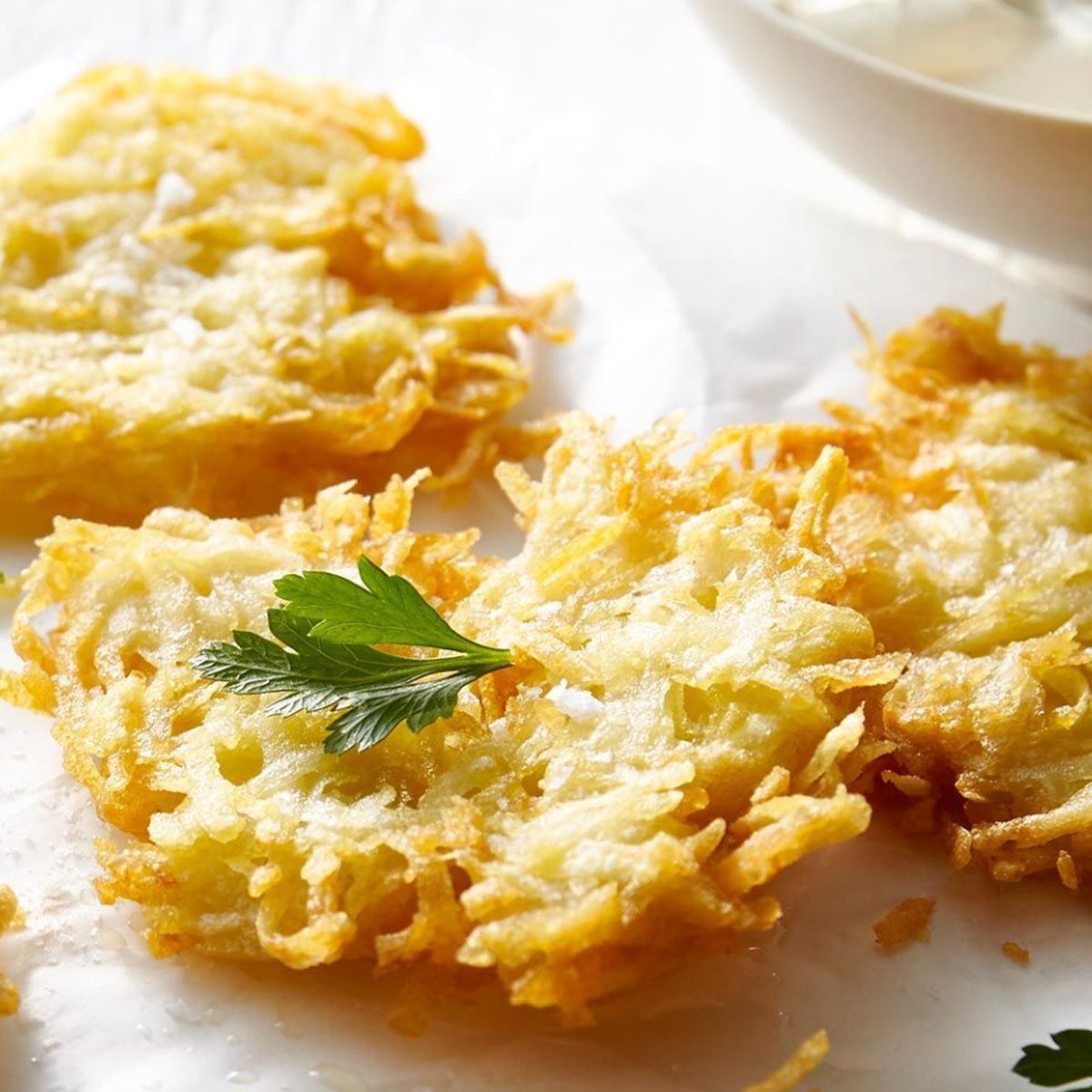
Transfer the rinsed potatoes to a clean kitchen towel or a set of cheesecloth bundles. Fold the cloth over the potatoes and twist tightly over the sink, applying maximum pressure. You must remove as much water as possible; the pile of shreds should feel damp but not wet. If the potatoes remain saturated, the water will boil in the pan instead of frying, resulting in a soft, steamed texture rather than a crisp crust.
This preparation creates a dry, clean canvas for frying. The removal of water and loose starch ensures that the heat from the oil can immediately trigger the Maillard reaction, creating the golden-brown crust that defines a great hash brown. Any skipped step here will compromise the final texture, regardless of how well you cook them later.
The skillet frying method
The difference between a soggy potato pile and a golden, shattering crust comes down to moisture control and starch chemistry. When you press shredded potatoes into a hot skillet, you are creating a thermal environment where water must escape faster than it can steam the interior. This rapid evaporation allows the exposed starch granules to gelatinize and then undergo the Maillard reaction, forming the complex, savory compounds that define the best hash brown recipe.
Start by heating a heavy-bottomed skillet, preferably cast iron, over medium-high heat. Add enough neutral oil with a high smoke point, such as vegetable or canola oil, to coat the bottom generously. The oil acts as a conductive medium, transferring heat evenly to the potato surface. Wait until the oil shimmers but does not smoke; this indicates it has reached the optimal temperature range of 350°F to 375°F (175°C to 190°C).
Managing moisture and starch
Dry potatoes are non-negotiable. Any residual water from rinsing will lower the skillet temperature instantly, causing the potatoes to steam rather than fry. Squeeze the shredded potatoes firmly in a clean kitchen towel or cheesecloth until no more liquid emerges. This step removes surface moisture that interferes with browning and prevents the formation of a gelatinous layer that traps steam.
When you add the potatoes, press them down firmly with a spatula to create a uniform patty. This increases surface contact with the hot pan, ensuring even heat transfer. The starches on the surface will begin to fuse together, creating a cohesive structure that can be flipped without disintegrating. Avoid moving the hash browns for the first five to seven minutes; constant flipping prevents the crust from forming and leads to uneven cooking.
Achieving the crust
The goal is a deep amber color on the first side. Lift a corner to check; if the edges are crisp and browned, it is time to flip. Use a plate to help invert the patty if needed, then slide it back into the skillet. The second side typically requires slightly less time, about three to five minutes, as the interior is already cooking from the residual heat.
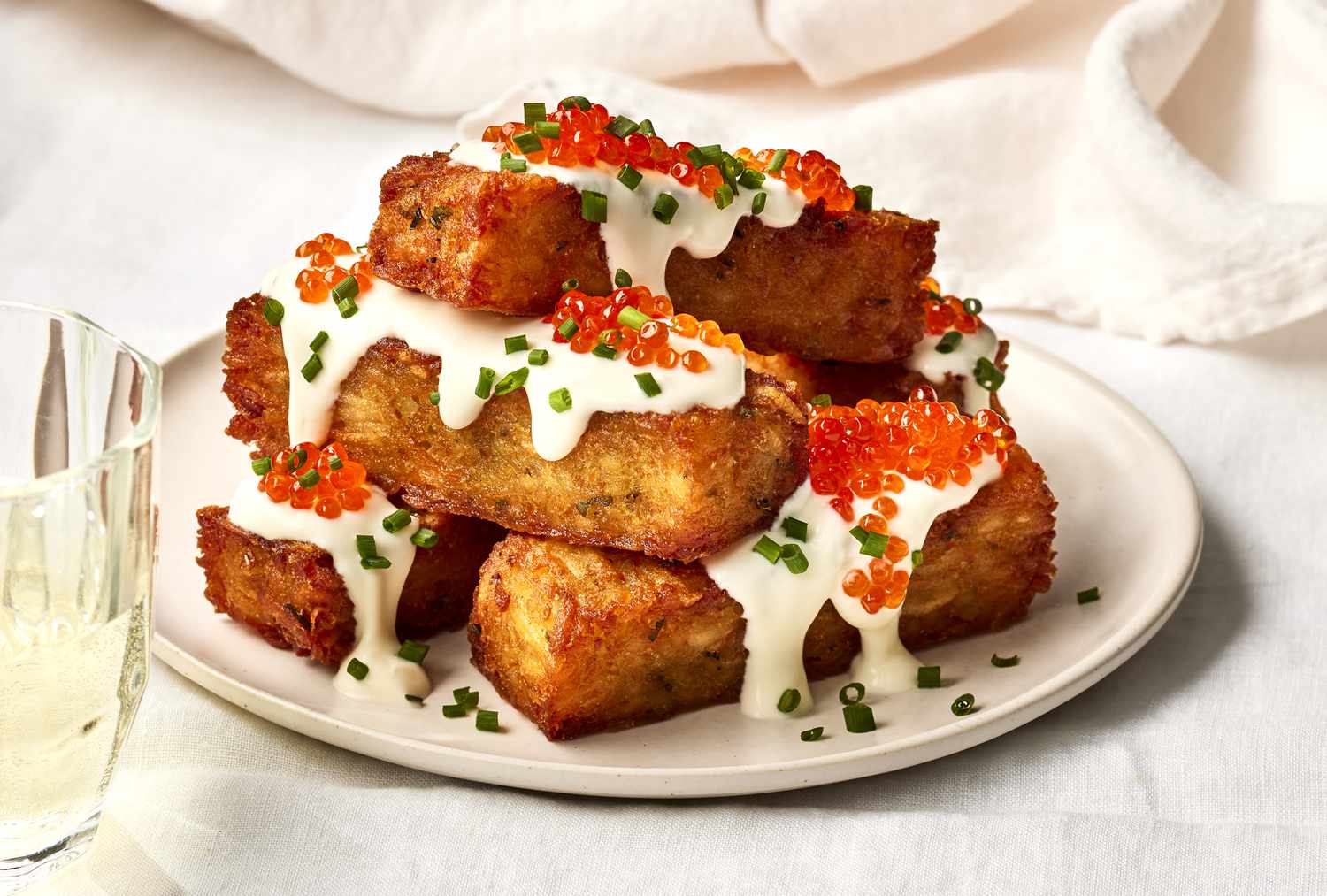
Remove the hash browns to a wire rack set over a baking sheet. This allows air to circulate around the entire patty, preventing the bottom from steaming in its own heat. Serving immediately ensures the crust remains shattering-crisp while the interior stays tender.
Ingredients and timing
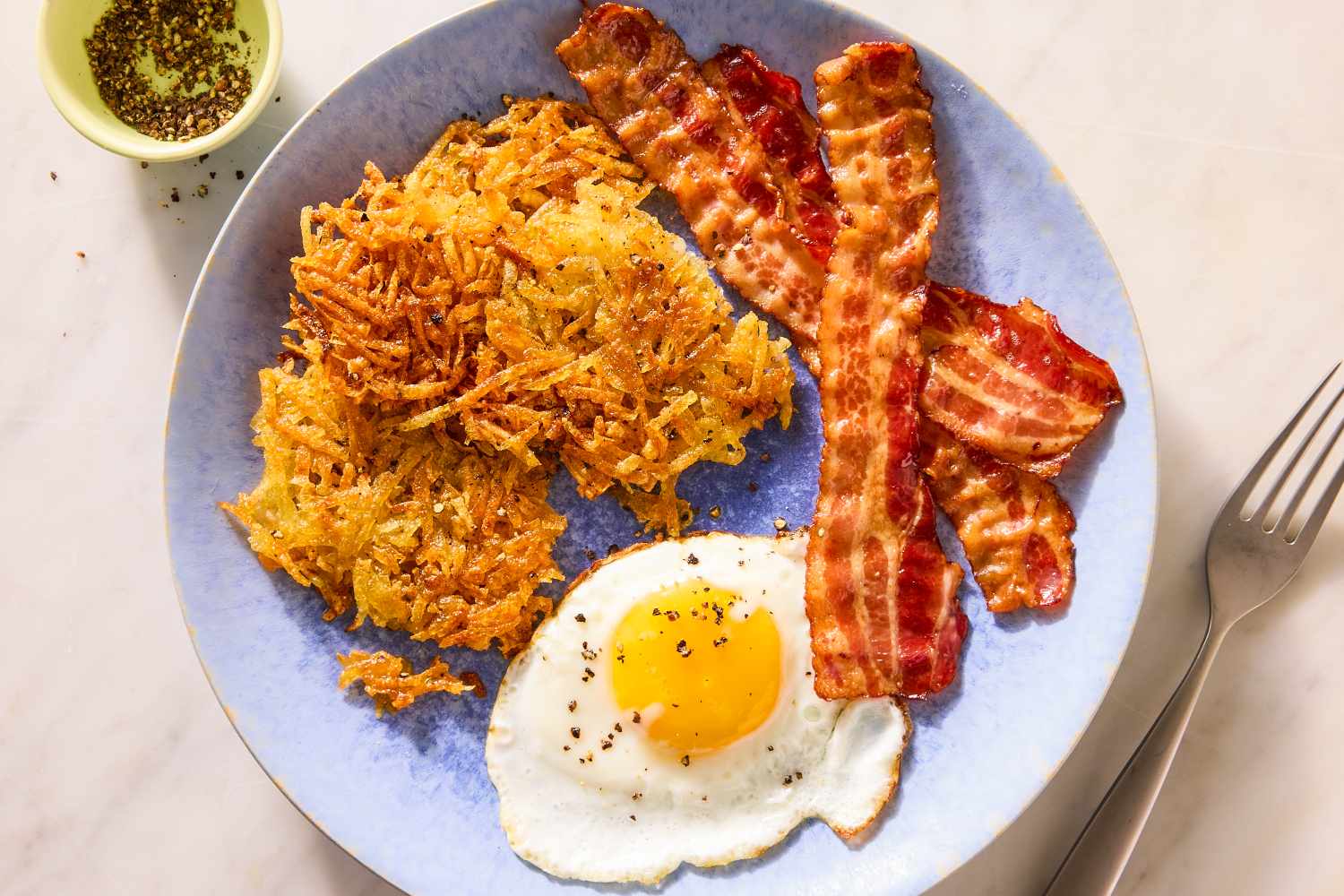
Achieving the best hash brown recipe relies on managing moisture and starch. Russet potatoes provide the necessary structure, while a small amount of flour acts as a binder to hold the shreds together during the flip. Rinsing removes excess surface starch that causes gumminess, allowing the exterior to crisp rather than steam. Timing is equally critical; high heat for a short duration ensures a golden crust without burning the natural sugars.
This method balances the Maillard reaction for color with the removal of water for texture. The addition of butter at the end enhances flavor without lowering the smoke point too early in the cooking process. Ensure your skillet is large enough to avoid overcrowding, which traps steam and softens the crust.
Common mistakes to avoid
Even with the best hash brown recipe, technical errors can turn a potential crisp into a soggy mess. The difference between a diner-style breakfast and a failed skillet session usually comes down to moisture control and starch management. Russet potatoes provide the necessary starch structure, but only if you handle them correctly.
Squeezing out too much moisture
Water is the enemy of crispness. If the shredded potatoes remain wet, they steam instead of frying. You must squeeze the potatoes firmly in a clean kitchen towel or cheesecloth until no more liquid drips out. This step removes surface starch and water that would otherwise gelatinize and create a soft exterior.
Using the wrong potato
Starchy varieties like Russets are ideal because they break down slightly during frying, creating a rough surface that browns evenly. Waxy potatoes hold their shape too well, resulting in a pale, soft texture that lacks the necessary crunch. Always verify your potato type before shredding.
Crowding the pan
Overfilling the skillet drops the oil temperature rapidly. When the heat cannot recover quickly enough, the potatoes absorb oil rather than fry. Cook in batches if necessary to ensure each layer makes direct contact with the hot pan. This allows the Maillard reaction to occur, forming that essential golden crust.
No comments yet. Be the first to share your thoughts!