
Why frozen shreds work best
Many cooks assume that fresh potatoes are the only path to a perfect hash brown, but frozen shredded potatoes offer a distinct advantage for achieving diner-style crunch. The key lies in how they are processed. Frozen shreds are typically blanched before freezing, a step that partially cooks the potato and removes excess surface moisture. This pre-treatment means you skip the tedious and often messy process of grating, squeezing, and wringing out fresh potatoes in a towel.
When you grate a fresh potato, you release starches that turn gummy when heated, creating a barrier against browning. Frozen shreds have already shed much of this sticky starch during industrial processing. As a result, the potatoes separate more easily in the pan, allowing hot oil to contact more surface area. This increased exposure accelerates the Maillard reaction—the chemical process that gives browned food its distinctive flavor and color.
The texture difference is immediate. Fresh shreds tend to clump together, steaming themselves in their own released water. Frozen shreds, by contrast, lay flat and crisp up rapidly. This consistency makes them a reliable base for achieving a golden crust, removing the guesswork from moisture management so you can focus on heat control and timing.
Ingredients for crispy results
A minimal pantry is all you need, but the quality of those few items dictates the final texture. You need frozen shredded potatoes, a high-smoke-point oil, salt, and pepper. This specific combination is non-negotiable for achieving the deep golden crunch that defines a perfect skillet hash brown.
Frozen Shredded Potatoes
Frozen shredded potatoes are the preferred base for this method because they are pre-blanched and thoroughly drained. This process removes the excess surface moisture that fresh potatoes retain, which is the primary enemy of crispiness. When you add water to a hot skillet, it creates steam rather than fry, resulting in soggy, pale potatoes. By starting with frozen shreds, you skip the tedious step of squeezing fresh potatoes in a towel and ensure a drier, more consistent foundation for the Maillard reaction.
High-Smoke-Point Oil
The oil acts as the heat conductor that facilitates browning. Vegetable, canola, or avocado oil are ideal choices because they have high smoke points, allowing the skillet to reach the necessary temperature without burning. Butter adds flavor but burns too quickly at the high heat required for maximum crunch. Use enough oil to coat the bottom of the skillet generously—about two tablespoons for a standard 10-inch pan. This layer ensures that every potato shred makes contact with the hot surface, promoting even browning across the entire cake.
Salt and Pepper
Seasoning is straightforward: kosher salt and freshly cracked black pepper. Salt draws out moisture, so adding it just before cooking helps maintain the structural integrity of the shreds. The pepper adds a subtle aromatic depth that complements the savory potato flavor. Keep the seasoning minimal to let the natural potato taste and the crispy texture shine.
Skillet technique for golden crust
Achieving a perfect result relies on managing moisture and heat. Frozen shreds release water rapidly when they hit the pan. If you stir immediately, the potatoes steam instead of fry. You need a solid, unbroken crust to lock in texture and flavor. This method uses a heavy skillet to distribute heat evenly, ensuring every shred browns without burning.
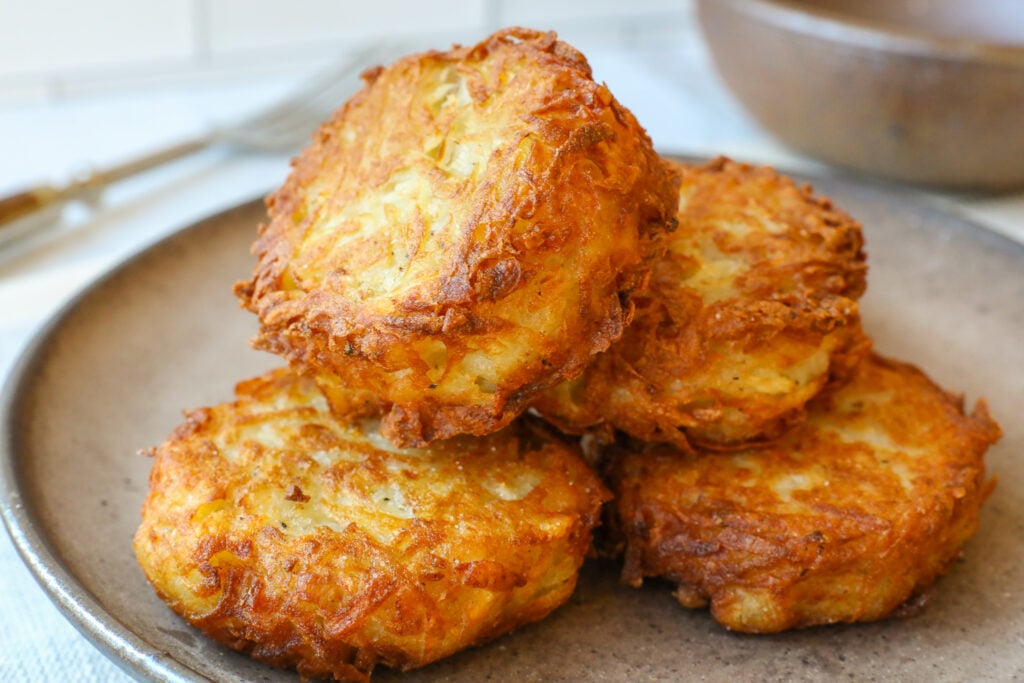
Place a 10-inch cast iron or non-stick skillet over medium-high heat. Add one tablespoon of vegetable oil or bacon fat. Wait until the oil shimmers and ripples slightly. This indicates the surface is hot enough to sear the potatoes instantly upon contact.
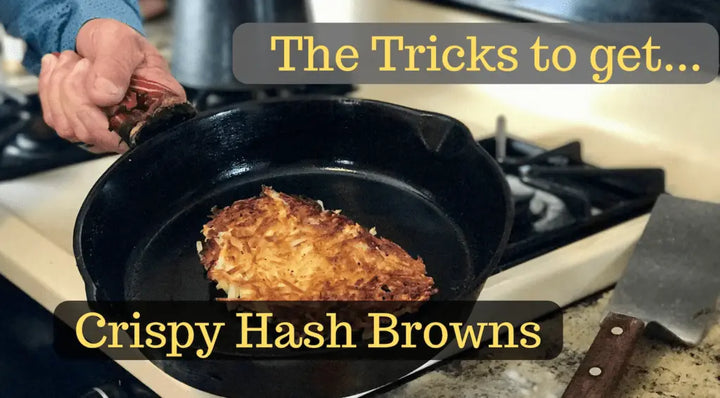
Dump the frozen hash browns into the center of the skillet. Use a spatula to push them outward toward the edges, forming a single, even layer. Press down firmly with the back of the spatula. This compacts the shreds, removing air pockets that prevent browning and creating a solid patty structure.
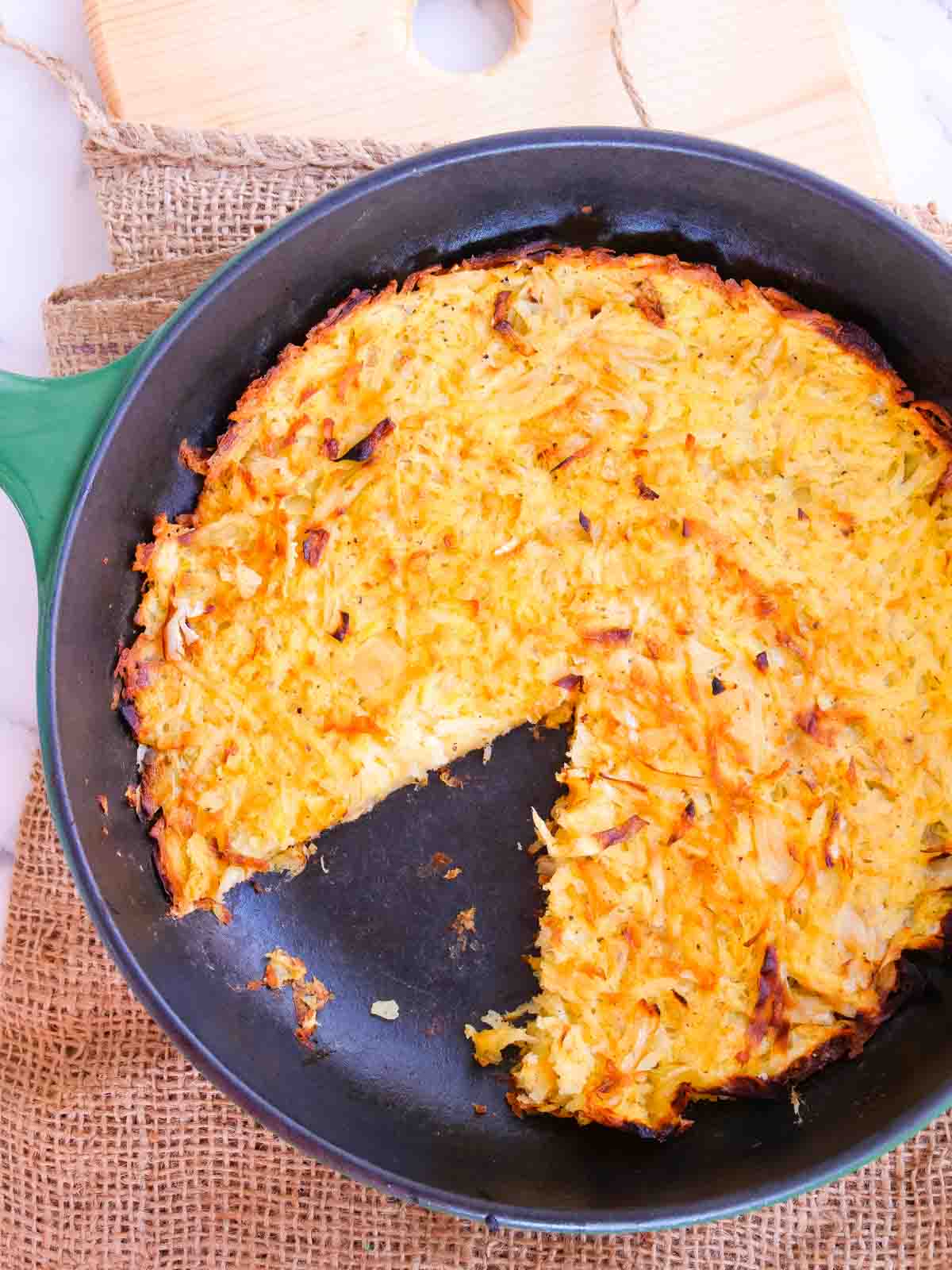
Do not touch the hash browns. Let them cook for five minutes. This is the critical no-touch period. The moisture inside the potatoes evaporates, and the sugars begin to caramelize against the hot metal. Moving them too early results in soggy, pale shreds.
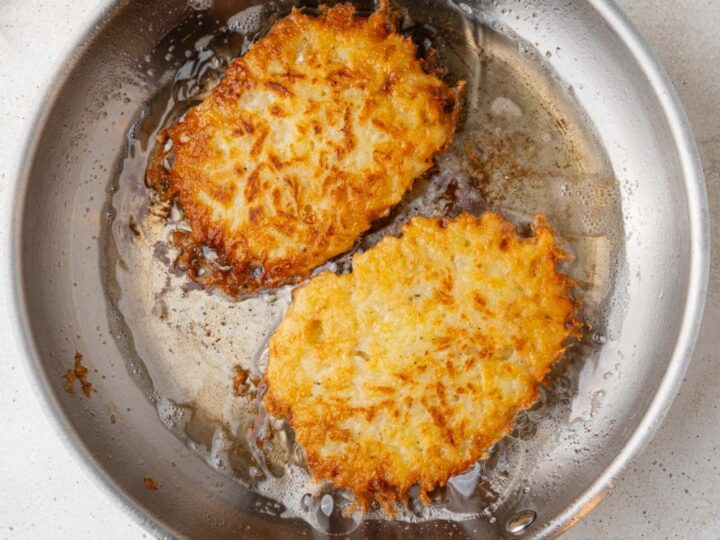
Slide a large spatula under the entire patty. Check the underside; it should be deep golden brown. If it looks pale, give it another minute. Flip the hash browns in one confident motion. A broken patty will still taste good, but a whole flip ensures even cooking on both sides.
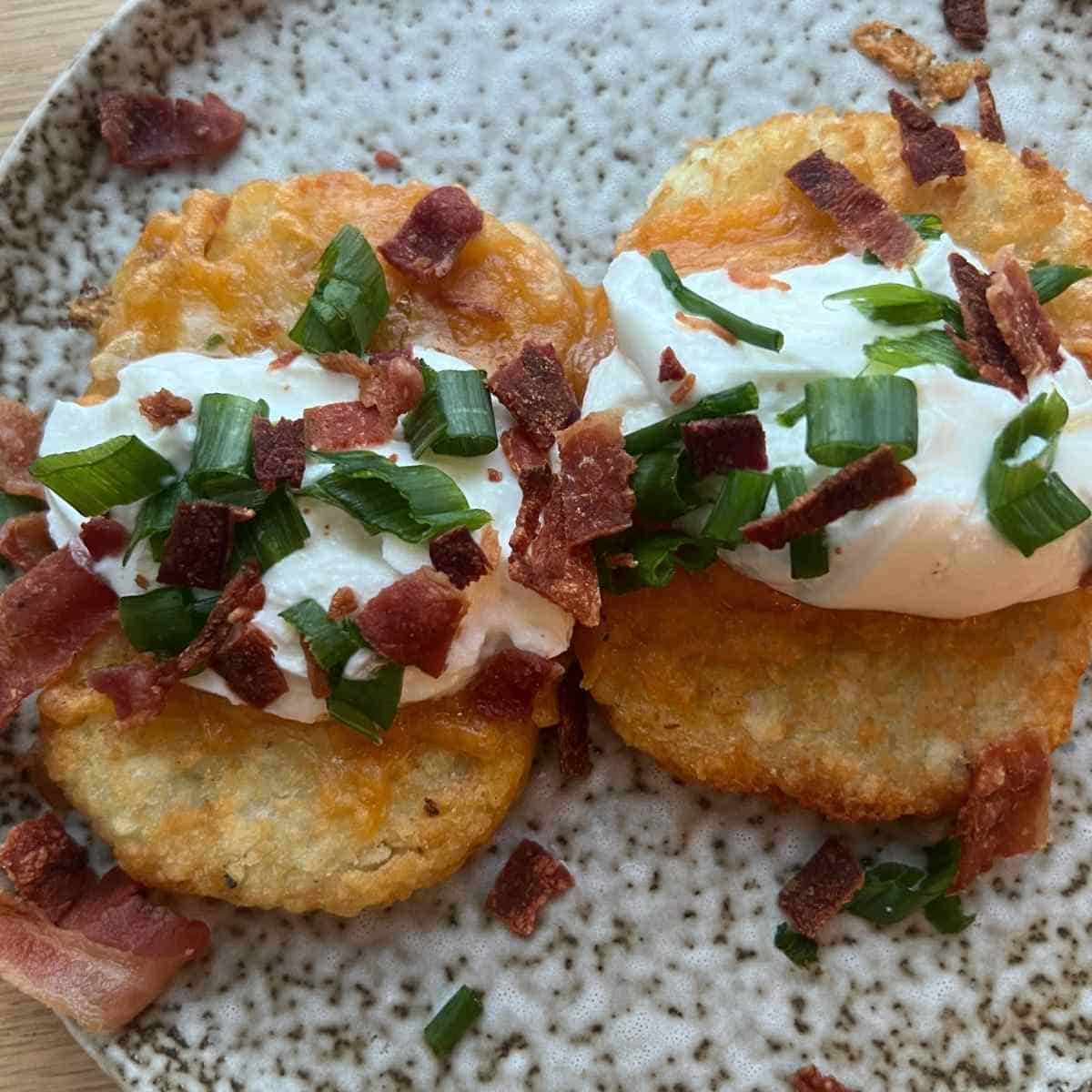
Cook the second side for four to five minutes. Press down gently again to ensure contact with the pan. The hash browns are done when both sides are crispy and the interior is hot. Serve immediately while the crust is at its peak crunch.
The secret to this dish is patience. The Maillard reaction—the chemical process that gives browned food its distinctive flavor—requires consistent heat and time. By resisting the urge to stir, you allow the starches to gelatinize and then crisp into a golden shell that holds up to eggs and bacon.
Common Mistakes to Avoid
Even with frozen shreds, achieving the perfect crust requires patience and heat management. The most frequent error is flipping too early. If you try to turn the hash browns before the bottom layer has fully caramelized, the pucks will break apart, leaving you with a messy scramble instead of a cohesive skillet. The Maillard reaction needs time to build a structural shell that holds the potatoes together.
Overcrowding the pan is the second major pitfall. When you pack too many potato shreds into the skillet, the temperature drops rapidly, and the released moisture cannot evaporate quickly enough. Instead of frying, the potatoes steam in their own liquid, preventing the formation of a crispy exterior. Cook in smaller batches if necessary to ensure each shred has direct contact with the hot oil.
Serving and Storage
To keep your skillet hash browns crispy, drain them on a wire rack rather than a paper towel. Paper towels trap steam against the surface, softening the crust you just worked hard to create. The Maillard reaction requires dry heat to maintain that golden-brown texture.
Serve immediately while the potatoes are hot. Seasoning right after cooking helps the salt adhere to the surface oils, enhancing flavor without drawing out excess moisture over time. If you must hold them, keep them in a single layer on a wire rack in a warm oven (200°F) to prevent sogginess.
-
Drain on a wire rack to allow airflow
-
Season immediately while hot and oily
-
Hold in a single layer in a warm oven
Leftovers rarely match the fresh crispiness, but you can recover some texture. Avoid the microwave, which steams the potatoes and makes them rubbery. Instead, reheat in a skillet over medium heat or in a toaster oven. This dry-heat method helps evaporate residual moisture and restores some of the original crunch.
Frequently asked: what to check next
Getting the best hash brown recipe right comes down to moisture control and heat management. Even when using frozen shreds, small errors in timing or temperature can lead to soggy results. Here are the most common questions about achieving that perfect golden crust.
No comments yet. Be the first to share your thoughts!