
Why frozen hash browns need a refresh
Pre-formed frozen patties suffer from a fundamental structural flaw: they are manufactured to hold together, not to crisp. The industrial process binds shredded potatoes with starches and preservatives that trap steam during cooking. When you place these patties in a skillet, the exterior may brown, but the interior remains dense and soggy because the moisture cannot escape quickly enough. This results in a texture that is uniformly soft rather than distinctly crunchy.
Achieving true crispy hash browns requires managing water content at the molecular level. Potatoes are roughly 80% water. To get a golden, shattering crust, that water must evaporate before the starches gelatinize and harden. Frozen patties are engineered to retain that moisture, creating a barrier to the Maillard reaction—the chemical process that creates complex browning and flavor. Even with high heat, the steam generated inside the patty prevents the surface from reaching the temperatures needed for deep caramelization.
A potato shredder gives you control over this physics problem. By shredding fresh potatoes, you expose more surface area and allow you to squeeze out excess liquid before the pan ever gets hot. This simple step changes the cooking dynamic from steaming a compressed block to frying individual strands. The result is a hash brown with distinct, crispy edges and a tender center, something a frozen patty simply cannot replicate.
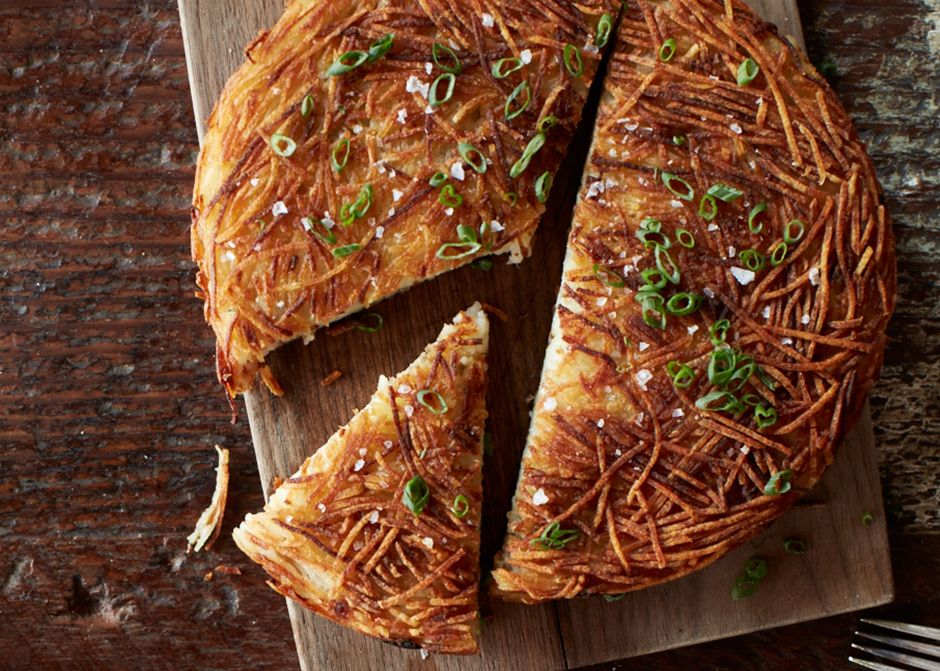
Break down the frozen patty
The biggest mistake people make with frozen hash browns is trying to cook them whole. A solid, frozen disk creates a thermal barrier. The outside burns before the inside thaws, leaving you with a charred crust and a cold, soggy center. To get crispy hash browns, you must increase the surface area immediately.
Using a box grater or a food processor with a shredding disc transforms that dense block into loose strands. This physical breakdown exposes more potato surface to the hot oil, allowing moisture to evaporate rapidly. Rapid evaporation is the primary driver of the Maillard reaction, which creates that golden-brown crust.
Step 1: Prepare the tool
Place a large bowl under your box grater or food processor chute. If using a food processor, ensure the shredding disc is locked in place. This setup catches the shreds immediately, preventing them from scattering across your counter and making cleanup easier.
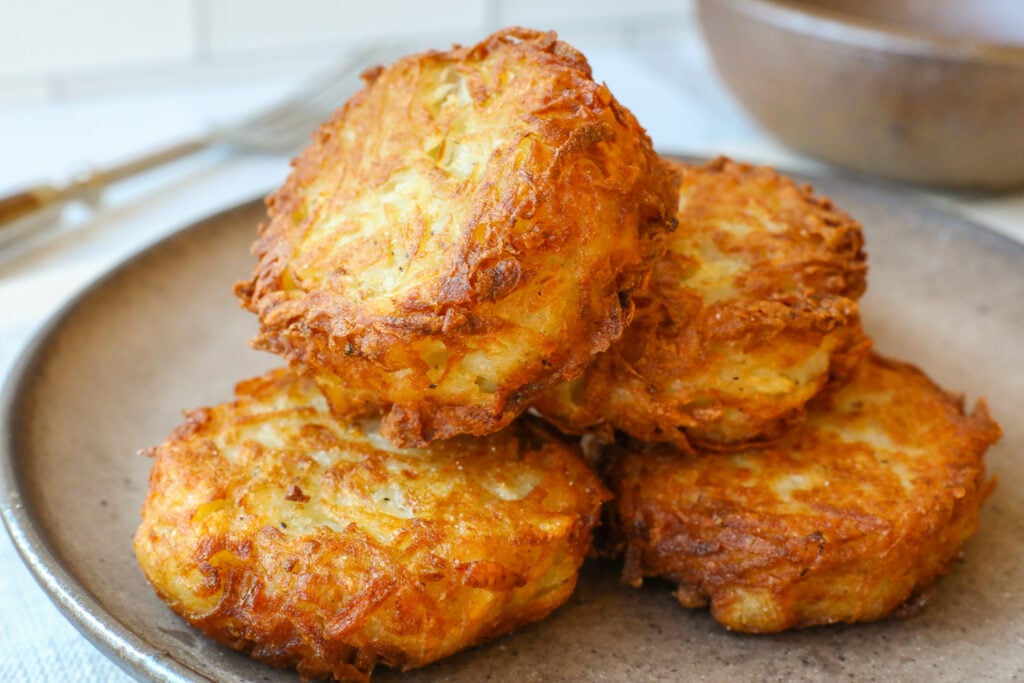
Hold the frozen hash brown patty firmly. If using a box grater, use the large holes for classic shreds. If using a food processor, feed the patty through the chute using the pusher. Do not force it; let the blades do the work. Aim for uniform strands, roughly the width of a french fry. Uniformity ensures even cooking.
Once shredded, use your hands or a fork to break up any clumps. You want individual strands, not a mashed potato texture. If the shreds are still frozen solid, let them sit for two minutes. This slight thaw makes them easier to separate without turning into mush.
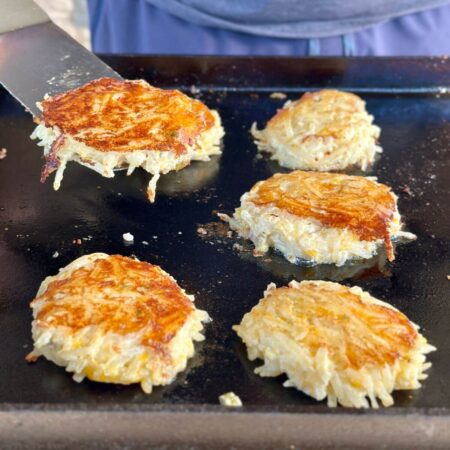
Moisture is the enemy of crispiness. Spread the shreds on a clean kitchen towel or paper towels. Pat them dry. This step removes surface ice and excess water. Dry potatoes hit the hot oil with higher thermal efficiency, crisping faster and staying crisp.
Why uniform shreds matter
Inconsistent shred sizes lead to inconsistent results. Thin strands burn quickly. Thick chunks remain undercooked. By shredding the frozen patty uniformly, you create a bed of potatoes that cooks at the same rate. This allows you to flip the hash browns once, achieving an even golden color on both sides.
Pro tip: Don't rinse
Fresh potatoes need rinsing to remove starch. Frozen hash browns are already par-cooked and processed. Rinsing them adds unnecessary water. Skip the rinse. Season immediately after drying, then cook.
Remove moisture for maximum crunch
The physics of a perfect hash brown is simple: water is the enemy of crispiness. When shredded potato hits hot oil, the surface moisture must evaporate before the starch can undergo the Maillard reaction. If too much water remains trapped in the shreds, the pan temperature drops, and the potatoes steam rather than fry. This creates a soggy, pale interior that never achieves that distinct, shattering crunch.
To get there, you need to extract as much liquid as possible before the pan even heats up. Place your shredded potatoes in a clean kitchen towel or a layer of cheesecloth. Gather the edges and twist tightly, applying firm pressure over the sink. You should see a steady stream of starchy water release. Continue wringing until no more liquid drips out. This step is non-negotiable for achieving restaurant-quality results.
Once the shreds are dry, spread them on a paper towel for a final pat-down. This removes surface starch that can cause burning before the interior cooks through. With the moisture gone, the oil can transfer heat directly to the potato structure, creating those golden, lace-like edges that define crispy hash browns.
The total cooking time should be around 15 minutes. Rushing this step by turning up the heat will burn the outside while leaving the inside raw. Let the potatoes sit in the pan to build a solid crust. This patience ensures every bite delivers that satisfying crunch.
Cook in a hot cast iron skillet
The transition from raw potato to golden-brown crust relies on rapid moisture evaporation and efficient heat transfer. A cast iron skillet is the ideal tool for this process because of its thermal mass. It holds heat consistently, preventing the temperature from dropping when cold, wet hash browns hit the surface. This stability allows the Maillard reaction—the chemical browning that creates flavor and color—to occur quickly and evenly.
Choose the right fat and manage heat
Start by heating a heavy skillet over medium-high heat. Add enough oil to coat the bottom generously; about one to two tablespoons works best. Neutral oils with high smoke points, such as vegetable, canola, or avocado oil, are preferable because they allow the pan to get hot enough to crisp the exterior without burning. Butter adds flavor but burns too quickly for this technique.
Once the oil shimmers and a single shred of potato sizzles immediately upon contact, the pan is ready. If the oil is too cool, the potatoes will steam in their own moisture rather than fry, resulting in a soggy texture. If it is too hot, the outside will burn before the inside cooks. Medium-high heat is the sweet spot for controlled crisping.
The undisturbed searing technique
Spread the shredded potatoes into an even layer, pressing down gently to create a compact patty. The key to achieving maximum crispiness is patience. Do not stir or move the hash browns for the first three to five minutes. This undisturbed period allows a continuous, unbroken crust to form on the bottom. The starches caramelize and harden into a rigid structure that defines the final texture.
After the initial sear, check the edge of the patty. If it is a deep golden brown and releases easily from the pan, it is time to flip. Use a spatula to turn the hash browns in halves or quarters, or flip the entire patty if you are confident. Cook the second side for another three to five minutes until it matches the first. The goal is a uniform, crunchy exterior on all sides while keeping the interior tender. Serve immediately to maintain the crispness.
Season and serve immediately
Timing dictates the final texture of your crispy hash browns. Salt draws moisture out of the potato through osmosis. If you season before or during cooking, the released water steams the shreds instead of frying them, resulting in a soggy, pale surface. Wait until the patty has developed a deep, golden-brown crust before adding salt. This ensures the structural integrity of the crust remains intact.
Serve the hash browns while they are still hot and hot from the pan. Heat transfer continues even after removal from the skillet, and residual steam trapped under a lid or in a basket will soften the exterior within minutes. The goal is to preserve the contrast between the crunchy exterior and the tender interior.
A quick pre-flight check ensures no last-minute disasters ruin the crisp:
-
Skillet is fully heated and oiled
-
Shredded potatoes are thoroughly dried
-
Salt is ready at the table, not the stove
-
Serving plate is warm
Pairing matters less than timing. Whether you add a dollop of sour cream or a side of fresh herbs, the hash browns must hit the plate directly from the heat source to maintain their best texture.
Crispy hash browns: troubleshooting moisture and texture
Getting crispy hash browns from frozen patties requires managing water content. When potatoes hit hot oil, surface moisture turns to steam, creating a barrier that prevents browning and leads to soggy results. Removing that water is the primary driver of crispness.
What is the secret to crispy hash browns?
The secret is aggressive moisture removal. Whether you are shredding fresh potatoes or rehydrating frozen patties, you must squeeze out as much liquid as possible. Press the potatoes firmly between layers of paper towels or a clean kitchen towel until they feel dry to the touch. Less water means more direct contact with the oil, which accelerates the Maillard reaction for a golden crust.
Why don't my hash browns get crispy?
Most failures come from overcrowding the pan or skipping the rest period. If you move the patty too early, you tear the forming crust. Let the hash browns cook undisturbed for 5-7 minutes per side. Additionally, ensure your oil is hot enough (around 350°F/175°C) before adding the patties; cold oil soaks into the potato rather than crisping the surface.
How do restaurants get hash browns so crispy?
Restaurants typically use high heat and high fat volume. They often cook shredded potatoes in a large amount of oil or butter, which transfers heat efficiently and keeps the surface temperature high. They also rinse and dry the potatoes thoroughly before cooking. For home cooking, using a cast iron skillet helps retain the steady, high heat needed to evaporate moisture quickly.
Should I add cornstarch to hash browns?
Yes, adding a small amount of cornstarch can improve texture. Cornstarch absorbs residual surface moisture and creates a thin, crunchy layer when fried. Mix about one teaspoon of cornstarch per cup of shredded potatoes before cooking. This is especially helpful when using frozen patties, which often retain more internal water than fresh potatoes.
No comments yet. Be the first to share your thoughts!