
Pick the right potatoes
The foundation of a crispy hash brown is the potato itself. You want a starchy variety, specifically the Russet. These potatoes have a high starch content and low moisture, which allows them to develop a crunchy, golden exterior without turning into a gummy mass. Waxy potatoes, like red or Yukon Golds, hold too much water and contain less starch, making them better for boiling or roasting whole but poor candidates for shredding.
Think of the potato as a sponge. A Russet is like a dry sponge that readily absorbs oil and crisps up quickly. A waxy potato is like a wet sponge that resists the heat and steams itself instead of frying. When you shred a Russet, the exposed starch granules act as a natural binder and crisping agent, creating those distinct, lacy edges that define a diner-style hash brown.
To help you decide, here is a quick comparison of how different potato types behave when shredded and fried:
| Potato Type | Starch Level | Resulting Texture |
|---|---|---|
| Russet | High | Crispy, lacy edges |
| Yukon Gold | Medium | Creamy, less crisp |
| Red Potatoes | Low | Waxy, dense, chewy |
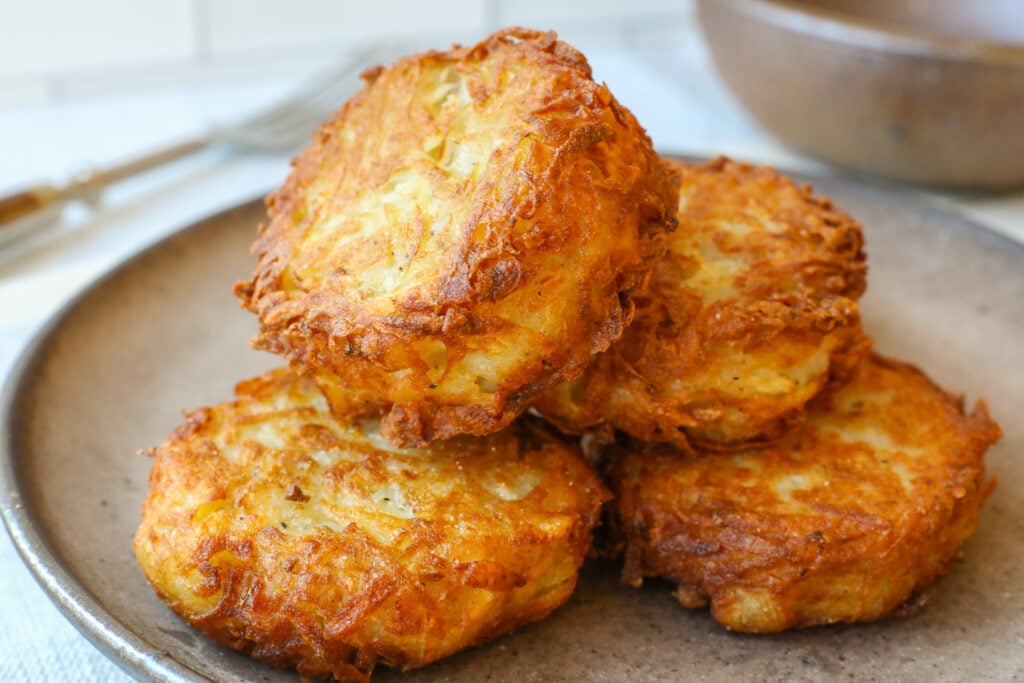
Shred and squeeze dry
Removing moisture is the single most important step in making crispy hash browns. Water turns to steam when it hits the skillet, steaming the potatoes instead of frying them. This creates a soft, soggy texture that falls apart when you try to flip it. To get that diner-style crunch, you need to get the potatoes as dry as possible before they ever touch the pan.
Start by peeling and shredding the potatoes. A box grater works well for this, but a food processor with a shredding disk is faster and gives you more consistent results. As you shred, the potatoes will start to release their starch and water. This is normal, but you need to remove it.
Transfer the shredded potatoes to a clean kitchen towel or a few layers of cheesecloth. Gather the edges and twist the bundle tightly over the sink. Squeeze with all your might. You should see a steady stream of water coming out. Continue squeezing until the towel feels only slightly damp, not wet. If the towel is dripping, the potatoes are still too wet.
Key Tip: Moisture is the enemy of crispiness. Squeeze until the towel is damp, not dripping.
Once the potatoes are dry, spread them out on a clean towel or paper towels for a few minutes to let any remaining surface moisture evaporate. This extra step ensures that every shred is ready to crisp up in the hot oil.
Season and bind lightly
While removing moisture is the foundation of crispiness, seasoning and binding determine the final texture. The goal here is to add flavor without introducing water or excess starch that could turn the exterior gummy instead of crunchy.
Start with a simple base of salt and black pepper. For a deeper, more complex flavor profile, add a teaspoon of smoked paprika. This spice not only contributes a subtle heat but also helps achieve that desirable golden-brown hue during frying. Toss the shredded potatoes gently with these dry spices to ensure even distribution.
Next, consider binding. Adding a small amount of cornstarch or all-purpose flour—about one to two tablespoons for a standard batch—creates a microscopic barrier around the potato strands. This layer helps lock in the crispness by drawing away residual surface moisture and promoting faster browning. Avoid adding too much; excess powder can create a thick, doughy coating that masks the potato's natural flavor. The result should be wispy, golden edges, not a dense patty.
Fry Until Golden Brown
Heat two tablespoons of oil in a large skillet over medium-high heat. You want the oil hot enough to sizzle immediately when the potatoes hit the pan, but not so hot that it smokes. This temperature is critical: it creates an instant sear that locks in structure while driving off remaining surface moisture, setting the stage for a shattering crust.
Spread the shredded potatoes into an even layer. Press down firmly with a spatula to compact the shreds. A dense, uniform patty ensures that heat distributes evenly, preventing thin spots from burning while thick clumps remain soggy in the center.
Resist the urge to stir. Let the hash browns cook undisturbed for six to eight minutes. During this time, the starches will caramelize and bond together, forming a solid base. If you lift an edge and see a deep golden-brown color, the bottom is ready. If it looks pale, give it another minute; patience is the only shortcut to crispiness.
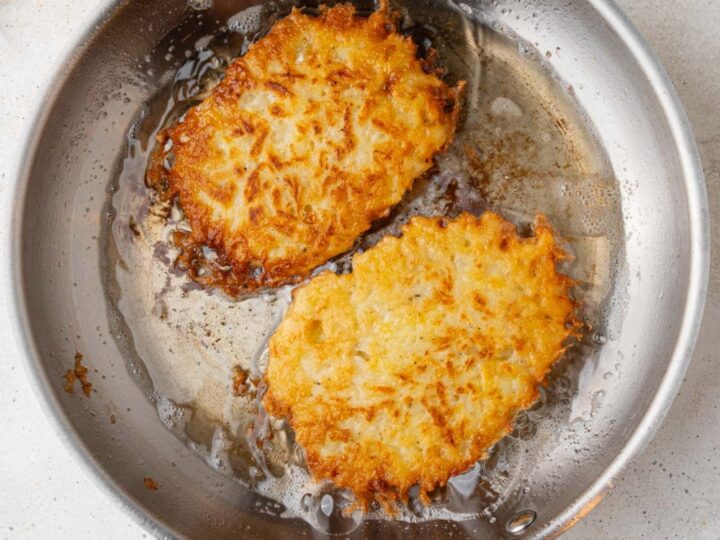
Once the bottom is deeply golden and releases easily from the pan, flip the hash browns. Cook the second side for another three to five minutes until equally crisp. Serve immediately while hot and crunchy.
Serve Hot with Toppings
Hash browns lose their crispness the moment they sit, so plate them immediately while the exterior is still shattering and the interior tender. The heat helps the toppings adhere and keeps the dish from turning into a soggy mass. A warm plate is essential to maintaining that diner-style texture you worked hard to achieve.
Classic diner toppings rely on simple, high-contrast flavors that cut through the richness of the oil. Shredded cheddar melts quickly into the hot crevices, while diced jalapeños add a necessary acidic crunch. A dollop of sour cream or a spoonful of salsa provides a cool, wet counterpoint to the dry, salty potatoes.
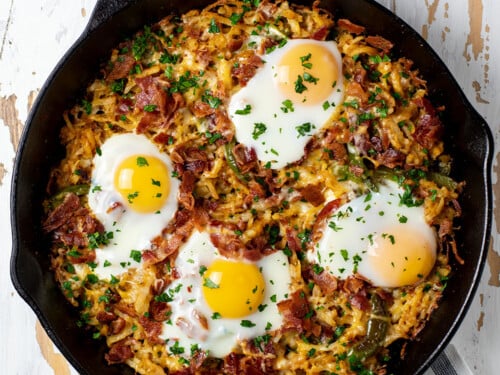
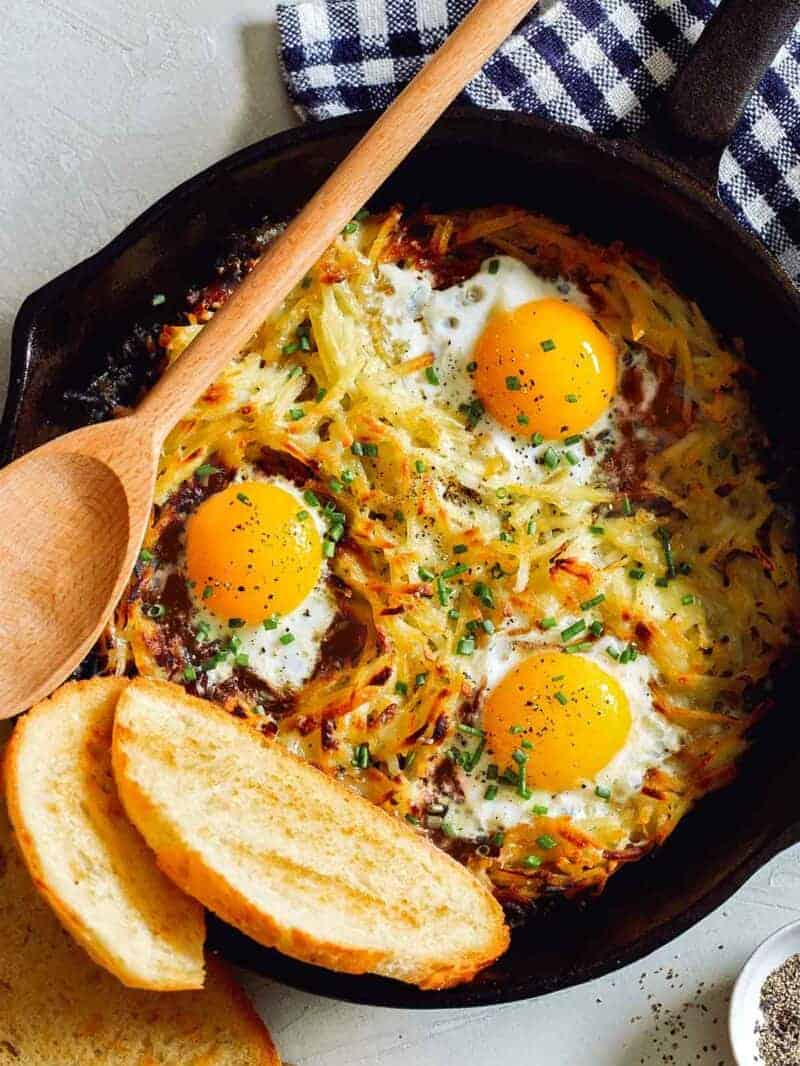
For a more substantial breakfast, use the hash browns as a base rather than just a side. Layer them under a fried egg, where the runny yolk acts as a natural sauce. You can also fold them into an omelet or serve them alongside bacon and sausage for a hearty, complete meal. Keep the toppings minimal to let the potato flavor shine.
Common hash brown mistakes
Even experienced cooks can turn a batch of shredded potatoes into a soggy mess. The difference between diner-style crispiness and a steamed pancake usually comes down to three specific errors: excess moisture, overcrowding the pan, and premature stirring. Fixing these issues requires patience and a light hand.
Wet potatoes
Water is the enemy of crispiness. If your shredded potatoes are wet, they will steam rather than fry. The Bon Appétit test kitchen emphasizes that you must squeeze the potatoes dry. Use a clean kitchen towel or cheesecloth to wring out every drop of liquid. If the potatoes still feel damp after the first squeeze, do it again. Dry potatoes equal crispy hash browns.
Overcrowding the pan
A crowded pan lowers the temperature and traps steam. If you are trying to cook a large batch, do it in multiple smaller batches. Each layer of potatoes needs direct contact with the hot skillet surface. If the potatoes are piled on top of each other, the bottom layer will burn while the top layer remains raw and soggy. Give your hash browns space to breathe and brown evenly.
Stirring too soon
Patience is the most important ingredient. Resist the urge to stir or flip the hash browns immediately after adding them to the pan. Let the potatoes cook undisturbed for at least five to eight minutes on medium-high heat. This gives the starches time to set and form a golden, crunchy crust. Only flip the hash browns once when the bottom layer is firmly anchored to the pan.
-
Potatoes are thoroughly dried
-
Pan is preheated to medium-high
-
Oil is shimmering but not smoking
-
Hash browns are in a single layer
No comments yet. Be the first to share your thoughts!