
The Rise of the One-Pan Breakfast: Why Skillets Are Taking Over
Streamlining morning routines is changing how people eat breakfast. One-pan breakfast skillets are becoming popular, not just for convenience, but for less cleanup, more flavor from layered ingredients, and a customizable base for any breakfast desire. Skillet cooking has deep roots, so this isn't just a fleeting trend.
Skillets, especially cast iron, were kitchen workhorses, valued for heat retention and versatility. Early American cooking used them often over hearths. Today's one-pan breakfast skillet combines that legacy with a need for speed and efficiency. It's a natural extension of the sheet pan dinner trend.
What makes this trend stand out is the focus on hash browns. Skillet breakfasts aren't new, but building them deliberately around crispy potatoes is. This creates a textural and flavor base for endless variations. The combination is catching on, and more complex versions will likely appear soon.
Food-focused social media also contributes. Visually appealing breakfast skillets—golden hash browns, colorful vegetables, perfectly cooked eggs—are highly shareable. This visual appeal boosts the trend, inspiring others to create their own versions. It's a cycle of inspiration and replication, driven by platforms like Instagram and TikTok.
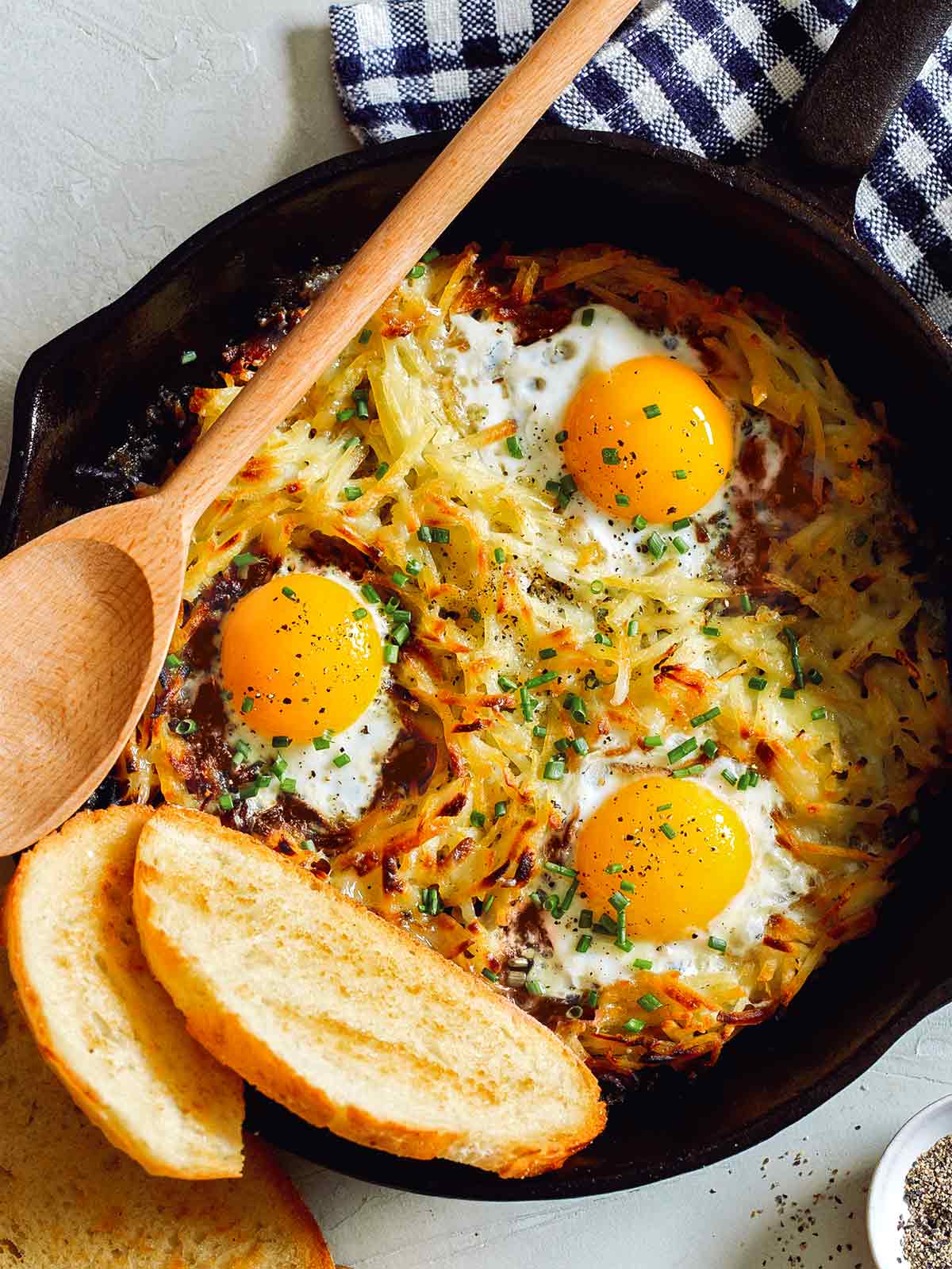
Bacon, eggs, extra crispy hash browns, sourdough toast with lots of butter and a latte. That's what's missing. https://t.co/MKZ6LaHXkY
— Kimberly Auer (@Kimberlyrja8) April 12, 2026
Hash Brown Foundations: Choosing the Right Potato and Prep
Crispy hash browns are essential for a good skillet. Potato selection is key. Russet potatoes are best, with high starch for maximum crispness. Yukon Golds provide a creamier, buttery flavor but need more work to crisp. Red potatoes, lower in starch, tend to steam, not crisp, making them less ideal.
Rinsing grated or diced potatoes is essential. It removes excess starch, which prevents crispiness. Rinse under cold water until the water runs clear. This step makes a significant difference. Grating creates a finer texture and more surface area for crisping, while dicing yields chunkier, rustic hash browns.
Pressing out moisture is also important. After rinsing, use a clean kitchen towel or cheesecloth to squeeze out as much water as possible. This reduces steam during cooking, encouraging browning and crisping. Letting the potatoes sit in the towel for 10-15 minutes after the initial squeeze can draw out even more moisture.
Pre-shredded hash browns are convenient but often contain preservatives and don't crisp as well as fresh ones. They can become mushy and stick together. If using them, spread them thinly and don't overcrowd the skillet. They'll need more frequent flipping and higher heat to achieve any crispness.
- Russet: Highest starch, maximum crispness.
- Yukon Gold: Creamier texture, buttery flavor, requires more effort to crisp.
- Red: Lowest starch, tends to steam, not ideal for hash browns.
The Cowboy Skillet: A Hearty Classic with a Kick
The 'Cowboy Hash Brown Skillet,' popularized by The Country Cook, is a hearty meal from the American West. It features crispy hash browns, savory beef, and eggs, with a robust, satisfying flavor and a hint of spice.
Ingredients include 1 pound of ground beef, 1 medium diced onion, 1 diced bell pepper (red or orange recommended for color), 3 cups of shredded hash browns, and 6-8 eggs. Season with salt, pepper, garlic powder, and cayenne pepper. Worcestershire sauce or taco seasoning can add depth.
Brown ground beef in a large, oven-safe skillet (cast iron is ideal). Drain excess grease, then add diced onion and bell pepper. Cook until softened, about 5-7 minutes. Stir in shredded hash browns and season. Spread the mixture evenly and cook for 10-15 minutes, flipping occasionally, until golden brown and crispy. Make wells in the hash brown mixture and crack an egg into each. Cook until eggs are set.
This recipe is adaptable. For more spice, add jalapeño or use chorizo instead of ground beef. For a gluten-free version, ensure taco seasoning is gluten-free. Vegetarians can substitute beef with black beans or a plant-based ground meat alternative. Maintaining flavor and texture balance is key.
- Beef: 1 pound ground beef.
- Onion: 1 medium, diced.
- Bell Pepper: 1, diced (red or orange recommended).
- Hash Browns: 3 cups shredded.
- Eggs: 6-8.
Beyond Beef: Exploring Protein Variations in Your Skillet
While beef is classic, one-pan breakfast skillets are versatile with protein. Sausage works well. Italian sausage adds robust, savory flavor, chorizo brings a spicy, smoky kick, and breakfast sausage offers a more traditional profile with sage and other seasonings.
Bacon is another option; cook it separately until crispy, then crumble it into the skillet to prevent sogginess. Diced, seasoned chicken also works, especially with a
For those seeking a vegetarian option, black beans or chickpeas are excellent choices. Season them generously with cumin, chili powder, and smoked paprika to mimic the savory flavor of meat. Tofu, crumbled and browned, is another possibility, though it requires careful seasoning to avoid blandness. I’m not sure about the best way to get tofu truly crispy in a skillet – it’s something I’m still experimenting with.
The choice of protein significantly impacts the overall flavor profile. Sausage tends to be more assertive, while chicken is milder and more adaptable. Black beans and chickpeas offer a hearty, plant-based alternative. Consider the other ingredients in your skillet when selecting a protein to ensure a harmonious balance of flavors.
Protein Comparison for One-Pan Breakfast Skillets
| Protein Type | Flavor Profile | Approximate Cooking Time (with vegetables) | Best Pairing Vegetables | Spice Recommendations |
|---|---|---|---|---|
| Bacon | Smoky, Salty | 15-20 minutes | Bell Peppers, Onions, Spinach | Black Pepper, Paprika, Garlic Powder |
| Sausage (Pork) | Savory, Rich | 20-25 minutes | Broccoli, Mushrooms, Potatoes (beyond hash browns) | Sage, Thyme, Red Pepper Flakes |
| Chorizo | Spicy, Smoky | 18-22 minutes | Sweet Potatoes, Corn, Zucchini | Chili Powder, Cumin, Oregano |
| Ham (Diced) | Salty, Mildly Smoky | 12-15 minutes | Asparagus, Tomatoes, Kale | Mustard Powder, Rosemary, Black Pepper |
| Smoked Salmon | Delicate, Salty | 8-12 minutes | Spinach, Red Onion, Cherry Tomatoes | Dill, Lemon Pepper, Garlic |
| Ground Turkey | Mild, Versatile | 15-20 minutes | Peppers, Onions, Green Beans | Italian Seasoning, Paprika, Garlic Powder |
| Steak (Diced) | Robust, Beefy | 10-15 minutes | Mushrooms, Onions, Bell Peppers | Garlic Powder, Black Pepper, Rosemary |
Illustrative comparison based on the article research brief. Verify current pricing, limits, and product details in the official docs before relying on it.
Veggie Power: Adding Color and Nutrition to Your Hash Brown Base
Beyond the standard onions and peppers, the one-pan breakfast skillet is a fantastic vehicle for incorporating a wide variety of vegetables. Mushrooms, sautéed until golden brown, add an earthy umami flavor. Spinach and kale, wilted into the skillet, provide a boost of nutrients and a slightly bitter counterpoint to the richness of the eggs and potatoes.
Broccoli florets, lightly steamed or roasted beforehand, add a satisfying crunch. Cherry tomatoes, halved, burst with sweetness and acidity. Zucchini and squash, diced and sautéed, offer a mild, refreshing flavor. Don’t be afraid to experiment with less common vegetables like asparagus or Brussels sprouts.
Proper cooking technique is crucial. Heartier vegetables like broccoli and Brussels sprouts require pre-cooking to ensure they’re tender. Leafy greens like spinach and kale should be added towards the end of cooking to prevent them from becoming overcooked and mushy. The goal is to achieve a balance of textures – tender-crisp vegetables that complement the crispy hash browns.
Seasoning the vegetables well is just as important as choosing the right ones. A simple combination of salt, pepper, and garlic powder is a good starting point, but don’t hesitate to add other spices like paprika, cumin, or chili powder. A splash of soy sauce or Worcestershire sauce can also enhance the umami flavor.
Sally's Baking Addiction Inspired Skillet: A Sweet and Savory Twist
Sally's Baking Addiction offers a unique take on the one-pan breakfast skillet, incorporating sweet potatoes and a more balanced sweet and savory flavor profile. This approach moves beyond the traditional savory focus and introduces a delightful complexity. The addition of sweet potatoes adds a natural sweetness and a vibrant color.
This skillet often includes ingredients like diced apples, maple syrup, and a touch of cinnamon. The combination of sweet potatoes, apples, and maple syrup creates a comforting, autumnal flavor. Sally’s approach is unique in that she often incorporates the eggs directly into the hash brown mixture, creating a more cohesive and unified dish.
A starting recipe might include 2 cups of shredded hash browns (a mix of russet and sweet potato works well), 1 diced apple, 1/2 cup of chopped pecans, 2 tablespoons of maple syrup, and 6 eggs. Season with salt, pepper, cinnamon, and a pinch of nutmeg. Cook the hash brown and apple mixture until golden brown and crispy, then stir in the pecans and maple syrup. Pour in the eggs and cook until set.
Variations on this theme are endless. You could add dried cranberries or raisins for extra sweetness. A sprinkle of brown sugar or a drizzle of caramel sauce can further enhance the sweet flavor. For a touch of spice, add a pinch of cayenne pepper or a dash of vanilla extract. The key is to find the right balance between sweet and savory.
Troubleshooting Common Skillet Issues: Soggy Hash Browns & Uneven Cooking
Soggy hash browns are the bane of any skillet breakfast maker’s existence. The most common culprit is insufficient moisture removal. Remember to rinse the grated or diced potatoes thoroughly and squeeze out as much water as possible. A hot skillet is also crucial – the potatoes need to hit a hot surface to start crisping immediately. Avoid overcrowding the skillet; this lowers the temperature and creates steam.
Uneven cooking is another frequent problem. Layering ingredients correctly is key. Start with the hash browns, then add the vegetables and meat, and finally the eggs. This ensures that the potatoes have direct contact with the heat source and cook evenly. Using the right heat is also important – medium-high heat is generally best.
If the bottom of the skillet is browning too quickly, lower the heat slightly or add a tablespoon of water to the skillet and cover it briefly. This will create steam and help prevent burning. If the eggs are cooking too quickly, reduce the heat or move the skillet off the burner for a few moments.
I'm not sure about the best way to salvage a skillet that's already burning. My instinct would be to carefully transfer the unburnt ingredients to a new skillet and start over. Prevention is definitely the best approach when it comes to avoiding burnt skillets.

No comments yet. Be the first to share your thoughts!