
Why Air Frying is a Game Changer for Hash Browns
For years, achieving truly crispy hash browns at home felt like a culinary challenge. Pan-frying often resulted in uneven cooking, a greasy texture, and a frustratingly soggy bottom. The problem isn’t necessarily the cook, it’s the physics of traditional frying. Maintaining consistent heat around the entire potato mass is difficult in a pan, especially with the moisture released during cooking. Air frying changes everything.
The key is convection – the rapid circulation of hot air. This mimics deep frying, creating a uniformly crispy exterior while keeping the inside fluffy. Beyond speed and convenience, this optimizes the Maillard reaction, the chemical process between amino acids and reducing sugars that creates browning and delicious flavor. The air fryer’s environment accelerates this process.
Soggy hash browns often result from excess moisture released during cooking, which traditional pans struggle to evaporate. Air frying provides ample space for this moisture to escape, and the elevated temperature encourages faster evaporation. Even with wetter potato varieties, an air fryer produces superior results compared to traditional methods.
Testing hash brown techniques across different air fryer brands, such as Cosori and Ninja, over two years consistently shows significant improvement in texture and flavor compared to pan-frying. The difference is noticeable even to those not dedicated to potatoes.
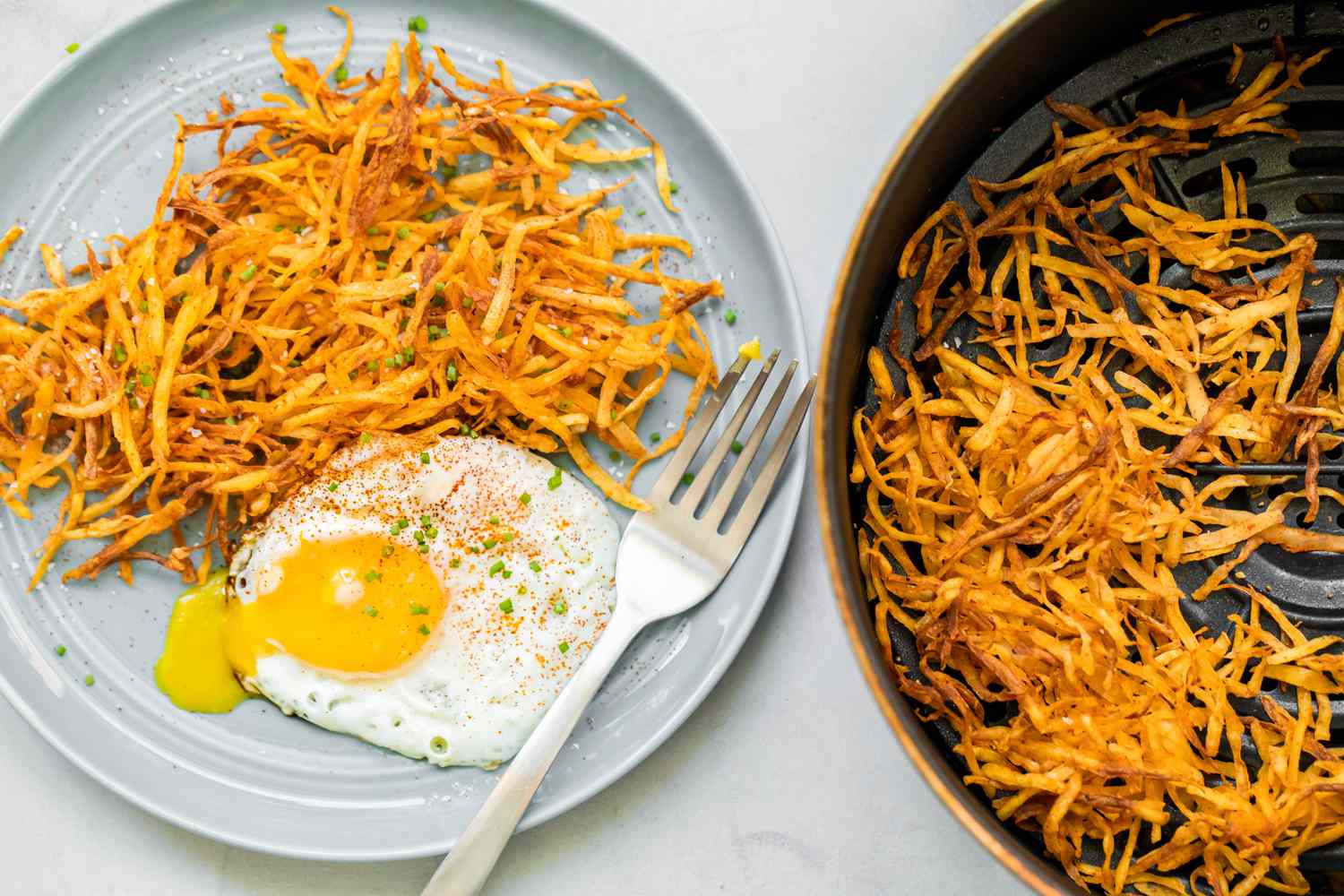
Bacon, eggs, extra crispy hash browns, sourdough toast with lots of butter and a latte. That's what's missing. https://t.co/MKZ6LaHXkY
— Kimberly Auer (@Kimberlyrja8) April 12, 2026
Potato Choice: The Foundation of a Great Hash Brown
The type of potato you use is arguably the most important factor in hash brown success. Starch content dictates the final texture. High-starch potatoes like Russets break down easily, resulting in a fluffy interior, while lower-starch varieties like red potatoes hold their shape better. Yukon Golds fall somewhere in between, offering a good balance of both.
Russets are ideal for classic hash browns. Their high starch content yields a desirable fluffy interior, and they crisp up beautifully in the air fryer. Yukon Golds offer a slightly denser, more buttery texture. Red potatoes, while not ideal for traditional hash browns, can work for a more rustic, country-style version.
Peeling is a matter of preference. Peeling potatoes results in a smoother texture, while leaving the skin on adds earthiness and extra nutrients. If the skin is left on, scrub the potatoes thoroughly. The impact on crispness is minimal, making the choice a matter of personal taste.
Don’t underestimate the impact of potato age. Older potatoes tend to have a higher starch content. While this can be good for fluffiness, they can also become gummy if overhandled. Using fresher potatoes, within a week or two of purchase, generally leads to the best results.
The Grating Technique: Coarse vs. Fine, and Why It Matters
How you grate your potatoes is critical. A coarse grate creates more surface area, which translates to more crispiness. The larger shreds allow for better air circulation during cooking, promoting even browning. A fine grate, on the other hand, results in a smoother, more compact hash brown, similar to a potato pancake.
A coarse grate is recommended for maximum crispiness. It requires more effort, but the results are worth it. Use a box grater or a food processor with a coarse grating attachment. When using a food processor, pulse instead of running it continuously to avoid turning the potatoes into a paste.
Removing excess starch is essential, as starch inhibits crisping. After grating, place the potatoes in a bowl of cold water for at least 10 minutes to draw out the starch. Adding a tablespoon of white vinegar to the water can help with crispness.
After soaking, drain the potatoes thoroughly and squeeze out as much excess water as possible using a clean kitchen towel or cheesecloth. This step is crucial for achieving crispy hash browns; the drier the potatoes, the better they will crisp up in the air fryer.
- Grate the potatoes: Use a coarse grater.
- Soak in cold water: Add 1 tbsp vinegar.
- Drain and squeeze: Remove excess water.
Seasoning Secrets: Beyond Salt and Pepper
Salt and pepper are the foundation, but don’t be afraid to experiment with other seasonings. Garlic powder, onion powder, and paprika are classic additions that complement the potato flavor beautifully. A pinch of cayenne pepper adds a welcome kick. I like to use a pre-made seasoning blend like Old Bay or Montreal Steak Seasoning for convenience.
I’ve found that seasoning before cooking allows the flavors to meld with the potatoes, resulting in a more evenly seasoned hash brown. However, you can also add seasoning after cooking if you prefer a bolder flavor. I often do a little of both – a light seasoning before cooking and a sprinkle of fresh herbs or spices after.
Consider pairing your seasonings with toppings. For example, if you’re serving your hash browns with smoked salmon and cream cheese, dill and lemon pepper would be excellent seasonings. If you’re going for a Southwestern vibe, cumin, chili powder, and a touch of smoked paprika would be perfect. Think about flavor combinations.
Don’t overdo it with the salt. Potatoes naturally contain some salt, and you can always add more at the table. Start with a small amount and taste as you go. Remember, you can always add more, but you can’t take it away.
Air Fryer Settings: Temperature, Time, and Avoiding Stickiness
An optimal air fryer temperature is 380°F (190°C). Lower temperatures result in soggy hash browns, while higher temperatures may cause burning. Cooking time varies by air fryer model and quantity, but 15-20 minutes is a good starting point.
Preventing sticking requires lightly coating the air fryer basket with cooking spray, such as avocado oil spray, ensuring even coverage. Avoid overcrowding the basket; cook large batches in multiple rounds to allow for proper air circulation and even cooking.
Preheating the air fryer for at least 5 minutes ensures potatoes start cooking immediately for a crispier texture. Shaking the basket halfway through cooking promotes even browning and prevents sticking, redistributing the potatoes for uniform cooking.
For smaller air fryers, reduce cooking time and check for doneness after 12 minutes. Larger air fryers may require slightly longer cooking times. Experiment to find what works best for your specific model.
- Temperature: 380°F (190°C)
- Time: 15-20 minutes
- Preheat: 5 minutes
- Basket prep: Lightly spray with oil
Air Fryer Basket Material Comparison for Hash Brown Preparation
| Material | Cleaning Ease | Durability | Sticking Risk |
|---|---|---|---|
| Metal | Generally requires more effort; may necessitate soaking and scrubbing. | High; resistant to scratches and warping. | Moderate to High; food can adhere if insufficient oil is used. |
| Non-Stick Coated | Typically easier to clean; often requires only a wipe with a damp cloth. | Moderate; coating can degrade over time with abrasive cleaning or utensil use. | Low to Moderate; reduced sticking compared to metal, but not entirely stick-proof. |
| Stainless Steel (with dimpled pattern) | Moderate; dimples can trap food particles requiring thorough cleaning. | Very High; excellent resistance to corrosion and damage. | Moderate; dimples can reduce surface area for sticking, but oil is still crucial. |
| Metal (with perforated liner) | Moderate; liner adds a cleaning step, but protects the basket. | High; basket itself is durable, liner may require replacement. | Low; liner creates a barrier reducing direct contact with the basket surface. |
| Ceramic Coated | Easy; similar to traditional non-stick coatings. | Moderate; ceramic coatings can be less durable than PTFE-based non-stick. | Low; generally provides a good non-stick surface for hash browns. |
Illustrative comparison based on the article research brief. Verify current pricing, limits, and product details in the official docs before relying on it.
Recipe: My Go-To Air Fryer Hash Brown Recipe (2026 Edition)
This recipe is simple, straightforward, and consistently delivers crispy, golden-brown hash browns. Adjust seasonings to your liking; the amounts provided are a good starting point.
Yields: 2-3 servings Prep time: 15 minutes Cook time: 18 minutes Ingredients: 2 large Russet potatoes, peeled and coarsely grated; 1 tablespoon white vinegar; 1 teaspoon garlic powder; 1/2 teaspoon onion powder; 1/2 teaspoon paprika; 1/4 teaspoon cayenne pepper (optional); 1 teaspoon salt; 1/2 teaspoon black pepper; 1 tablespoon avocado oil.
Instructions: 1. Place grated potatoes in a bowl of cold water with vinegar. Let sit for 10 minutes. 2. Drain potatoes and squeeze out excess water using a kitchen towel. 3. In a bowl, combine drained potatoes, garlic powder, onion powder, paprika, cayenne pepper (if using), salt, pepper, and avocado oil. Mix well. 4. Preheat air fryer to 380°F (190°C). 5. Place hash browns in the air fryer basket in a single layer. 6. Cook for 18 minutes, shaking the basket halfway through. 7. Serve immediately.
I often add a handful of shredded cheddar cheese to the potato mixture before cooking for extra flavor. You can also add diced onions or peppers for a more substantial hash brown. Don’t be afraid to experiment! This recipe is a blank canvas for your culinary creativity.
Troubleshooting: Common Problems and How to Fix Them
Soggy hash browns: The most common issue. The likely cause is insufficient starch removal or overcrowding the basket. Ensure you thoroughly drain and squeeze the potatoes after grating, and cook in batches. Also, verify your air fryer is reaching the correct temperature. Some models run cooler than advertised.
Uneven cooking: This usually happens when the potatoes aren’t spread in a single layer. Shake the basket halfway through cooking to redistribute the potatoes and ensure even browning. Avoid piling the potatoes on top of each other.
Burning: Lower the temperature slightly or reduce the cooking time. Different air fryers have different heating elements. If your air fryer tends to burn easily, start with a lower temperature and monitor closely. Also, make sure you’re using a light coating of oil.
Sticking: Ensure the air fryer basket is adequately coated with cooking spray. If the hash browns are still sticking, try using parchment paper specifically designed for air fryers. However, be aware that parchment paper can affect air circulation, so it’s not always the best solution. I’ve seen many questions about this in online cooking forums.
Beyond the Basics: Hash Brown Variations to Try
Once you’ve mastered the basic air fryer hash brown, the possibilities are endless. Sweet potato hash browns are a delicious and healthy variation. Simply substitute sweet potatoes for Russets and adjust the seasonings accordingly. Cinnamon and nutmeg pair well with sweet potatoes.
Chorizo and cheese hash browns are a hearty and flavorful option. Add cooked chorizo and shredded cheese (Monterey Jack or cheddar work well) to the potato mixture before cooking. Loaded hash brown stacks are a fun and satisfying meal. Layer hash browns with your favorite toppings – cheese, bacon, sour cream, chives – and bake in the air fryer until heated through.
I recently experimented with a Mediterranean hash brown, incorporating sun-dried tomatoes, feta cheese, and oregano. It was a surprising success! I also enjoy adding roasted garlic to my hash browns for a more intense flavor. Don’t be afraid to get creative and experiment with different flavor combinations.
The key to adapting the basic recipe for variations is to adjust the cooking time as needed. Adding ingredients like cheese or chorizo may require a slightly longer cooking time. Always check for doneness before serving. It's all about tweaking and refining until you find your perfect hash brown.

No comments yet. Be the first to share your thoughts!