
Why frozen hash browns work best
The persistent myth that fresh potatoes yield superior hash browns ignores the physics of moisture management. Fresh potatoes contain high water content and active enzymes that release steam rapidly upon contact with heat. This steam creates a barrier between the potato surface and the pan, preventing the Maillard reaction—the chemical process responsible for browning and crispiness. You end up with steamed, soggy shreds rather than a golden crust.
Frozen shredded potatoes solve this problem through industrial processing. Before freezing, the potatoes are typically blanched and often pre-rinsed. This removes surface starch and excess water that would otherwise inhibit crisping. The freezing process itself also breaks down cell walls, allowing the shreds to dehydrate more efficiently when they hit the hot pan. The result is a consistent texture that responds predictably to heat.
Consistency is the other major advantage. A bag of frozen hash browns provides uniform shred size and moisture levels throughout the entire package. Freshly grated potatoes vary in thickness and water content depending on the potato variety and grater used. This variability leads to uneven cooking, where some shreds burn while others remain pale and soft. Using frozen shreds ensures that every bite has the same crunch.
Key insight: Frozen shreds are often pre-rinsed, reducing surface starch that causes sogginess.
Ingredients for golden hash browns
Achieving maximum crunch with frozen hash browns requires managing moisture and optimizing heat transfer. The foundation is a standard 12-ounce bag of frozen shredded hash browns. Because these pre-cooked potatoes retain water, adding a dry binder is non-negotiable for structural integrity and surface crispiness.
Cornstarch is the primary binding agent. It coats the potato shreds, creating a barrier that limits starch gelatinization and promotes a brittle, crunchy exterior rather than a gummy interior. This technique mimics the cornstarch application used in professional deep-frying but works effectively in a skillet.
Fat selection dictates the browning profile. Neutral high-smoke-point oils like canola or vegetable oil facilitate even conduction without imparting flavor. Butter adds richness but burns quickly; use it only for finishing. Season with salt and black pepper after cooking to prevent moisture extraction during the frying process.
Prep the potatoes properly
The difference between a soggy, steamed mess and a shatteringly crisp hash brown comes down to one variable: moisture. Frozen hash browns arrive pre-cooked and packed with ice crystals. If you throw them straight into the pan, that ice melts instantly, turning the cooking medium into a water bath. The potatoes steam instead of fry, resulting in a pale, mushy texture that lacks structural integrity.
To achieve the Maillard reaction—the chemical process responsible for browning and flavor development—you must remove as much free water as possible before the oil ever touches the pan. This section outlines the precise preparation workflow to ensure maximum crispiness.
Transfer the frozen hash browns to a colander and let them sit at room temperature until fully thawed. Do not skip this step. Attempting to dry frozen, solid blocks is ineffective; the ice core will melt during cooking, releasing steam directly into the frying surface. Complete thawing ensures the water is accessible for removal.
Once thawed, the potatoes will release a significant amount of liquid. Use your hands to squeeze the mixture firmly. As Bon Appétit’s test kitchen notes, you must squeeze "with all of your might." This mechanical action expels the surface moisture that would otherwise inhibit browning. If the mixture feels wet to the touch, it is not ready for the pan.
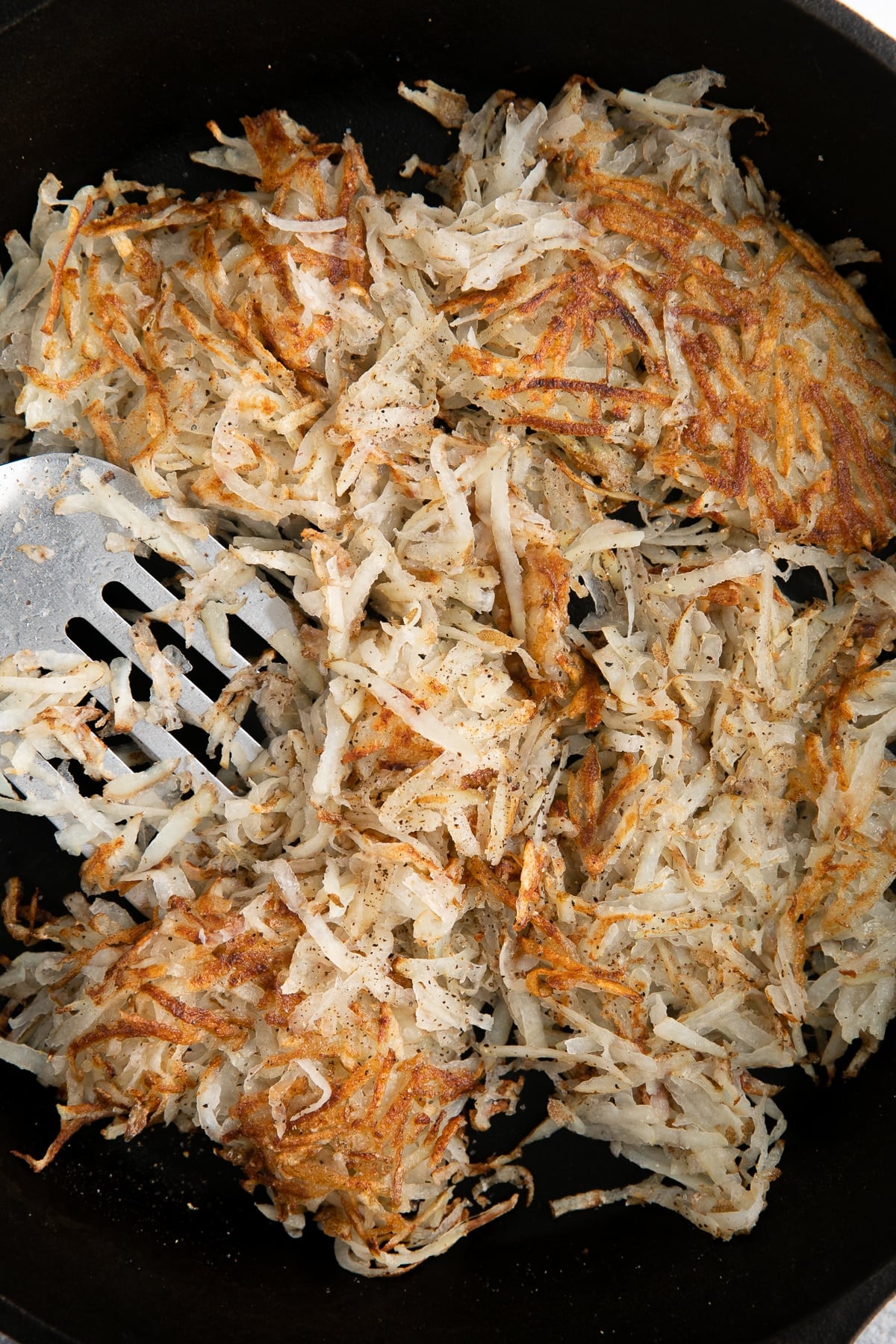
After squeezing, spread the potatoes on a layer of paper towels or a clean kitchen towel. Pat the top dry to absorb any residual surface liquid. The goal is a dry, loose texture. If the potatoes clump together due to released starch, break them apart gently. A dry starting point ensures immediate searing upon contact with hot oil.
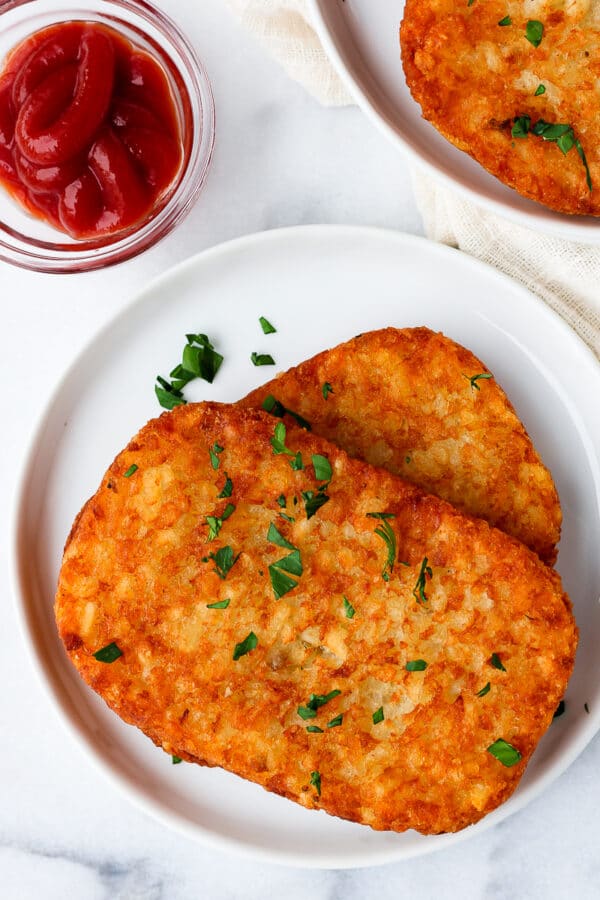
For extra structural crispiness, toss the dried potatoes with a small amount of cornstarch or flour. This acts as a binder and creates a thin, dry barrier that crisps up faster than the potato itself. This step is optional but highly recommended for achieving that distinct, crunchy exterior without burning the interior.
Cook for maximum crunch
To achieve a crisp exterior without burning, you must manage heat transfer and moisture evaporation with precision. The goal is to drive off water rapidly so that the potato surface can reach the temperature required for the Maillard reaction, creating that distinct golden-brown crust. This process relies on three factors: consistent medium-high heat, sufficient fat to conduct energy, and strict patience during the initial cooking phase.
Preheat and Oil the Pan
Start with a heavy-bottomed skillet or griddle. Medium-high heat is the target range; this temperature is high enough to sizzle the oil immediately upon contact but low enough to prevent the outside from charring before the inside thaws and dries out. Add enough oil to coat the bottom generously—about one to two tablespoons of neutral oil like canola or vegetable oil. Swirl the pan to ensure an even film. The oil should shimmer but not smoke. If the oil smokes, the pan is too hot, and your hash browns will burn before they crisp.
Spread and Press the Patties
Once the oil is hot, add the frozen hash brown patties. Do not crowd the pan; give each patty at least an inch of space around its edge. Crowding traps steam, which turns the cooking process into steaming rather than frying, resulting in a soggy texture. Press down firmly on each patty with a spatula. This action ensures maximum surface contact between the potato and the hot pan, which is essential for even browning. You are essentially creating a uniform layer of potato that will cook at the same rate.
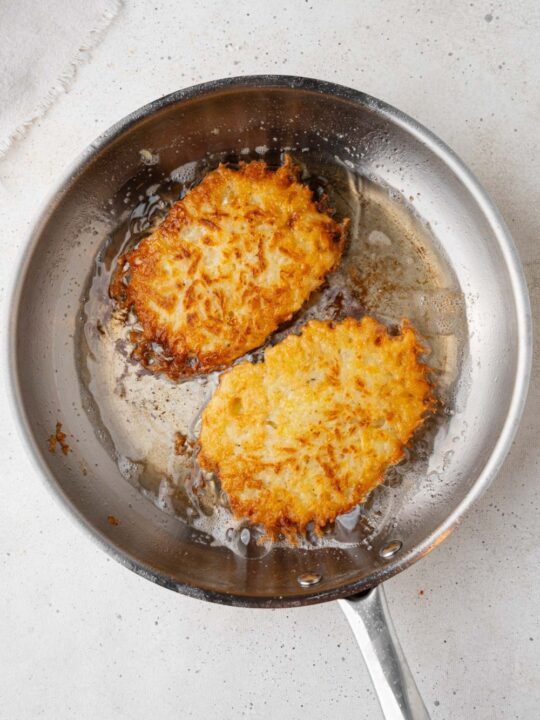
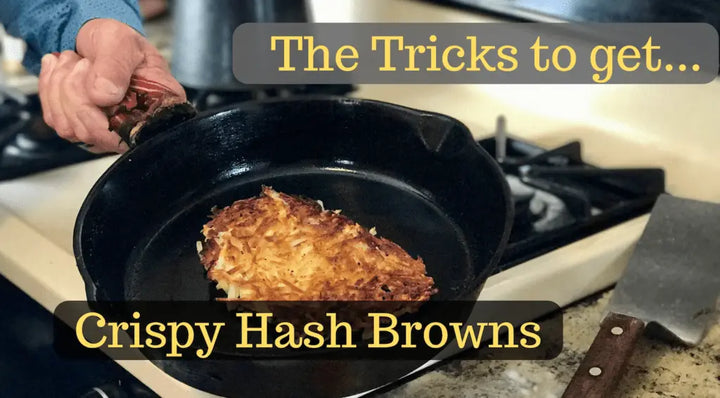
Once the patties are pressed into the pan, do not touch them. Let them cook undisturbed for 5 to 10 minutes. This is the most critical phase. The heat needs time to evaporate the moisture from the bottom layer of the potato. If you lift the patty too early, you will tear the forming crust and release the heat needed to crisp the surface. You will see the edges begin to turn golden and become translucent as the starches gelatinize and dry out.
After the initial resting period, check the underside. It should be a deep golden brown. Slide your spatula completely underneath the patty and flip it in one smooth motion. A hesitant flip can break the crust. Once flipped, press down again lightly to ensure the new side makes full contact with the pan. The second side typically cooks faster, requiring only 3 to 5 minutes. The internal moisture will continue to escape, and the second side will develop a similar crisp texture.
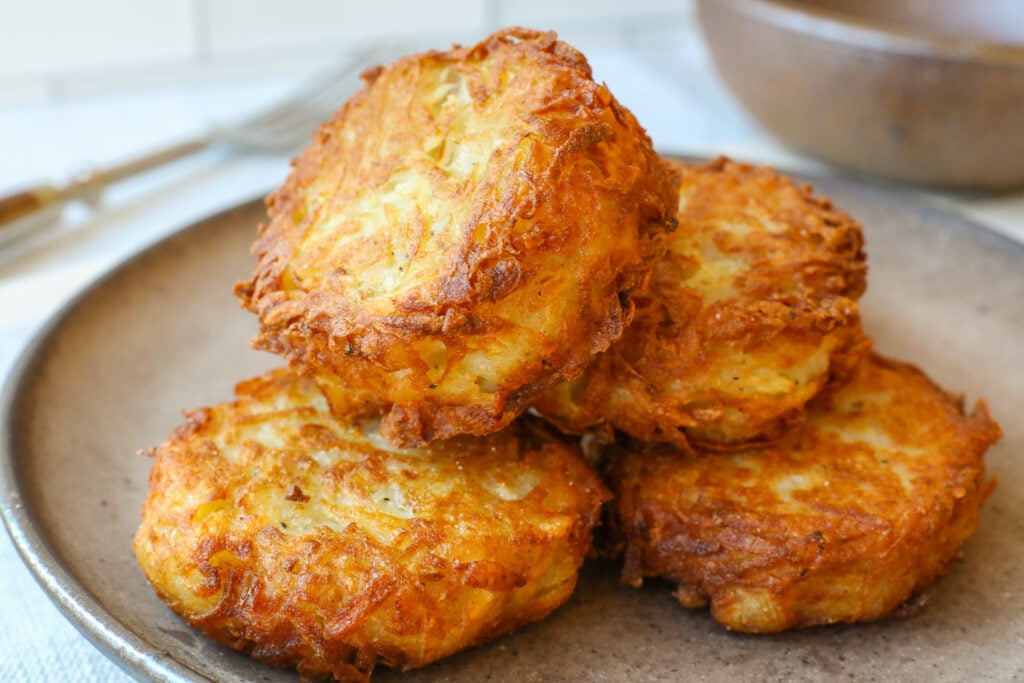
Transfer the cooked hash browns to a wire rack or a plate lined with a paper towel. Avoid stacking them directly on top of each other while hot, as the steam trapped between the layers will soften the crisp crust. Let them rest for a minute to allow the exterior to set further. Serve immediately while the surface is still hot and crunchy. The contrast between the crisp exterior and the soft, tender interior is the primary indicator of success.
Troubleshooting Soggy Hash Browns
Soggy hash browns are almost always a moisture problem. Frozen potatoes contain significant water content that must evaporate before the surface can brown. If the pan temperature drops too low, that water turns into steam, which keeps the exterior soft and pale rather than crisp and golden.
To fix this, manage the heat and the surface area. Start with a medium-high heat setting. This ensures the oil is hot enough to flash-sear the outside before the interior thaws completely. If you are cooking a large batch, use a wide skillet or griddle to maximize surface area. Crowding the pan creates a microclimate of trapped steam, which prevents browning and leads to a mushy texture.
Spread the potatoes in a thin, even layer. A thin layer allows heat to penetrate quickly and moisture to escape. Avoid stirring frequently. Let the potatoes sit undisturbed for 3–5 minutes to develop a crust. Flip only once when the bottom is deeply golden. If the hash browns are still soft after flipping, extend the cooking time slightly on the second side, ensuring the heat remains consistent.
Common hash brown: what to check next
Addressing frequent technical hurdles ensures consistent results every time you cook. These clarifications focus on moisture management and heat transfer to maximize crispiness.
No comments yet. Be the first to share your thoughts!