
Why a potato shredder changes everything
If you want hash browns that shatter when you bite them, the tool in your hand matters more than the heat under the pan. A dedicated potato shredder is the secret weapon here. It produces wispy, uniform strands that cook evenly and crisp up in ways a food processor simply can’t match.
Food processors tend to mash potatoes into a sticky, wet pulp. That excess moisture steams the potatoes instead of frying them, leaving you with a dense, gummy cake rather than a golden crust. A box grater works, but it requires significant arm strength and time. The manual shredder cuts through raw potatoes quickly, giving you those perfect, thin ribbons without the sweat.
These thin strands are key to the crunch. When the shreds are uniform, they hit the hot butter at the same time and brown together. You get that distinct, audible snap—the kind of crunch that makes hash browns addictive. It’s the difference between a side dish and a headline act.
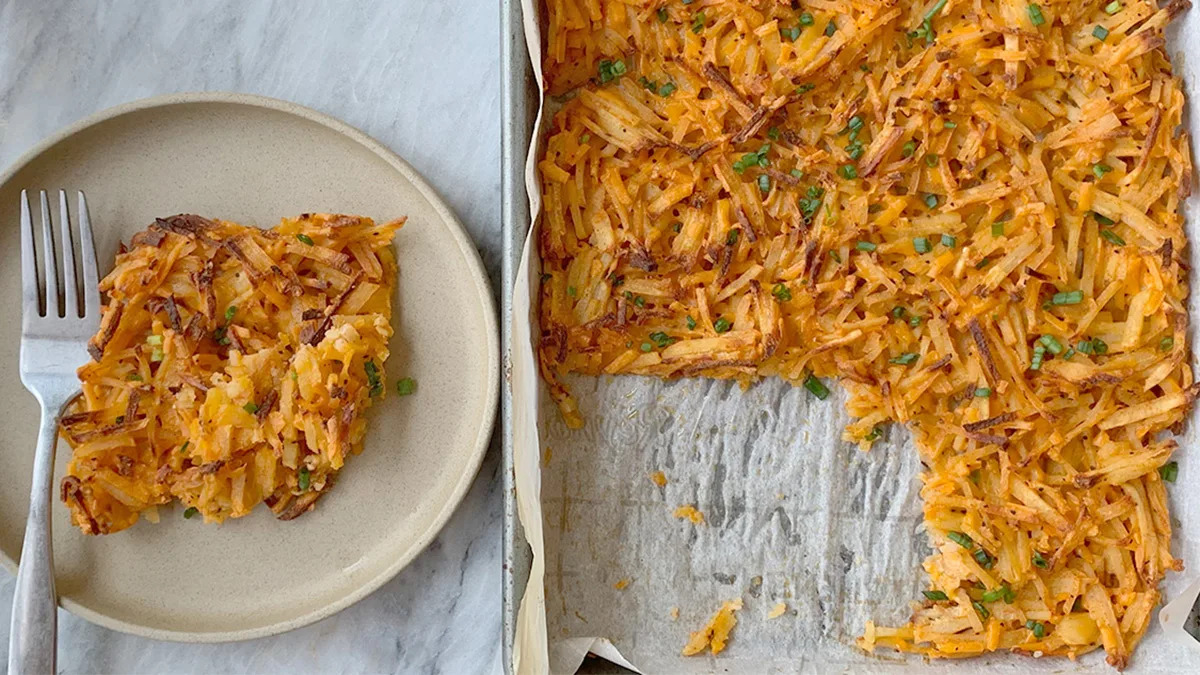
The secret to crunch: squeezing moisture
You can’t get that deep golden crunch without removing the water. Potatoes are mostly water, and that moisture creates steam when it hits the hot pan. Steam is the enemy of crispiness; it steams the potatoes instead of frying them. If the shreds are wet, you’ll get a soggy mess instead of a crispy crust.
This is where a potato shredder changes the game. Manual grating is tedious and uneven, often leaving you with inconsistent shreds that cook at different rates. A shredder produces uniform strands quickly, making the next step much easier to manage. Uniform shreds expose more surface area to the heat, ensuring every bite has that satisfying snap.
How to squeeze properly
- Rinse the shreds: Place your shredded potatoes in a fine-mesh strainer and rinse under cold water. This washes away excess surface starch, which helps prevent sticking and contributes to a lighter texture.
- Dry with a towel: Lay the rinsed shreds on a clean kitchen towel or several layers of paper towels. Gather the edges and twist tightly. Squeeze with all your might. You want the towel to come out damp, not dripping.
- Check the result: If the shreds still feel slick or cold, they need more drying. Repeat the squeezing process until they are dry to the touch. This step is non-negotiable for crispy hash browns.
By taking the time to dry the potatoes thoroughly, you’re setting the foundation for a perfect skillet recipe. The result is a hash brown that shatters when you cut it, with a savory, golden exterior and a tender interior.
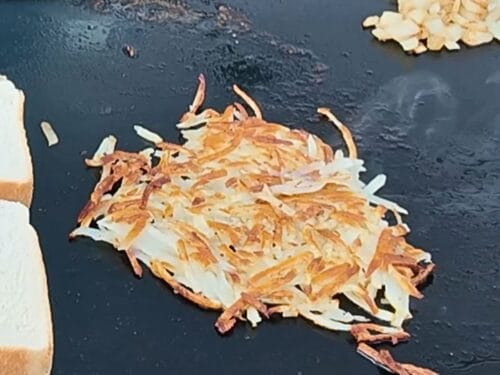
Spread the shredded potatoes under cold running water in a colander. Use your fingers to gently separate the strands and wash away the cloudy starch water. This step prevents the hash browns from sticking together in the pan.
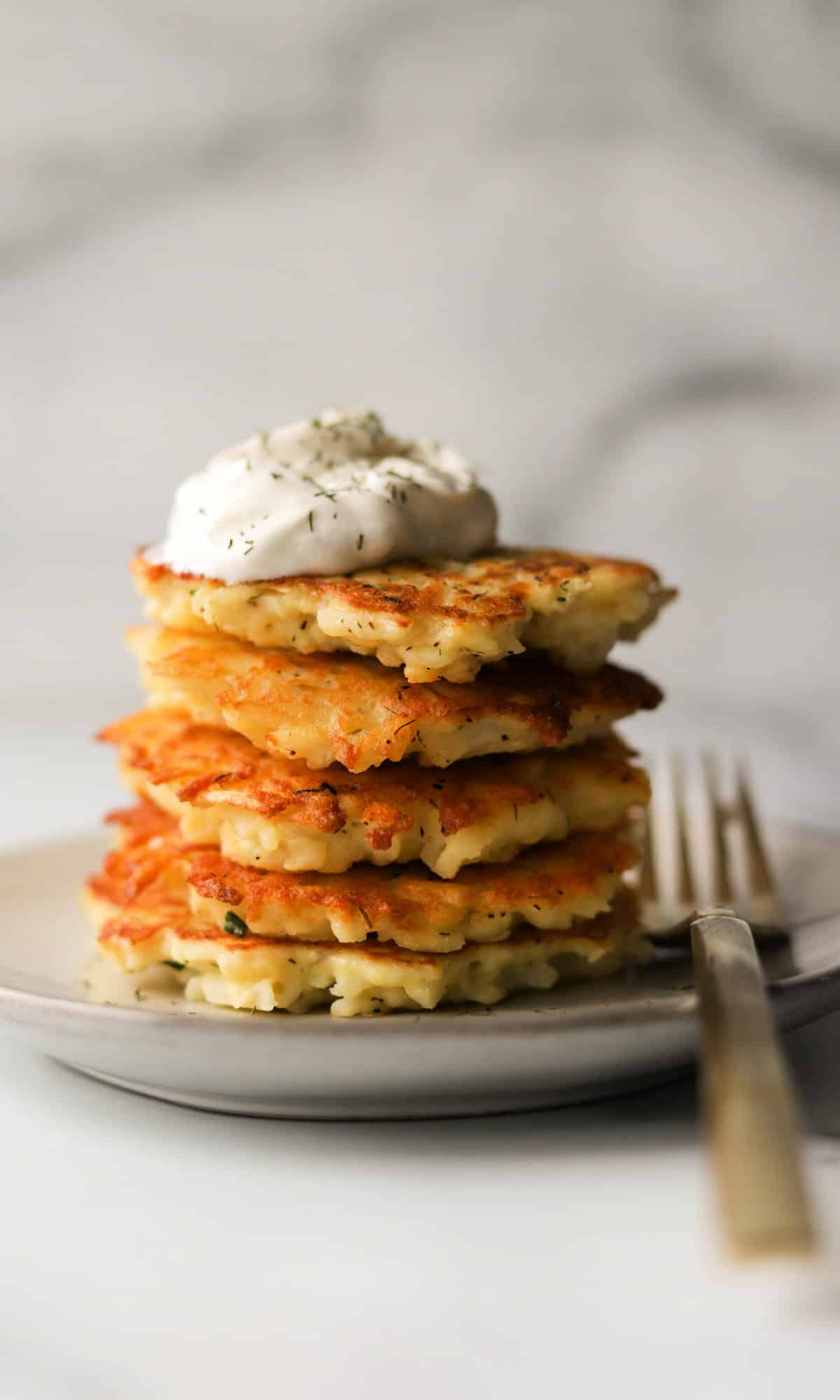
Lay the rinsed potatoes on a clean kitchen towel. Gather the corners and twist tightly, squeezing out as much liquid as possible. Repeat until the shreds feel dry and separate, not clumped or wet.
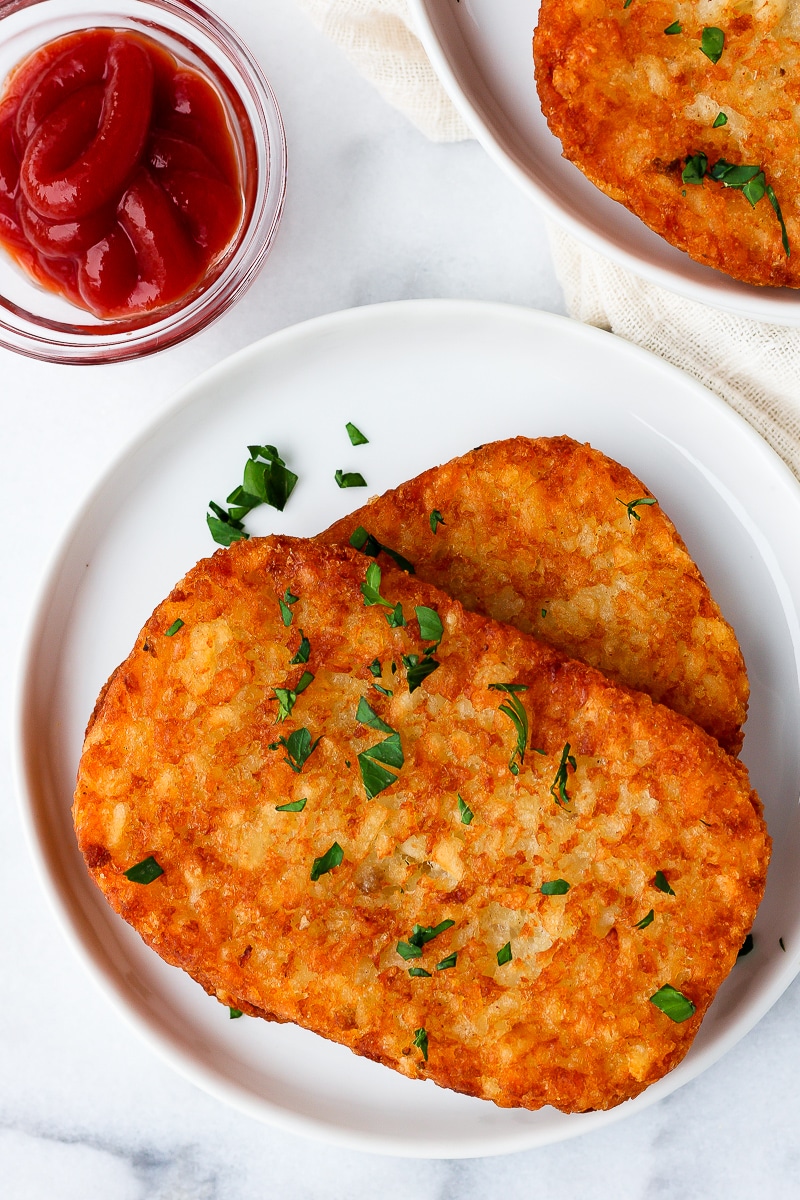
Transfer the dry shreds to a bowl. Add salt, pepper, and a tablespoon of cornstarch for extra crispness. Heat oil in a skillet until shimmering, then spread the potatoes in a thin, even layer. Cook without moving for 5-7 minutes until the bottom is deeply golden.
Skillet hash brown recipe ingredients
You only need a handful of items to get that signature golden crunch. The secret isn't a complex spice blend; it's about texture management and heat conduction. Using a potato shredder makes this process effortless, turning what could be a tedious grating session into a quick prep step.
The star is, of course, the potatoes. Russets are the gold standard here because their high starch content helps them crisp up beautifully. You'll also need cornstarch. This is the non-negotiable ingredient for extra crunch. A light dusting of cornstarch on the shreds absorbs surface moisture and creates a delicate, shatteringly crisp exterior that pure potato just can't achieve on its own.
For cooking, you'll want a mix of butter and oil. Butter provides the rich, nutty flavor we crave, while the oil raises the smoke point so the butter doesn't burn before the potatoes are golden. Combine these with salt and pepper, and you have everything you need for a perfect skillet breakfast.
-
6 large Russet potatoes
-
2 tablespoons cornstarch
-
2 tablespoons cooking oil (like canola or vegetable)
-
2 tablespoons unsalted butter
-
1 teaspoon salt
-
½ teaspoon black pepper
Cook the hash browns undisturbed
The secret to that diner-style crunch isn't just the potato—it's patience. Once your skillet is hot and ready, the real work begins. Spread the shredded potatoes evenly across the pan. A thin, consistent layer is crucial here; if the pile is too thick, the center will steam instead of fry, leaving you with soggy, pale bits instead of a golden crust.
Heat the skillet to medium-high. This temperature is the sweet spot: hot enough to sear the exterior immediately, but controlled enough to prevent burning before the inside cooks through. As you spread the shreds, you’ll hear that satisfying hiss—the sound of moisture escaping and the Maillard reaction kicking in. This is where the flavor develops.
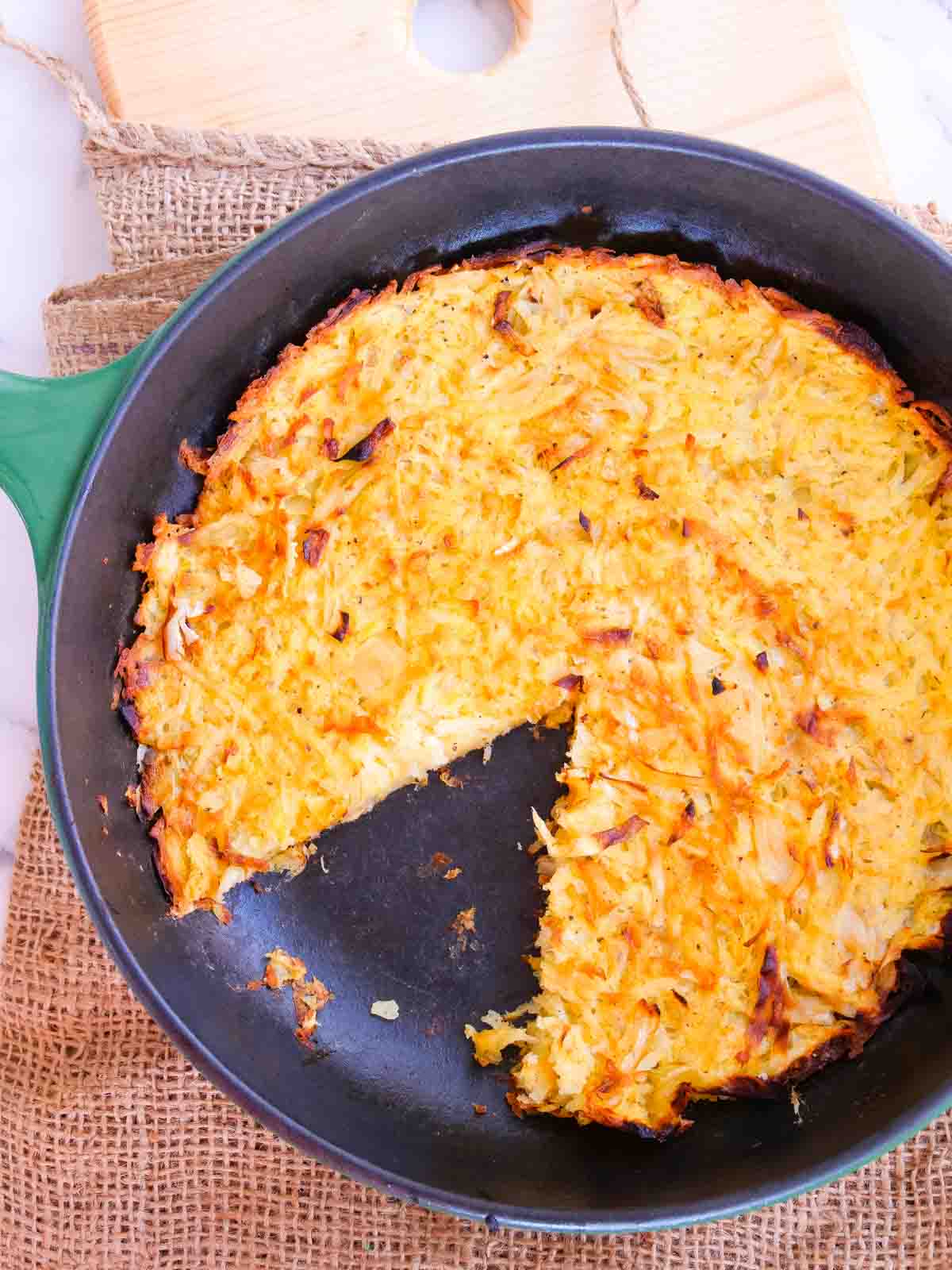
Place your cast iron or non-stick skillet over medium-high heat. Add your oil or butter and let it shimmer. You want the fat hot but not smoking. This ensures the potatoes hit the pan with enough thermal energy to crisp immediately rather than absorb grease.
Dump the shredded potatoes into the center and use a spatula to press them down into a single, even layer. Don’t mound them up. A thin layer maximizes surface area contact with the hot pan, which is the primary driver of crispiness. Flatten it out like a pancake.
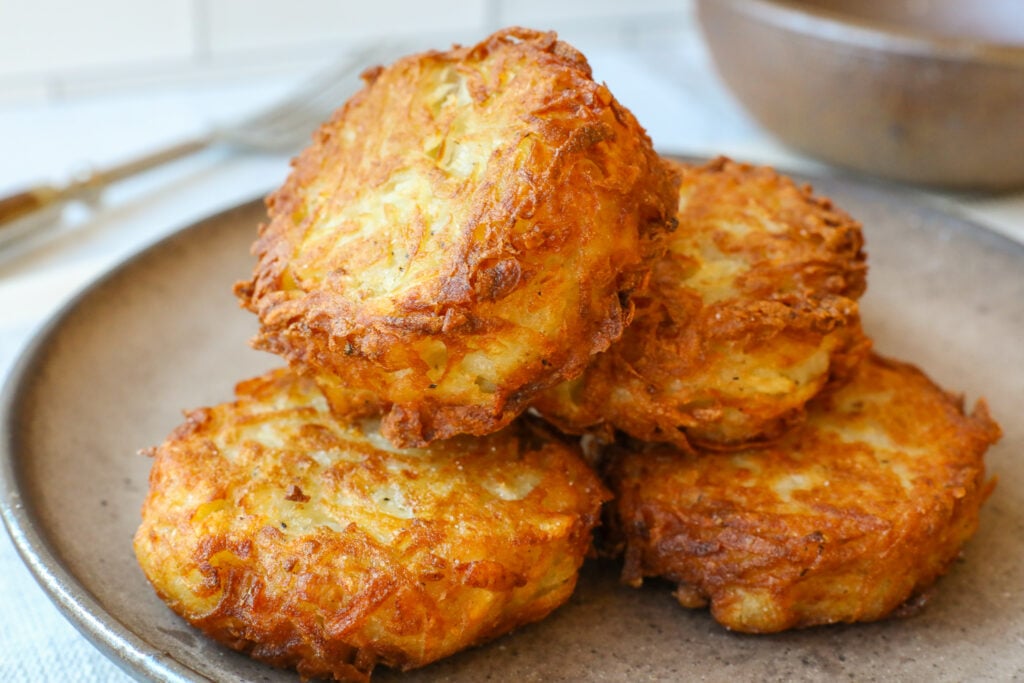
Walk away. Resist the urge to stir. Let the hash browns cook undisturbed for 5 to 7 minutes. During this time, a rigid, golden-brown crust will form. You can gently lift an edge with a spatula to check color, but do not flip or break the structure yet. Patience here yields the crunch.
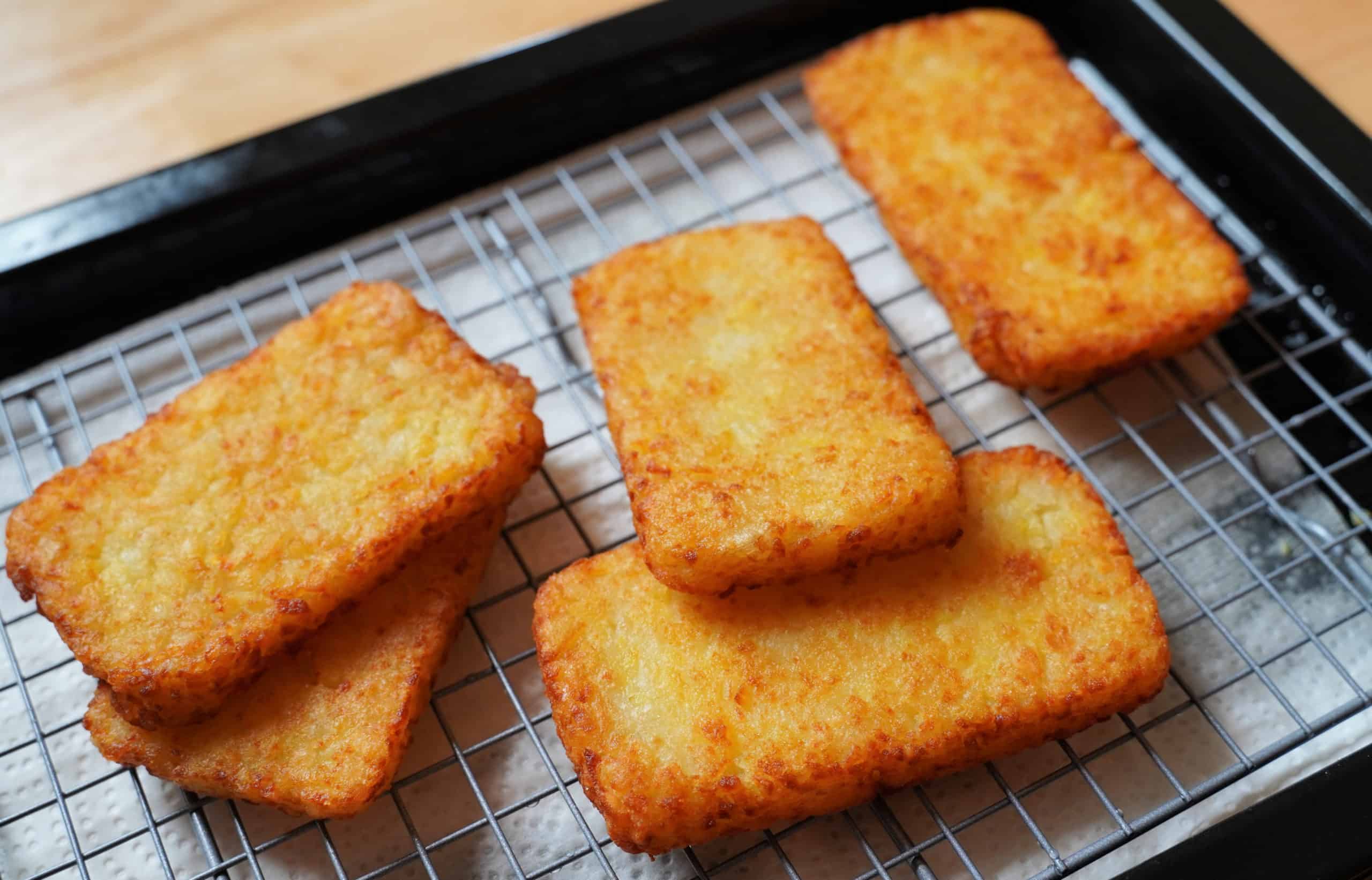
Once the bottom is deep golden brown, slide your spatula underneath and flip the entire mass or individual patties. Cook the second side for another 4 to 5 minutes until equally crisp. Season with salt immediately after flipping so it adheres to the hot surface. Serve hot for maximum crunch.
Using a potato shredder makes this process significantly easier than manual grating, as it produces uniform shreds that cook at the same rate. This consistency ensures that every bite has that same satisfying crunch, without the risk of some pieces being raw while others are burnt.
Recipe Card and Serving Tips
This is the moment you’ve been waiting for. The potato shredder does the heavy lifting, turning raw tubers into uniform shreds in seconds—no more wrist fatigue from manual grating. Once those shreds hit the hot oil, the real magic happens: a steady sizzle that quickly transforms into a deep, resonant crunch.
For the ultimate breakfast skillet experience, serve these hot and crispy alongside scrambled eggs or crisp bacon. The contrast between the crunchy exterior and tender interior pairs perfectly with a dollop of sour cream or a sprinkle of hot sauce. If you’re feeding a crowd, keep the finished hash browns warm in a 200°F oven while you finish the rest of the batch.
Fixing Mushy Hash Browns
A soggy center or a burnt crust is the only thing standing between you and the perfect crispy hash brown. This usually happens when the pan is too crowded or the heat is mismanaged. Think of your skillet as a sauna, not a steam room; if the potatoes are packed tight, the moisture gets trapped and steams the shreds instead of frying them.
To avoid this, use a large enough pan to give the shreds room to breathe. Spread them in a single layer with a little space between each clump. If you are making a large batch, cook in two rounds rather than overcrowding. The potato shredder makes portioning easier, but you still need to respect the pan's surface area.
If you notice browning too fast, lower the heat slightly and cover the pan for a minute to steam the center, then uncover to re-crisp. Trust the crunch over the color; golden brown is the goal, not dark brown.
FAQs about crispy hash browns
Can I make hash browns ahead of time?
Yes, but you need to manage the moisture. Shred your potatoes, soak them in ice water for 30 minutes to remove starch, then drain and dry them thoroughly. Store the damp shreds in an airtight container in the fridge for up to 24 hours. When you are ready to cook, squeeze them one last time to remove any accumulated water. This prep step saves morning stress while keeping the crunch intact.
What is the best potato for crispy hash browns?
Starchy potatoes like Russets are the gold standard. Their low moisture and high starch content create that golden, shatteringly crisp crust you want. Waxy potatoes hold too much water and tend to steam rather than fry, leaving you with a soggy result. If you only have Yukon Golds, they work but will yield a softer, more tender texture rather than a hard crunch.
Can I freeze cooked hash browns?
Freezing cooked hash browns is possible, but the texture often suffers. They may lose some of their initial snap and become slightly chewy upon reheating. For best results, freeze the raw, shredded, and dried potatoes in portions. Thaw and cook them fresh. If you must freeze cooked patties, reheat them in a hot skillet or toaster oven to restore as much crispness as possible, avoiding the microwave.
No comments yet. Be the first to share your thoughts!