
Choose the right potato
The foundation of diner-style crispy hash browns lies in starch content. Waxy potatoes hold too much moisture and structural integrity, preventing the shreds from breaking down and fusing into a golden crust. Instead, you need high-starch varieties like russets. These potatoes have a mealy texture that releases starch granules during cooking, acting as a natural binder that holds the hash browns together while allowing the exterior to dehydrate and crisp.
When selecting potatoes, look for large, firm russets with thick, brown skins. Avoid any tubers with green patches or soft spots, as these indicate age or improper storage. A heavy potato for its size suggests high water content, which you will need to work harder to remove. The goal is to maximize the surface area of starch exposed to the hot oil.
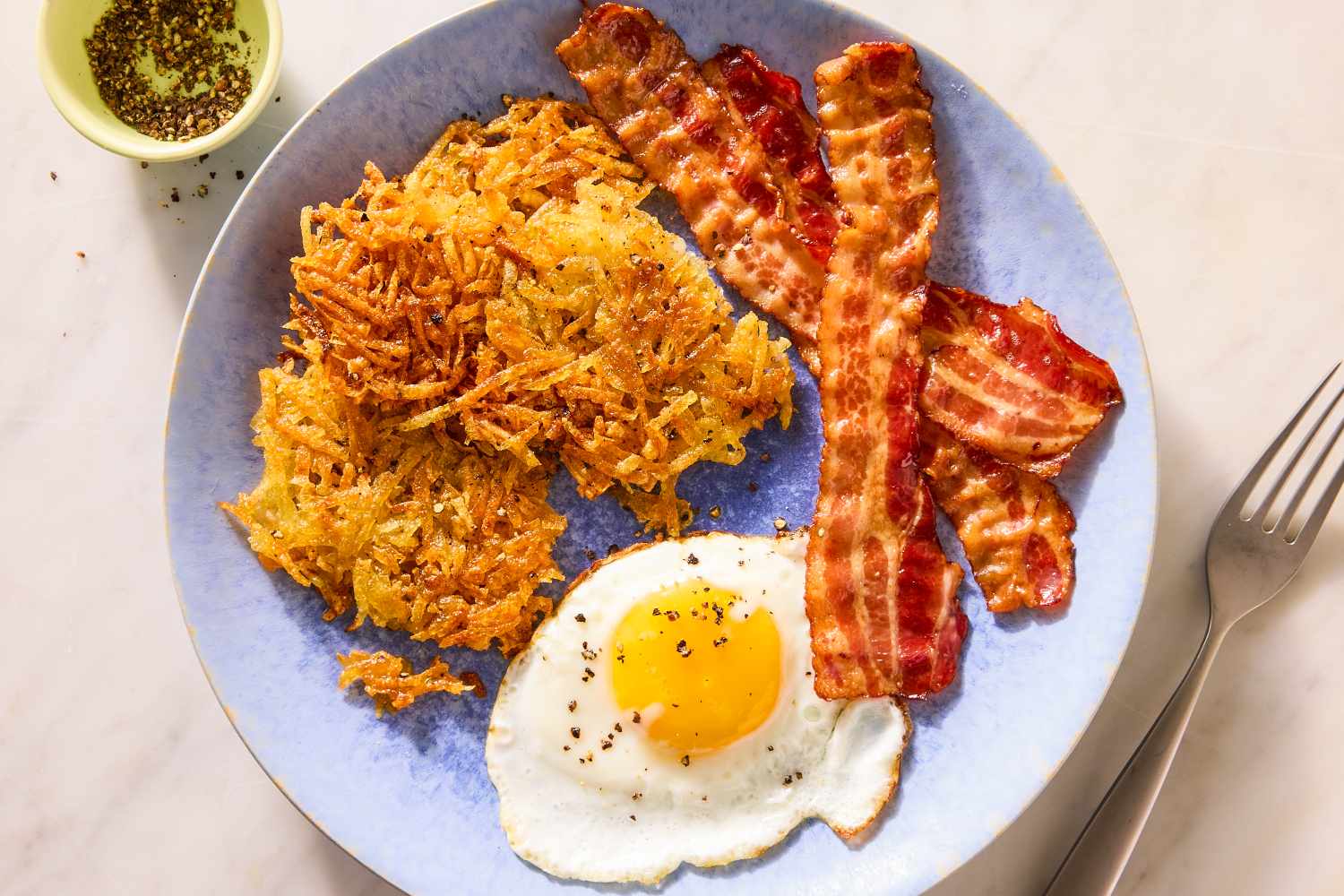
Once selected, the preparation is mechanical. Peel the russets and shred them using a box grater or food processor. The immediate next step is moisture removal. Place the shredded potatoes in a clean kitchen towel and squeeze them tightly over the sink. You will release a significant amount of water. This step is non-negotiable; any remaining moisture will steam the potatoes in the skillet, resulting in a soggy texture rather than a crispy one. Dry shreds equal crisp hash browns.
-
Select large, firm russet potatoes
-
Peel the potatoes completely
-
Shred using a box grater or food processor
-
Squeeze shredded potatoes in a towel to remove all moisture
Shred and rinse the potatoes
The texture of hash browns is determined before the pan ever heats. You are fighting two enemies: starch, which acts as a glue, and water, which steams the potato instead of frying it. To get that distinct, shatteringly crisp exterior, you must strip away the surface starch and dry the vegetable completely.
Use the large holes of a box grater or the shredding disk of a food processor. Grate peeled russet potatoes into a large bowl. The goal is uniform, thin strips that will cook evenly. Avoid the fine grater, which turns the potato into a wet paste that will never crisp.
Submerge the shredded potatoes in a bowl of cold water. Swirl them with your hands to release the cloud of white starch. Drain the cloudy water and repeat this rinse two or three times. Stop when the water runs clear. This step is non-negotiable; residual starch will turn your hash browns into a gummy, pale disc.
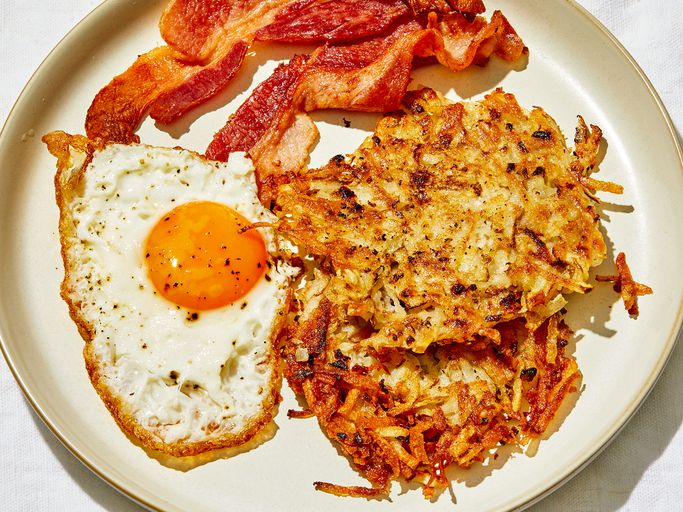
Transfer the rinsed potatoes to a clean kitchen towel or several layers of cheesecloth. Gather the edges and twist tightly. Squeeze with maximum force to expel as much water as possible. The drier the potato, the faster the Maillard reaction occurs in the skillet. Wet potatoes steam; dry potatoes fry.
Dry shredded potatoes are the foundation of a successful hash brown. If you skip the rinse or fail to squeeze them dry, no amount of heat or oil will compensate for the moisture and starch. Proceed to the skillet only when the shreds feel cool and nearly brittle to the touch.
Dry the potatoes thoroughly
Removing moisture is the single most important variable in making crispy hash browns. Water is the enemy of the Maillard reaction, the chemical process that creates the golden-brown crust and complex flavors. When wet potato shreds hit hot oil, the surface temperature cannot rise above 212°F (100°C) until all the water evaporates. This delay turns the cooking process into a steaming session, resulting in pale, soggy shreds rather than a crunchy exterior.
To achieve true crispness, you must mechanically extract as much water as possible. After grating or shredding the potatoes, place them in a clean cheesecloth or a tightly woven kitchen towel. Gather the edges and twist with significant force, squeezing out every drop of liquid. The potatoes should feel dry to the touch and the shreds should separate easily.
If the potatoes remain damp, they will clump together in the skillet and steam each other. This prevents individual shreds from making direct contact with the hot oil, which is necessary for even browning. Dry shreds fry individually, creating a lattice of crispy edges that defines a perfect hash brown.
Cook in a hot skillet
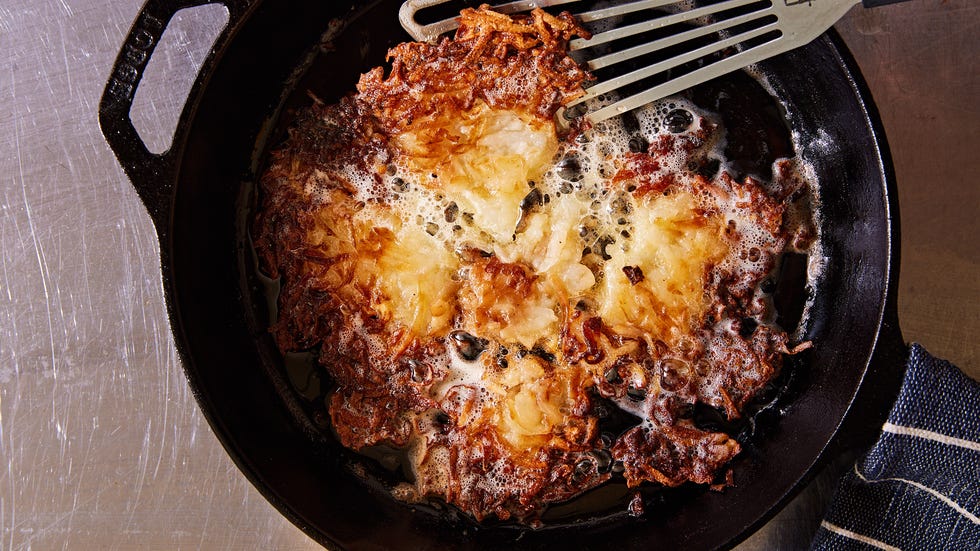
The physics of a crispy hash brown relies on rapid moisture evaporation. Water boils at 212°F (100°C), while the Maillard reaction—the chemical process that creates browned, flavorful crusts—requires surface temperatures exceeding 280°F (140°C). To achieve this, you must preheat your skillet over medium-high heat before adding the potatoes. A properly heated pan forces water out of the potato cells quickly, preventing the shreds from steaming in their own juices. If the pan is too cool, the potatoes will absorb oil and become soggy rather than forming a rigid, crunchy exterior.
Place a heavy skillet, preferably cast iron or stainless steel, over medium-high heat. Allow it to warm for at least two to three minutes. You can test the heat by flicking a drop of water onto the surface; if it sizzles and evaporates immediately, the pan is ready. This high initial temperature is critical for searing the exterior of the potatoes before the interior dries out.
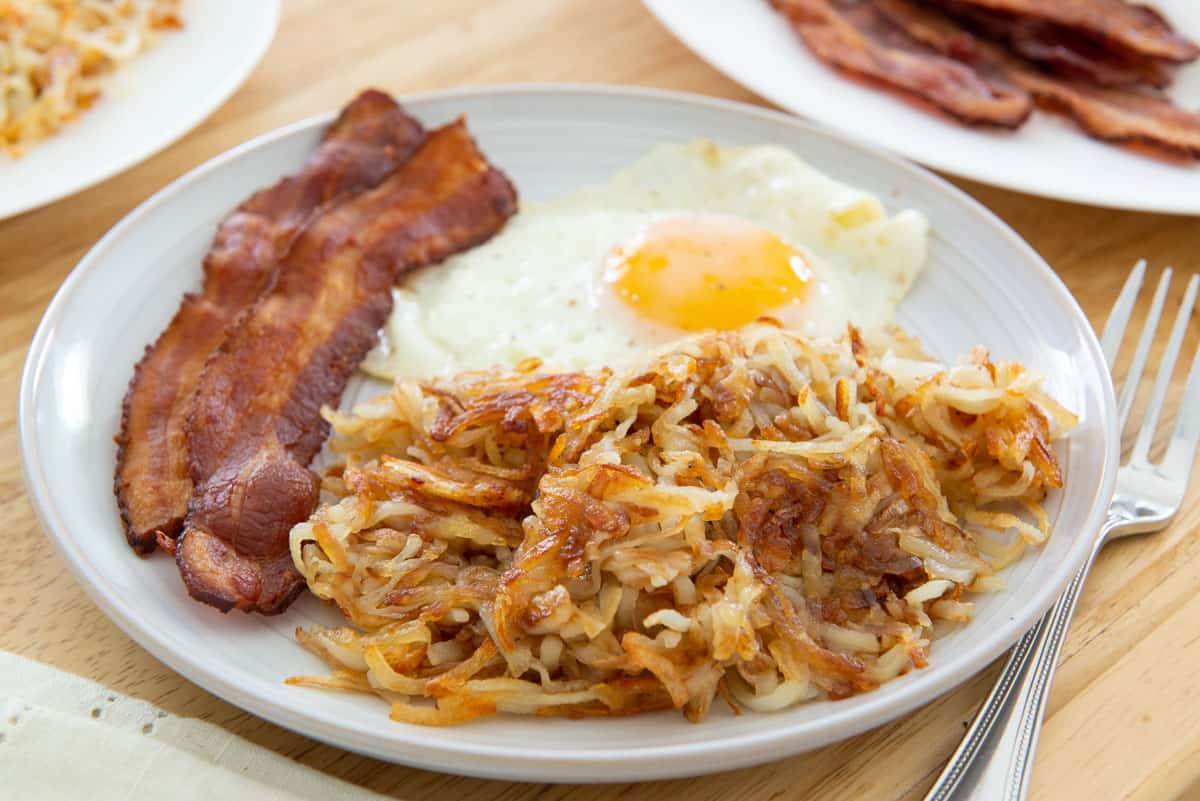
Add your butter and oil to the hot pan. The oil should shimmer but not smoke heavily. Spread the shredded potatoes into an even layer, pressing down gently with a spatula to maximize surface contact with the metal. Uniform thickness ensures that every shred cooks at the same rate, preventing uneven browning or burnt edges.
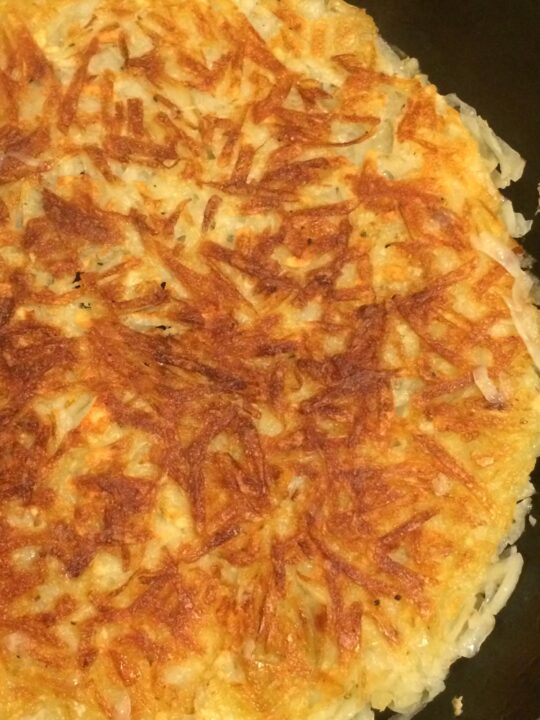
This is the most critical phase: do not touch the potatoes. Let them cook undisturbed for five to ten minutes. During this time, the starches on the bottom layer will gelatinize and then caramelize, forming a solid crust. Moving the potatoes too early will break this developing structure, resulting in loose, mushy shreds instead of a cohesive, crispy cake.
Lift an edge with your spatula to inspect the color. It should be a deep, uniform golden brown. If it resists moving, give it another minute. Once the bottom is set, flip the hash browns in sections or as a whole cake. Cook the second side for another five to seven minutes until it matches the first. The goal is a rigid, audible crunch when pressed.
YouTube videos can clarify the visual cues of proper browning. Watching a demonstration helps identify the exact shade of golden brown that indicates readiness, which is often difficult to describe in text alone.
Season and serve
Salt acts as an osmotic agent, drawing residual moisture from the potato surface. If you salt too early, the potatoes release water into the pan, turning the crust soggy. Wait until the hash browns are fully crisped and removed from the heat. Sprinkle fine sea salt immediately; the heat will help it adhere without penetrating the interior.
For serving, keep the texture front and center. A simple dollop of sour cream or a side of salsa provides necessary contrast to the rich, fried potato. Avoid heavy sauces that might soften the crust before it reaches the plate. Serve immediately while the Maillard reaction is still visible on the surface.
Frequently asked: what to check next
Can I store leftover hash browns in the fridge?
Yes, but texture degrades. Moisture migration from the starches to the surface creates steam, which softens the crust. Store cooled hash browns in an airtight container for up to two days. Reheating is mandatory to restore crispness; microwaving traps steam, making them rubbery. Instead, re-crisp them in a hot skillet with a thin layer of oil or in a toaster oven at 400°F (200°C) for 5–7 minutes.
What is the best potato type for crispy hash browns?
High-starch potatoes, specifically Russets, are the standard. Their low moisture content and high starch density allow for better structural integrity and browning. Waxy potatoes (like Red Bliss) hold too much water and release it during cooking, resulting in a soggy, steamed texture rather than a fried one. If Russets are unavailable, Yukon Golds are a secondary option, but you must squeeze them more aggressively to remove excess liquid.
How do I reheat hash browns without losing crispness?
Avoid the microwave, which heats water molecules directly, turning your crust into a steamed bun. The best method is a skillet. Add a teaspoon of oil to a non-stick or cast-iron pan over medium-high heat. Place the hash browns in a single layer and press down gently. Cook for 2–3 minutes per side until the surface temperature exceeds 300°F, driving off residual moisture and re-caramelizing the starches. Alternatively, use an air fryer at 375°F for 4 minutes.
No comments yet. Be the first to share your thoughts!